New History Movies on Tub Tv - Page 482
All Services
Free Services
 Netflix
 Amazon Prime Video
 Apple iTunes
 Apple TV Plus
 Disney Plus
 Google Play Movies
 Paramount Plus
 Hulu
Hulu
 HBO Max
 YouTube
 fuboTV
 Peacock
 Peacock Premium
 Amazon Video
 The Roku Channel
 AMC+
AMC on Demand
AMC+
AMC on Demand
 Kocowa
 Hoopla
 The CW
 Vudu
Vudu
 Starz
Starz
 Showtime
 PBS
PBS
 Pantaflix
 FXNow
FXNow
 Tubi TV
 Kanopy
 Comedy Central
 Crunchyroll
 Microsoft Store
 Redbox
 Sun Nxt
 ABC
ABC
 DIRECTV
 Crackle
 Fandor
 Plex
Plex
Netflix
Amazon Prime Video
Apple iTunes
Apple TV Plus
Disney Plus
Google Play Movies
Paramount Plus
Hulu
HBO Max
YouTube
fuboTV
Peacock
Peacock Premium
Amazon Video
The Roku Channel
AMC+
AMC on Demand
Kocowa
Hoopla
The CW
Vudu
Starz
Showtime
PBS
Pantaflix
FXNow
Tubi TV
Kanopy
Comedy Central
Crunchyroll
Microsoft Store
Redbox
Sun Nxt
ABC
DIRECTV
Crackle
Fandor
Plex

Shoka
2010
Shoka
2010
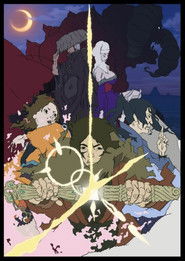
star 7Edo, Japan. Calligraphists are not mere writers, they can bring drawings to life and utilize kanji. Three calligraphists from the art wielding clan join up and fight against an exiled calligraphist and his minions to protect the Tokugawa shogunate.Beyond Gay: The Politics of Pride
2010
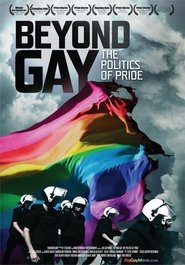
star 3.9Over the course of a year, film follows Vancouver Pride Society president Ken Coolen to various international Pride events, including Poland, Hungary, Russia, Sri Lanka and others where there is great opposition to pride parades. In North America, Pride is complicated by commercialization and a sense that the festivals are turning away from their political roots toward tourism, party promotion and entertainment. Christie documents the ways larger, more mainstream Pride events have supported the global Pride movement and how human rights components are being added to more established events. In the New York sequence, leaders organize an alternative Pride parade, the Drag March, set up to protest the corporatization of New York Pride. A parade in São Paulo, the world's largest Pride festival, itself includes a completely empty float, meant to symbolize all those lost to HIV and to anti-gay violence.Mystification
2010
Mystification
2010
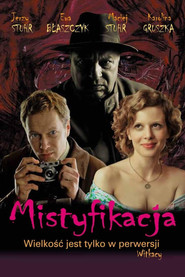
star 5.8Lazowski, an expelled university student, investigates the supposed suicide of the famous artist Witkacy and tries to prove that the artist is in fact still alive.Bang Rajan 2
2010
Bang Rajan 2
2010
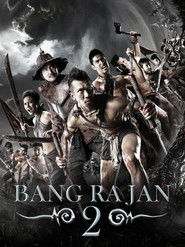
star 5.7Inspired by the Bang Rajan warriors who did not give up hope in their battle against the Burmese invaders, a group of villagers form a guerrilla unit to battle their enemies.Not the Messiah (He's a Very Naughty Boy)
2010
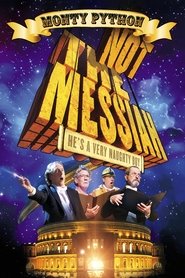
star 6.9Not The Messiah (He's a Very Naughty Boy) is a comic oratorio based on Monty Python's Life of Brian, which retells the tragic tale of Mandy, impregnated by a Roman soldier, giving birth to Brian, a reluctant revolutionary of the People's Front of Judea who falls in love with Judith, gets mistaken for a Messiah and is arrested by the Romans and sentenced to be crucified. It ranges in reference from Handel, through a naughty Mozart duet, to the Festival of Nine Carols, Bob Dylan, and the classic finale "Always Look on the Bright Side of Life".A Day in Smara
2010
A Day in Smara
2010
star 3The documentary tells the story of one day in Smara, a refugee camp in the south of Algeria. A handmade symbolic toke takes us through the lives of six characters and the reality of the situation in Sahara: The past, present and future of a population without land who want that their words will be heard by the world.The Runaways
2010
The Runaways
2010
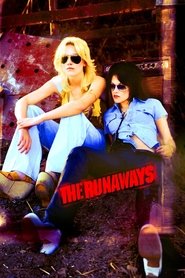
star 6.5Joan Jett and Cherie Currie, two rebellious teenagers from Southern California, become the frontwomen for The Runaways -- the now-legendary group that paved the way for future generations of female rockers. Under the Svengali-like influence of impresario Kim Fowley, the band becomes a huge success.Dersimiz: Atatürk
2010
Dersimiz: Atatürk
2010
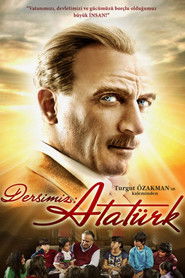
star 5.4Tarihci Dede is giving information to a couple of children about Mustafa Kemal Atatürk's success and his way to shape todays Turkey.The Sound of Freedom
2010
The Sound of Freedom
2010
star 2Based on true events. USSR, 1950s. As the reach of the oppressive communist regime escalates,Victoria: A Royal Love Story
2010
Fiona Bruce traces the story of one of history's great royal love affairs: the love between Queen Victoria and Prince Albert. It was a love based on a powerful physical attraction, and it grew into a marriage that set the tone for the Victorian age. Over the 20 years they spent together, until Albert's tragic death, they gave each other a dazzling collection of paintings, sculptures and jewellery. That collection was on show - much of it for the first time - at a major exhibition in London, and it reveals a new and passionate side of the royal couple.After the Flowers
2010
After the Flowers
2010
star 7.3Ito, daughter of a clan official, encounters Magoshiro Eguchi. Magoshiro is a low ranking samurai sparks an attraction with Ito. Ito challenges Magoshiro to a sword match using bamboo sticks. Mahoshiro accepts. The pair's duel causes sparks to fly an attraction from both sides. Meanwhile, Ito faces an arranged marriage with Saisuke Katagiri and Magoshiro is with Kayo...Paper Birds
2010
Paper Birds
2010
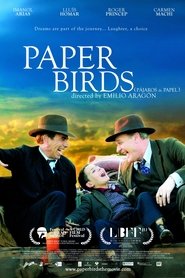
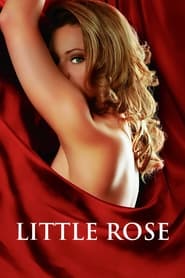
star 6.6At the end of the Spanish Civil War, the members of a group of vaudeville performers have been stripped of everything: all they have left is hunger and the instinct to survive. Day after day, agonizingly, lost and helpless between the victors and the vanquished, the musician Jorge, the ventriloquist Enrique, the couplet singer Rocío and the orphan Miguel search tirelessly for something to eat and a safe place to live.Little Rose
2010
Little Rose
2010
star 6.9Pressured by his superiors to disgrace public intellectual Warczewski, a professor and respected writer whom they believe to be a "camouflaged Zionist," rough security-services colonel Rozek enlists his sexy but naive girlfriend, Kamila, to insinuate herself into the distinguished older man's life and report on his every move. Not particularly interested in serving communism but eager to please her domineering lover, Kamila accepts the mission, reporting under the code name "Little Rose." As quick scenes contrast Kamila's crude pleasures with Rozek and her more refined experiences with Warczewski, it becomes clear that the more time the unschooled young woman spends with the professor, the more she comes to have true feelings for him.Chess!
2010
Chess!
2010
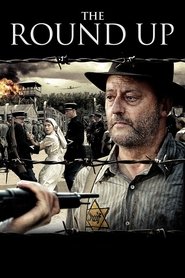
An attempt to a reconstruct of a chess game between Alexander Bogdanov and Vladimir Ilyich Ulyanov Lenin. Capri Italy. Tuesday April 28. 1908. The Villa of Russian Author Gorki.The Round Up
2010
The Round Up
2010
star 7.5A faithful retelling of the 1942 "Vel' d'Hiv Roundup" and the events surrounding it.Nasca Lines Decoded
2010
Nasca Lines Decoded
2010
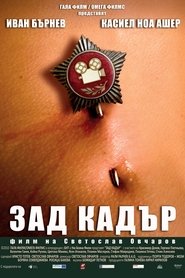
star 6They are striking works of art by any standard: but what purpose did they serve? Some of the theories put forward suggest that the lines were ancient running tracks, runways for aliens, and even a giant astronomical calculator. But after decades of misunderstanding, modern archaeology may finally have an answer to the puzzle of the Nasca lines.Voice Over
2010
Voice Over
2010
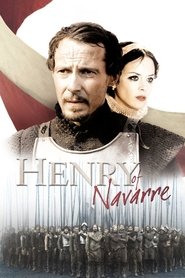
The end of the 70s. Anton Krastev, a DOP and his wife Diana are separated by the Iron curtain - she fled with their son Antoan to Western Berlin while he stayed in Bulgaria. She believes that Antoan can only be cured in Germany. But Anton can't live without his job. He works with the best film director who is a high ranking Communist. The State Security Services are keeping a zealous eye on Anton. His phone calls are being taped, his letters are being read. His close relations to the power people of the day make him even more suspicious. The State Security Services put an end to Anton's relation with his wife. Thorn apart, Anton and Diana go through love, alienation and hate. There comes a time though when the powerful friends of Anton lose their power and he loses everything that he's ever loved - his work, his wife and son. Thirty years later Anton shoots the story of his own life. But those who now direct the movie are the very same people who once persecuted him.Henri 4
2010
Henri 4
2010
star 5.5A wide-ranging, energetic period piece tracing the rise of the Protestant Henry of Navarre as he goes from battlefield warrior to France's beloved King Henri IV. Director Jo Baier's epic is a classically entertaining adventure, albeit one with more than a little bloodshed and frequent bawdy sexual interludes. In late 16th-century France, Catholics and Protestant Huguenots were at war. Seemingly seeking peace, the French dowager queen, Catherine de Medici summons Henry to her court to have him marry her daughter, uniting the two warring factions. However, the Catholics slaughter the Protestant wedding guests in what became known as the St. Bartholomew's Day massacre and Henry-now married-must use all his guile to both stay alive and maneuver for the throne. [Written by Palm Springs International Film Festival]