Popular War Movies - Page 113
All Services
Free Services
 Netflix
 Amazon Prime Video
 Apple iTunes
 Apple TV Plus
 Disney Plus
 Google Play Movies
 Paramount Plus
 Hulu
Hulu
 HBO Max
 YouTube
 fuboTV
 Peacock
 Peacock Premium
 Amazon Video
 The Roku Channel
 AMC+
AMC on Demand
AMC+
AMC on Demand
 Kocowa
 Hoopla
 The CW
 Vudu
Vudu
 Starz
Starz
 Showtime
 PBS
PBS
 Pantaflix
 FXNow
FXNow
 Tubi TV
 Kanopy
 Comedy Central
 Crunchyroll
 Microsoft Store
 Redbox
 Sun Nxt
 ABC
ABC
 DIRECTV
 Crackle
 Fandor
 Plex
Plex
Netflix
Amazon Prime Video
Apple iTunes
Apple TV Plus
Disney Plus
Google Play Movies
Paramount Plus
Hulu
HBO Max
YouTube
fuboTV
Peacock
Peacock Premium
Amazon Video
The Roku Channel
AMC+
AMC on Demand
Kocowa
Hoopla
The CW
Vudu
Starz
Showtime
PBS
Pantaflix
FXNow
Tubi TV
Kanopy
Comedy Central
Crunchyroll
Microsoft Store
Redbox
Sun Nxt
ABC
DIRECTV
Crackle
Fandor
Plex

The Wakhan Front
2015
The Wakhan Front
2015
star 6.3Afghanistan, 2014. As the withdrawal of troops approaches, Captain Antarès Bonassieu and his squad have been assigned a surveillance mission in a remote valley of Wakhan, on the border of Pakistan. Despite Antarès and his men’s determination, control of the secluded valley will slowly fall out of their hands. One dark night, soldiers begin to mysteriously disappear in the valley.Evensong
1934
Ant Hell War
1964
The Walls of Hell
1964
The Walls of Hell
1964
star 4.6In the final days of the battle of Manila during World War II, fanatical Japanese naval forces barricade themselves inside the walls of Intramuros, the ancient Spanish walled city of Manila. In a suicidal last stand, the Japanese hold many thousand Filipinos captive within the fortress, despite the incessant bombardment of United States artillery. An American war correspondent, Murray, arrives at the front line where a guerrilla unit led by American Lieutenant Sorenson makes contact with a young Filipino fighter, Nardo, who has escaped the fortress through a sewer passage. Nardo proposes a plan to rescue the prisoners through the tunnel.Year of Enlightment
1986
Year of Enlightment
1986
star 6.1April, 1940. Manolo, 16 years old, and Jesus, who is just 8, are taken by their older brother Pepe, a lieutenant in the Army, to a sanatorium for children suffering from tuberculosis, situated on the border with Portugal. Once in the sanatorium, Manolo, surrounded by boys all much younger than he is, feels a bit like the cock of the walk since the only other man around is the handyman Emilio who looks after the gardens and does whatever needs to be done about the place. His wife, Rafaela, is the cook. Manolo meets Irene, a falangist who runs the sanatorium, and the school teacher, Miss Transito, a crabby spinster. He has his first sexual experience, albeit as a voyeur, with his nurse Vicenta. When she has to leave, her place is taken by a girl from the village, Maria Jesus, with whom Manolo falls hopelessly in love. A relationship grows up between them which will mark them both for ever.Shout at the Devil
1976
Shout at the Devil
1976
star 6During World War One an English adventurer, an American elephant poacher and the latter's attractive young daughter, set out to destroy a German battle-cruiser which is awaiting repairs in an inlet just off Zanzibar. The story is based on a novel by Wilbur Smith, which in turn is very loosely based on events involving the light cruiser SMS Königsberg, which was sunk after taking refuge in Rufigi delta in 1915.You Should Survive
1981
You Should Survive
1981
star 11945, an attack aviation regiment is based at the field airfield, which is served by a team of young girls. The last days of the war are coming... In one of the battles, Lieutenant Volynin’s attack aircraft, damaged by a shell fragment, landed in territory occupied by the Germans. Air gunner Shchepov carried the wounded commander out of the burning plane. With the help of the Polish teacher Anna, they managed to get to theirs. And everyday life at the front began again. A few days before the Victory, Dima Shchepov died. Volynin took the death of his friend seriously. But it was even harder for him to learn about the death of Anna, whom he loved and whom he promised to find after the war...Enigmatic Explosion of the Battleship Mutsu
1960
During the naval battle of Midway in WWII, the battleship Mutsu was in its home port in Japan. The ship's officers and crew were frustrated at not being able to take part in the fighting. They had been held back by orders from the Naval Ministry, but there was also a plot by saboteurs, who were trying to prevent the sailing of the Mutsu. Director Komori developed a suspenseful plot by including a fictional adaptation of the Russian spy Richard Sorge, who had been captured in Japan and subsequently executed. Komori brings a fictional Russian spy to the screen by portraying him as a military attaché at the German embassy. As Germany was an ally of Japan in WWII, a secret agent being a mole in the German embassy is a perfect cover. The interaction of the saboteurs and the officers and crew of the Mutsu make an exciting story.The Notebook
2013
The Notebook
2013
star 6.5In a village on the Hungarian border, two young brothers grow up during war time with their cruel grandmother and must learn every trick of evil to survive in the absurd world of adults.The Boys in Company C
1978
star 6.5Disheartened by futile combat, appalled by the corruption of their South Vietnamese ally, and constantly endangered by the incompetence of their own company commander, the young men find a possible way out of the war. They are told that if they purposely lose a soccer game against a South Vietnamese team, they can spend the rest of their tour playing exhibition games behind the lines.Shoulder Arms
1918
Shoulder Arms
1918
star 6.8An American doughboy, stationed in France during the Great War, goes on a daring mission behind enemy lines and becomes a hero.Soldados
1978
Soldados
1978
star 5.3Dramatic portrait of men and women discouraged in the midst of the Spanish Civil War, after the odyssey of a group of Republican soldiers trying to reach the east coast to go into exile. Agustín must bear that his libertine father lives with the ironer Remedios, although she does not love him. She escapes and he goes to war; when they finally meet again, anxious amid bursts, it will be impossible to consummate their desires repressed for so long.The Angry Hills
1959
The Angry Hills
1959
star 4.4In 1941 Greece, on the eve of German occupation, cynical American foreign correspondent Michael Morrison arrives in Athens, intending to depart for London the following day. While there he is tricked into smuggling a list of resistance leaders out of the country and is pursued by the Germans.Pugowitza
1981
Pugowitza
1981
star 7World War II is over and Heinrich, a young German boy, influenced by the Russians, starts to act according to Communist principles in a small German village.And Starring Pancho Villa as Himself
2003
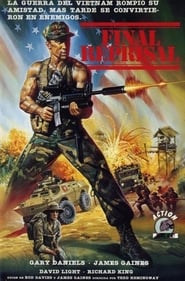
star 6.7In 1914, the Mexican revolutionary Pancho Villa invites studios to shoot his actual battles against Porfírio Diaz army to raise funds for financing guns and ammunition. The Mutual Film Corporation, through producer D.W. Griffith, interests for the proposition and sends the filmmaker Frank Thayer to negotiate a contract with Pancho Villa himself.Final Reprisal
1988
Final Reprisal
1988
star 6Sergeant David Callahan leads a task force of U.S. Marines on a failed mission. Five years later, working as an adviser to Thai Special Forces, he is forced to return to the Vietnamese P.O.W. camp he escaped years before, to fight a deadly duel.Saito Dosan: Rage of Power
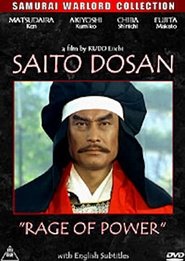
1991
star 6.5During the age of warring clans (Sengoku Jidai), many samurai lords sought to unite the country under their banners by becoming the supreme leader. One of the first to vie for power in this way was Saito Dosan, the 'Viper'. His son-in-law, Oda Nobunaga, did in fact unite the nation after subduing all of his enemies, yet falling at last to the treachery of one of his most trusted generals. This story is a pre-cursor to those later events as the brilliant military strategist Saito Dosan rises to power and notoriety as a great lord in his own right. Directed by Kudo Eiichi and with a tremendous supporting cast that includes Nakamura Toru as Oda Nobunaga and Chiba Shinichi as Akechi Mitsutsugu, battle scenes of awesome power and a unique view of Japanese history, this is a marvelous production highlighted by the action scenes done by the Japan Action Club (JAC).Battle of Warsaw 1920
2011
star 4.6Poland's winning battle against Soviet Russia as seen through the eyes of two young protagonists, Ola and Jan. She is a Warsaw cabaret dancer, while he is a cavalry officer and poet who believes in socialist idealsGod Does Not Believe in Us Anymore
1982
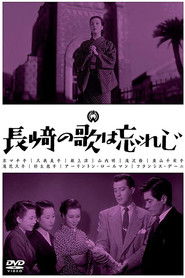
star 7After his father is murdered by the Nazis in 1938, a young Viennese Jew named Ferry Tobler flees to Prague, where he joins forces with another expatriate and a sympathetic Czech relief worker. Together with other Jewish refugees, the three make their way to Paris, and, after spending time in a French prison camp, eventually escape to Marseille, from where they hope to sail to a safe port.I'll Not Forget the Song of Nagasaki
1952
A Japanese soldier who died in a Japanese prisoner-of-war camp in Hawaii entrusted Henry Gray with an unfinished score and promised to complete it.