Popular War Movies - Page 99
All Services
Free Services
 Netflix
 Amazon Prime Video
 Apple iTunes
 Apple TV Plus
 Disney Plus
 Google Play Movies
 Paramount Plus
 Hulu
Hulu
 HBO Max
 YouTube
 fuboTV
 Peacock
 Peacock Premium
 Amazon Video
 The Roku Channel
 AMC+
AMC on Demand
AMC+
AMC on Demand
 Kocowa
 Hoopla
 The CW
 Vudu
Vudu
 Starz
Starz
 Showtime
 PBS
PBS
 Pantaflix
 FXNow
FXNow
 Tubi TV
 Kanopy
 Comedy Central
 Crunchyroll
 Microsoft Store
 Redbox
 Sun Nxt
 ABC
ABC
 DIRECTV
 Crackle
 Fandor
 Plex
Plex
Netflix
Amazon Prime Video
Apple iTunes
Apple TV Plus
Disney Plus
Google Play Movies
Paramount Plus
Hulu
HBO Max
YouTube
fuboTV
Peacock
Peacock Premium
Amazon Video
The Roku Channel
AMC+
AMC on Demand
Kocowa
Hoopla
The CW
Vudu
Starz
Showtime
PBS
Pantaflix
FXNow
Tubi TV
Kanopy
Comedy Central
Crunchyroll
Microsoft Store
Redbox
Sun Nxt
ABC
DIRECTV
Crackle
Fandor
Plex

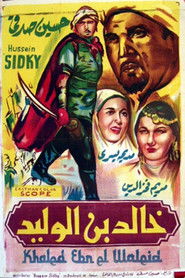
Khalid ibn el Walid
1958
Khalid ibn el Walid
1958
star 3The story of Khalid Ibn Al-Walid (592-642) the greatest military leader in the dawn of Islam during the life of prophet Muhammad and his caliphs Abu Bakr and Omar.Port Arthur
1980
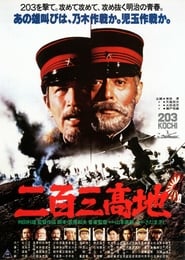
Port Arthur
1980
star 7.3Depicts the bloody siege of the fortress of Port Arthur, one of the most strongly fortified positions in the world, during the Russo-Japanese War of (1904 - 1905). In the story dominated the character Lt Takeshi Kogyo (Teruhiko Aoi), teachers, and a reserve officer who became commander of the platoon and later company. At the same time monitors the conduct of the army commander general Nogi (Tatsuya Nakadai), which was commissioned of the emperor Matsuhito (Toshirô Mifune) to the conquest of the fort.Straight for the Heart
1988
star 3.8Pierre is a Montreal photojournalist who returns from Nicaragua to find that his ten-year menage a trois is over. Haunted by his mid-life crisis, he becomes obsessed with trying to find out why his two lovers, Sarah and David, have left him.There
2015
There
2015
A disgruntled veteran unable to adjust back into society justifies domestic terrorism by interpreting his actions with alien invasion.The Knot
2006
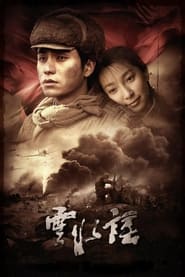
The Knot
2006
star 5.1They fell in love; Chen Qiushui was 20. Wang Biyun was 18. When Qiushui fled Taiwan after the 228 Massacre, Biyun gave him a gold engagement ring and they promised to meet again. Qiushui served as an army doctor during the Korean War, where he met Wang Jindi, a nurse from Shanghai who fell in love with him instantly. Years had gone by, Qiushui married Jindi and settled in Tibet. While in Taiwan, Biyun buried Qiushui's mother and continued to pray for his return. Flashback to modern time, Biyun is living in New York. Her niece played by Isabella Leong, a writer, has travelled to Tibet to find out what happened to Qiushui. Through the pictures she sends back via internet, Biyun finally gets to see the familiar face once again.Element of Surprise
1963
Pack Up Your Troubles
1940
Garage owner Tommy and ventriloquist friend Eric join the army and go to France, where they are captured by the Nazis. However, Eric's voice-throwing skills come in handy in engineering their escape and obtaining top secret information.Behind the Line: Escape to Dunkirk
2020
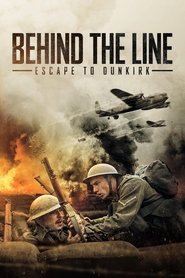
star 6.3Occupied France, 1940. A Nazi Commander discovers one of his prisoners, Danny is a champion boxer. He forces him to fight for his company's entertainment. But the POWs realise they can use these contests, as cover for an audacious breakout, before they re sent to Germany, where escape will be almost impossible. Their fate and freedom may all come down to how long Danny can keep fighting.48 Hours
1950
48 Hours
1950
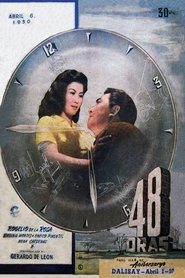
star 6A man has 48 hours to find the men who wronged him before a bullet lodged in his chest reaches his heart.Shadow Warriors: Hattori Hanzo
1980
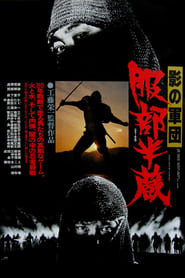
star 8The tale takes place around 1650, after the death of the third Tokugawa shogun, when ronin were expelled from Edo, the military capital. During the political instability following the death of Iemitsu Tokugawa, Hanzo's Iga ninja clan battles against the Koga clan as various factions vie to seize power. The child shogun Ietsuna is kidnapped but turns out to be hidden under (or over) everyone's noses in a castle turret which is reinforced by a comic book villain, the fire-spitting black ninja. The good ninja has to get through all the traps & save the child.Once Upon a Time in a Battlefield
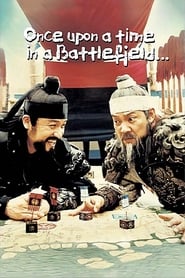
2003
star 6.5Set in the 7th century AD during the Korean peninsula's division into three perpetually warring kingdoms, Once Upon A Time In A Battlefield focuses on the Shilla's king Kim Choon-chu efforts to conquer his rivals: Koguryo and Baekche. To achieve this goal, he allies with mainland China's Tang empire, the superpower of the era, and together the two polities plan to attack first the weakest Baekche at its main fortress of Hwangsanbul, guarding the only easy access to the mountainous interior. But the fortress commander General Kye Baek (Park Joong-hoon) will be resisting to the end...This comedy relays on clash between ancient time and modern language combined with irony and distance to the war.Laskar Pemimpi
2010
Laskar Pemimpi
2010
A mismatched group of misfits become guerrillas as Indonesia attempts to maintain its independence when colonists return in 1948.The Great Martian War 1913–1917
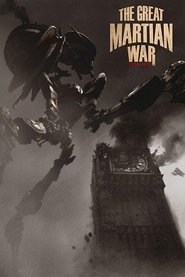
2013
star 6.3Documentary-drama recounting the Martian War of 1913–1917. Europe was on tenterhooks in the 2nd decade of the 20th century, everyone was expecting a Great War between the major European powers. But then, in 1913, something crashed into the forests of SW Germany. Troops were sent to investigate but were wiped out. Martian fighting machines began making their way across Western Europe and the countries of Europe combined forces to resist them. With aspects taken from ‘The War of the Worlds’ by H.G. Wells and from WWI itself, this dramatisation presents a documentary style look at events as they unfolded and the effect they had of our world today. Lots of references to real events including the mass attacks and defeats as men were thrown against machines on the Western front, the Christmas truce and the Angel of Mons, America's isolationism and late entry into the conflict, the worldwide Spanish flu epidemic that killed more people than the war, and many other things.Only The Brave
2006
Only The Brave
2006
star 5.1A searing portrait of war and prejudice, ‘Only the Brave’ takes you on a haunting journey into the hearts and minds of the forgotten heroes of WWII – the Japanese-American 100th/442nd. In 1941, when Japan attacked Pearl Harbor, overnight Japanese Americans were put into internment camps for the duration of the war. Determined to prove their loyalty, 1400 Japanese Americans successfully petitioned the government to serve becoming the 100th Infantry Battalion. They were sent to North Africa, Italy and finally France were they performed an impossibly-dangerous rescue of the Texas 36th Division. During their two years of combat these men received an unparalleled 21 Medals of Honor, 9,486 Purple Hearts, 8 Presidential Citations, 53 Distinguished Service Crosses, 588 Silver Stars and 5,200 Bronze stars – making them the most decorated unit of their size in American military history. This is their story.Downtime
1995
Downtime
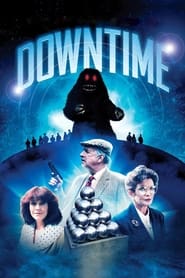
1995
star 5Retired commander of the United Nations' Intelligence Taskforce, and long-time associate of the mysterious time traveler the Doctor, Brigadier Alistair Lethbridge-Stewart faces the toughest battle of his military career when he is embroiled in a plot unwittingly set in motion by university chancellor Victoria Waterfield, herself a former companion of the Doctor, to take over the Earth by an evil alien entity called the Great Intelligence, aided by its ferocious robot Yeti cohorts. Can the Brigadier defeat this menace to the Earth without the Doctor's help?Héroes del aire
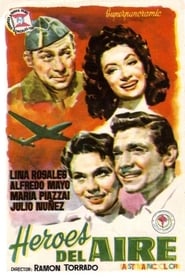
1958
Héroes del aire
1958
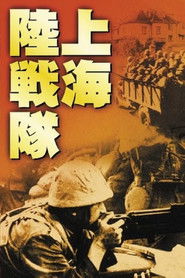
Shanghai Landing Party
1939
star 5This film attempts to reconstruct the tension of the Battle of Shanghai through an episode in an understated way, introducting its story in a documentary mode. In the film story, Japan's marine regiment protects Japanese residents and Chinese refugees-women and young children-from rampant street fighting, Shanhai Rikusentai unsparingly uses its first eight minutes for an official-mannered self-justification of the war. From the viewpoint of explaining Japan's military operation,the narration refers to the city s spatial division in sync with maps on screen.Rookie Revue
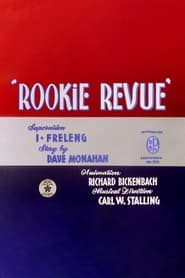
1941
Rookie Revue
1941
star 5.6Random gags around military life, set on an army base. A bugler uses a jukebox to play reveille. In formation, one private has a great deal of trouble remembering what comes after "3"; after he gets it, he decides not to go for the $32 question. In the mess hall, the machine gunners machine gun their food while the bombers catch falling biscuits. The infantry marches for miles - past a "next time, take the train" billboard.Red Dust
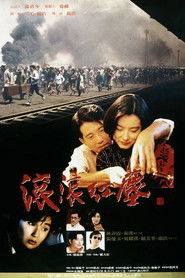
1990
Red Dust
1990
star 6.8Stretching across the canvas of the Sino-Japanese War of the 30s, the subsequent Japanese surrender in 1945, and the onslaught of Communism, this film depicts an ill-fated romance between a talented lady novelist and a Chinese traitor working with the Japanese who fall victim to the mayhem of war and their tragic inability to reconcile political differences.