Top Rated History Movies on Tub Tv - Page 391
All Services
Free Services
 Netflix
 Amazon Prime Video
 Apple iTunes
 Apple TV Plus
 Disney Plus
 Google Play Movies
 Paramount Plus
 Hulu
Hulu
 HBO Max
 YouTube
 fuboTV
 Peacock
 Peacock Premium
 Amazon Video
 The Roku Channel
 AMC+
AMC on Demand
AMC+
AMC on Demand
 Kocowa
 Hoopla
 The CW
 Vudu
Vudu
 Starz
Starz
 Showtime
 PBS
PBS
 Pantaflix
 FXNow
FXNow
 Tubi TV
 Kanopy
 Comedy Central
 Crunchyroll
 Microsoft Store
 Redbox
 Sun Nxt
 ABC
ABC
 DIRECTV
 Crackle
 Fandor
 Plex
Plex
Netflix
Amazon Prime Video
Apple iTunes
Apple TV Plus
Disney Plus
Google Play Movies
Paramount Plus
Hulu
HBO Max
YouTube
fuboTV
Peacock
Peacock Premium
Amazon Video
The Roku Channel
AMC+
AMC on Demand
Kocowa
Hoopla
The CW
Vudu
Starz
Showtime
PBS
Pantaflix
FXNow
Tubi TV
Kanopy
Comedy Central
Crunchyroll
Microsoft Store
Redbox
Sun Nxt
ABC
DIRECTV
Crackle
Fandor
Plex

Once My Mother
2014
Once My Mother
2014
star 8Australian filmmaker Sophia Turkiewicz investigates why her Polish mother abandoned her and uncovers the truth behind her mother's wartime escape from a Siberian gulag, leaving Sophia to confront her own capacity for forgiveness.Kent State
1981
Kent State
1981
star 6Dramatization of the four days of events leading up to the historic tragedy at Kent State University in May 1970, during the confrontation between National Guardsmen and students staging antiwar demonstrations.On the Way to Lenin
1970
On the Way to Lenin
1970
star 5A train travels through the vastness of Russia, a train with German prisoners of war returning home, and Viktor Kleist, a young German communist from an intellectual home in Munich, travels back home with them. During the journey, the stations on his way to Lenin wake up again.A Season of Giants
1990
A Season of Giants
1990
star 6.5At the turn of the sixteenth century, Michelangelo (Mark Frankel), Raphael (Andrea Prodan), and Leonardo Da Vinci (John Glover) create their masterpieces, while dealing with religious persecution, political turmoil, and the discovery of America.We Are Moluccans
2014
We Are Moluccans
2014
star 8.5After witnessing a child's death during a violent clash, a former soccer player launches a youth team to help local kids avoid further bloodshed.St. Patrick: Apostle of Ireland
2004
star 4.5Go beyond the revelry of St. Patrick's Day and learn about the man himself. This dramatic documentary features reenactments of St. Patrick's life and deeds and explores the only writings of his known to exist: "Confession" and "Letter to Coroticus." Father Frank Fahey, of Ballintubber Abbey, and Michael Slavin, author of The Book of Tara, discuss the history of this important figure who brought Christianity to Ireland.Addio, piccola mia
1979
Addio, piccola mia
1979
star 2Last years in the Life of german Dramatican Georg Büchner. Around the year 1830 he and his fellow students try to initiate a revolution in Germany, but they are not successful. Büchner has to leave the country and seeks exile in France and Switzerland, where he falls ill with typhus.Secrets of China's First Emperor
2007
star 6.8Documentary, Historical Documentaries, Biographical Documentaries - This thought-provoking biographical program illuminates the fascinating life of Qin Shi Huangdi, "The First Magnificent Emperor of Qin," a man considered both influential and controversial in Chinese history. The ancient emperor's long list of accomplishments includes planning the construction of China's first Great Wall, building the world's largest burial site guarded by the famous Terracotta Army and amassing the most expansive empire of his time.La Moglie di Claudio
1918
La Moglie di Claudio
1918
star 5.8Claudio is married to Cesarina, a frivolous and unfaithful woman. After the death of their only son their marriage is cold. While his wife lives her free life, Claudio is dedicated to the development of sophisticated weapons, elaborating the project of a new cannon; but smitten by the virtuous Jew Rebecca he can not surrender to his feelings because his religion prevents him from getting a divorce.Secrets of Egypt's Lost Queen
2007
star 7.5Move over, King Tut: There's a new pharaoh on the scene. A team of top archaeologists and forensics experts revisits the story of Hatshepsut, the woman who snatched the throne dressed as a man and declared herself ruler. Despite her long and prosperous reign, her record was all but eradicated from Egyptian history in a mystery that has long puzzled scholars. But with the latest research effort captured in this program, history is about to change.Ambel, la película
2014
Ambel, la película
2014
star 5.5Victim of the stagnant and hypocritical society of the 17th century, Martín de Ambel will be forced to live for 36 years within the walls of the Iglesia de la Concepción after committing murder to defend the honor of his family.Josef Mengele, the Angel of Death
2010
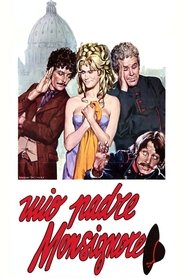
star 8More than 50 years ago, Nazi scientists conducted experiments to prolong Hitler's life. Joseph Mengele, a Nazi doctor who participated in the experiments, took refuge in Argentina after the war. Argentine writer Carlos de Napoli, who discovered the memorandum in which Mengele described the steps necessary to obtain the "Formula for Eternal Youth," traveled across Argentina and Germany, investigating the Third Reich's sinister experiments and persistent obsession with beauty and youth.My Father Monsignor
1971
My Father Monsignor
1971
star 6Against the backdrop of the Unification of Italy, two men have the dream of being recognized by their respective, illustrious, fathers: a bishop and the King.Industrial Revolution
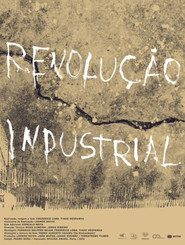
2014
star 5The Ave Valley is, for more than a century, a territory seized by an imposing industry. Amongst ruins and operating factories, we descend the river on a journey alongside the banks of the present, unveiling the marks of the past.Anna Goldin, the Last Witch
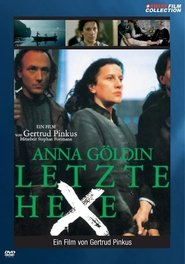
1991
star 6A native of Sennwald, Anna Göldi arrived in Glarus in 1765. For seventeen years, she worked as a maidservant for Johann Jakob Tschudi, a physician. Tschudi reported her for having put needles in the bread and milk of one of his daughters, apparently through supernatural means. Göldi at first escaped arrest, but the authorities of the Canton of Glarus advertised a reward for her capture in the Zürcher Zeitung on February 9, 1782. Göldi was arrested and under torture, admitted to entering in a pact with the Devil, who had appeared to her as a black dog. She withdrew her confession after the torture ended, but was sentenced on June 18, 1782 to execution by decapitation. The charges were officially of "poisoning" rather than witchcraft, even though the law at the time did not impose the death penalty for non-lethal poisoning.Past, Present, and Future
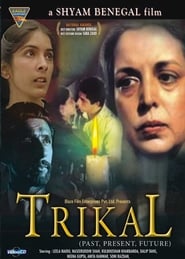
1985
star 8.8Set in 1961 Goa, this is a story of a rich and influential Goan family and what happens to them over a period of time. The movie is narrated in past-tense by one of the friends of the family.Fascism in Colour
2006
Fascism in Colour
2006
star 7.5After the World War I, Mussolini's perspective on life is severely altered; once a willful socialist reformer, now obsessed with the idea of power, he founds the National Fascist Party in 1921 and assumes political power in 1922, becoming the Duce, dictator of Italy. His success encourages Hitler to take power in Germany in 1933, opening the dark road to World War II. (Originally released as a two-part miniseries. Includes colorized archival footage.)The Secret Service Agent's Memories 2
2014
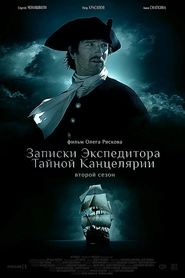
star 4.5Russia in the early 18th century: Naval officer Plakhov has fallen in love with a young woman. When she is threatened by a stranger, he kills him and is thereby sentenced to death. However, the head of the secret service decides to send Plakhov on a mission instead.Hitler’s Escape
2010
Hitler’s Escape
2010
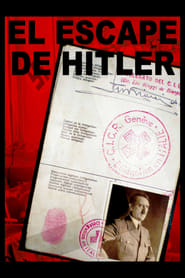
star 7Recent DNA and ballistics evidence have raised new questions and suspicions about Adolf Hitler's death. Hitler's Escape—filmed in Europe and Argentina—revisits these questions, examining the hypothesis of his secret escape to Patagonia. By challenging the official story of his suicide, it opens up the mystery of his final whereabouts.Dokuz Dağın Efesi: Çakıcı Geliyor
1958
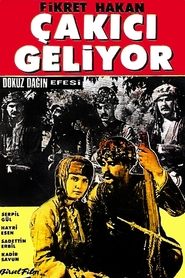
star 7The film traces the life of Çakırcalı Mehmet Efe, a Zeybek (active as an outlaw in the region enclosing İzmir, Aydın, Denizli, Muğla and Antalya in modern western Turkey, from 1893 to 1910) whose father, Çakırcalı Koca Ahmet Efe was murdered by an Ottoman sergeant.