Top Rated History Movies on Tub Tv - Page 393
All Services
Free Services
 Netflix
 Amazon Prime Video
 Apple iTunes
 Apple TV Plus
 Disney Plus
 Google Play Movies
 Paramount Plus
 Hulu
Hulu
 HBO Max
 YouTube
 fuboTV
 Peacock
 Peacock Premium
 Amazon Video
 The Roku Channel
 AMC+
AMC on Demand
AMC+
AMC on Demand
 Kocowa
 Hoopla
 The CW
 Vudu
Vudu
 Starz
Starz
 Showtime
 PBS
PBS
 Pantaflix
 FXNow
FXNow
 Tubi TV
 Kanopy
 Comedy Central
 Crunchyroll
 Microsoft Store
 Redbox
 Sun Nxt
 ABC
ABC
 DIRECTV
 Crackle
 Fandor
 Plex
Plex
Netflix
Amazon Prime Video
Apple iTunes
Apple TV Plus
Disney Plus
Google Play Movies
Paramount Plus
Hulu
HBO Max
YouTube
fuboTV
Peacock
Peacock Premium
Amazon Video
The Roku Channel
AMC+
AMC on Demand
Kocowa
Hoopla
The CW
Vudu
Starz
Showtime
PBS
Pantaflix
FXNow
Tubi TV
Kanopy
Comedy Central
Crunchyroll
Microsoft Store
Redbox
Sun Nxt
ABC
DIRECTV
Crackle
Fandor
Plex

Uthama Puthiran
1958
Uthama Puthiran
1958
star 7.5A conspiring uncle separates the twin sons of his sister, the queen. One becomes his uncle's pawn while the other grows to be a brave and honest man, who inadvertently learns of his true parentage.Kappalottiya Thamizhan
1961
star 7Chidambaram Pillai, a revolutionary leader, starts the first shipping company in India. With the help of this company, he fights against the monopoly of the British over maritime trade out of India.Racconti romani di una ex-novizia
1973
star 2A girl who entered the convent pushed by devotion is depraved, marries, betrays her husband and becomes a courtesan.Ankara Ekspresi
1970
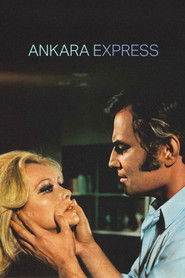
Ankara Ekspresi
1970
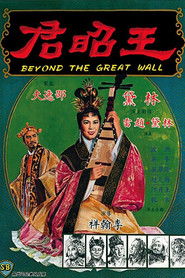
star 8During World War II, Germany aims to conquer Turkey with an operation which is Ankara Express. German spy Hilda and Turkish major Seyfi engage in a dangerous relationship while they work for the Ankara Express operation.Beyond the Great Wall
1964
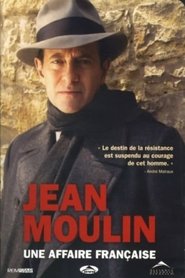
star 4Beyond the Great Wall is a true story based on how Wang Chao-chun sacrificed her love and life for the good of the Chinese people during war time fears between China and the Huns.Jean Moulin, une affaire française
2003
star 7Drama set in the Second World War, focused on Jean Moulin, hero, martyr and symbol of the French resistance and the patriotism during the dark years of Nazi occupation.This Is New Zealand
1970
This Is New Zealand
1970
star 9The movie that wowed audiences at Expo 70. The film combined scenic images including aerial cinematography with rousing classical music such as Sibelius' Karelia Suite. Using then ground-breaking technology, the film required three separate but synchronised 35mm film projectors which projected their images onto an extra-wide screen. In 2004/2005 Archives New Zealand commissioned a restoration at post production facility, Park Road Post. Hugh Macdonald, the original director, was involved in the restoration and Kit Rollings, the original sound mixer assisted with the updated soundtrack. The remastered film was released for sale on DVD in 2014.Whom the Gods Love
1942
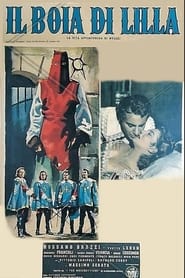
Milady and the Musketeers
1952
star 5.8Very stylish Italian swashbuckler - The Three Musketeers from the viewpoint of Milady de WinterChallenging Churchill
2012
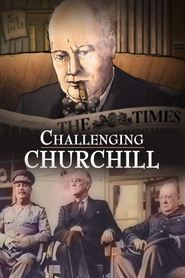
star 7Churchill, a name typically associated with braveness and altruism. Recently found evidence from Soviet and British sources however brings up questions about Churchill's doings in the conferences of Tehran, Yalta and Potsdam. Why did he agree to give Stalin large parts of Poland? The story of two world leaders in times of war - it is also the story of Poland.The Dawn of the Renaissance - Florence Cathedral
2010
star 4.8The Basilica di Santa Maria del Fiore is the main church of Florence, Italy. It was one of the most impressive projects of the Renaissance. Il Duomo di Firenze, as it is ordinarily called, was begun in 1296 in the Gothic style to the design of Arnolfo di Cambio and completed in 1436 with the dome engineered by Filippo Brunelleschi. The exterior of the basilica is faced with marble panels in various shades of green and pink bordered by white. The basilica is one of Italy's largest churches and, until development of new structural materials in the modern era was the largest in the world. It remains the largest brick dome ever constructed.The Rise & Fall of Penn Station
2004
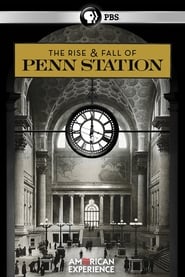
star 9.5In 1910, the Pennsylvania Railroad successfully accomplished the enormous engineering feat of building tunnels under New York City's Hudson and East Rivers, connecting the railroad to New York and New England, knitting together the entire eastern half of the United States. The tunnels terminated in what was one of the greatest architectural achievements of its time, Pennsylvania Station. Penn Station covered nearly eight acres, extended two city blocks, and housed one of the largest public spaces in the world. But just 53 years after the station’s opening, the monumental building that was supposed to last forever, to herald and represent the American Empire, was slated to be destroyed.Jerome's Secret
1994
Jerome's Secret
1994
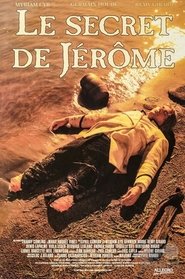
star 4.5In 1863, when a legless, shipwrecked man washes up on the Acadian coast, he's taken to the home of Jean the Corsican, a burly and bitter former soldier, and his childless young wife, Julitte. The man, who is young, handsome, and well-dressed, remains mute as Julitte nurses him back to health. Jean, meanwhile, who is inexplicably estranged from Julitte and an outsider to townspeople, continues his hunt for pirate treasure, rumored to be hidden in a cave by the sea. The treasure is his ticket out of Acadia. As loneliness and Eros draw Julitte and the mysterious Jérôme together, something's got to give.Avalokitesvara
2013
Avalokitesvara
2013
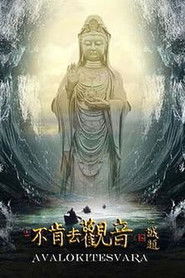
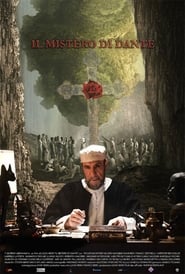
star 4.3In the time of the Tang Dynasty, Yu Xiufeng, a porcelain maker from Mount Meicen, makes a ceramic statue of the Bodhisattva Avalokitesvara to consecrate at Mount Wutai to protect the princeling Li Yi.The Mystery of Dante
2014
The Mystery of Dante
2014
star 5.2A journey in the footsteps of the most famous initiate of Italian Trecento, the author of the celebrated "Divine Comedy". A poet who has inspired some of the most outstanding minds in History.“May Your Memory Be Love“ - The Story of Ovadia Baruch
2008
star 5.2In March 1943, twenty-year-old Ovadia Baruch was deported together with his family from Greece to Auschwitz-Birkenau. Upon arrival, his extended family was sent to the gas chambers. Ovadia struggled to survive until his liberation from the Mauthausen concentration camp in May 1945. While in Auschwitz, Ovadia met Aliza Tzarfati, a young Jewish woman from his hometown, and the two developed a loving relationship despite inhuman conditions. This film depicts their remarkable, touching story of love and survival in Auschwitz, a miraculous meeting after the Holocaust and the home they built together in Israel. This film is part of the "Witnesses and Education" project, a joint production of the International School for Holocaust Studies and the Multimedia Center of the Hebrew University of Jerusalem. In this series, survivors recount their life stores - before, during and after the Holocaust. Each title is filmed on location, where the events originally transpired.The Man Without a Country
1973
star 6.5At his court-martial, an American Army officer renounces his country. For his punishment he is ordered to spend the rest of his life on a ship that sails all over the world, but he will never be allowed to set foot on his country's soil, nor come within sight of it, nor be allowed to know anything about the country.A Pleasant Terror: The Life and Ghosts of M.R. James
1995
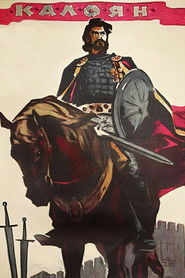
star 8A biopic on the author M. R. James. If M.R. James wrote his ghost stories purely to entertain his friends, why do they seem to strike such resonances in readers? Why are they so terrifying? Clive Dunn's fifty minute documentary sets out to try to answer this question. In the words of its fictional narrator, nicely played by Dangerfield's Bill Wallis, "was there something that made [Monty James] believe that evil and malice could become palpable?"Kaloyan
1963
Kaloyan
1963
star 8.51197. King Kaloyan ascends the throne in hard times for Bulgaria. The country is still recovering from a century of Byzantine subjugation. He is forced to carry out a very flexible foreign policy in order to strength his positions. Pope Innocent III recognizes him as Emperor (Tsar), but a little later the fourth Crusade crosses the country under Emperor Baldwin. A new conflict is coming. Tsar Kaloyan wages the decisive battle at Adrianople and wins.Gregório de Mattos
2003
Gregório de Mattos
2003
star 7The life of irreverent poet Gregório de Mattos, who lived in Bahia, Brazil, in the 17th century. Nicknamed Mouth of Hell, he used his transgressive poetry against the élite of the time.