New History Movies - Page 35
All Services
Free Services
 Netflix
 Amazon Prime Video
 Apple iTunes
 Apple TV Plus
 Disney Plus
 Google Play Movies
 Paramount Plus
 Hulu
Hulu
 HBO Max
 YouTube
 fuboTV
 Peacock
 Peacock Premium
 Amazon Video
 The Roku Channel
 AMC+
AMC on Demand
AMC+
AMC on Demand
 Kocowa
 Hoopla
 The CW
 Vudu
Vudu
 Starz
Starz
 Showtime
 PBS
PBS
 Pantaflix
 FXNow
FXNow
 Tubi TV
 Kanopy
 Comedy Central
 Crunchyroll
 Microsoft Store
 Redbox
 Sun Nxt
 ABC
ABC
 DIRECTV
 Crackle
 Fandor
 Plex
Plex
Netflix
Amazon Prime Video
Apple iTunes
Apple TV Plus
Disney Plus
Google Play Movies
Paramount Plus
Hulu
HBO Max
YouTube
fuboTV
Peacock
Peacock Premium
Amazon Video
The Roku Channel
AMC+
AMC on Demand
Kocowa
Hoopla
The CW
Vudu
Starz
Showtime
PBS
Pantaflix
FXNow
Tubi TV
Kanopy
Comedy Central
Crunchyroll
Microsoft Store
Redbox
Sun Nxt
ABC
DIRECTV
Crackle
Fandor
Plex

All For One
2025
All For One
2025
star 5.1France, 1625. Women! They’re women! With fake beards, chest binders and pants underneath their outfits, they are indeed women. Sara, a young girl on the run, unmasks the true nature of the three musketeers, protectors of the Queen of France. She decides to join these powerful women and their dangerous idea: dress as men to live free, even at the risk of their very own lives.O Sétimo Rebelde
2025
O Sétimo Rebelde
2025
Stork of Hope
2025
Stork of Hope
2025
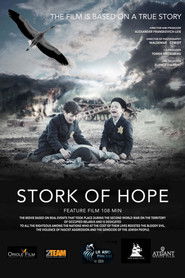
In the early days of World War II, two Jewish brothers lost their parents during the Nazi invasion of Belarus. The boys were imprisoned in a German hospital and found many of their peers there. They were kept in inhuman conditions - hunger, cold, lack of sleep and rest. The only thing the boys had, their treasure - was a family portrait with mom and dad. Before the fascists separated brothers, each of them got half of it.Ça tourne...
2025
Ça tourne...
2025
Kuster Beaton
2025
Kuster Beaton
2025
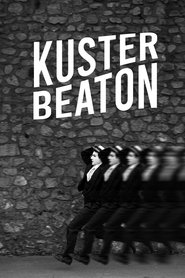
In 1970, Kuster Beaton, a former silent-film star, gives an interview looking back over his career. A journalist asks him about his legendary power : an alleged super-speed that enabled him to shoot his films without special effects.Share the Love
2025
Share the Love
2025
Kari and Onia meet in Cannes, experiencing love at first sight. Upon returning to Sakartvelo, they are quarantined in different hotels in the midst of the COVID-19 pandemic. They stay in touch via phone calls and video chat. Kari teaches Onia Caucasian Yoga breath training and they travel in past to meet a variety of Georgian historical figures during their important life events, in order to understand the wisdom and limits of love.Heidenn Sid
2025
The Way Home
2025
The Way Home
2025
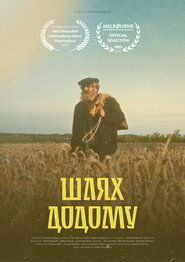
After Stalin ordered the forced collectivization of all the farms in 1930s Ukraine, Maxim, a humble cucumber farmer, rebels. He is arrested by local authorities and shipped off to forced labor camps of SIberia. In a bid to survive and return to his family, he steals away in the dead of night and begins the 1,000km journey home.A Great Big Secret
2025
A Great Big Secret
2025
Dutch-born Holocaust survivor and retired teacher Anita Magnus Frank narrates her story from childhood trauma to adult healing, when she finally opened up to the world as one of World War II’s “hidden children,” dramatized with a collage-like combination of interviews, archival footage, and animation.Whisper of The Ink
2025
Whisper of The Ink
2025
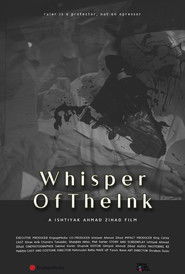
Rashed, a fearless artist active in recent protests, faces a crisis when his pregnant wife, Runa, goes into labor amid a nationwide crisis and curfew. With no ambulances, he defies the curfew, desperately searching for help to save her.Destroy All Humans
2025
Destroy All Humans
2025
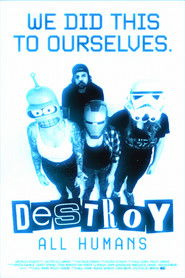
Destroy All Humans is a documentary exploring AI’s rise in art and media through an existential, experimental lens. At its center is HOVERBORG, a fictional band whose AI-generated music sparked questions about creativity and authenticity. Through interviews with musicians, artists, and media professionals, the film reflects on the unsettling shift toward hyperpersonalized media and asks: In a world shaped by algorithms, will we still recognize ourselves in the art we consume?The Wasps
2025
The Wasps
2025
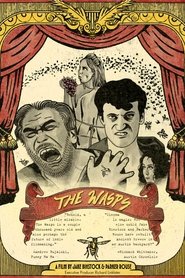
In ancient Athens, a son is forced to parent his crazy, conservative father-but things get complicated when dad's drunk war buddies come a-knocking.The Lifespan of a Ruined Chapel
2025
On its deathbed, a chapel in the Highlands of Scotland tells its life story.No Land's Talk
2025
No Land's Talk
2025
A short film inspired by true events in Bangladesh in front of Uttar Badda Government Primary School, 20th July of 2019.Under the Crystal Sky
2025
star 6In the 1800s American Southwest, an Indigenous family witness an extraordinary extraterrestrial event. The family must confront their fear of the phenomenon while also fending off the encroaching American military.William Tell
2025
William Tell
2025
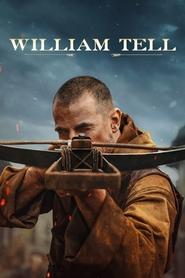
star 6.2The narrative unfolds in the 14th Century, when the European nations vie for supremacy within the Holy Roman Empire. The ambitious Austrian Empire, desiring more land, invades neighbouring Switzerland, a serene and pastoral nation. Protagonist William Tell, a formerly peaceful hunter, finds himself forced to take action as his family and homeland come under threat from the oppressive Austrian King and his ruthless warlords.Emergency
2025
Emergency
2025
star 3.8Based on true events that unfolded in 1975, the film chronicles incidents that took place under the leadership of Indira Gandhi, one of the most powerful women in Indian history.Never Alone
2025
Never Alone
2025
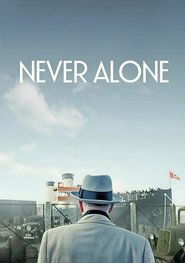
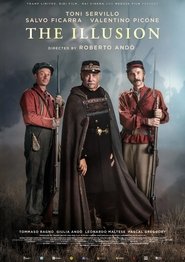
star 6.21942. The State of Finland has formed an alliance with Nazi Germany. An elderly man single-handedly tries to stop a secret attempt by the Finnish State Police to hand over Jewish refugees directly to the Gestapo.The Illusion
2025
The Illusion
2025
star 6.81860. Giuseppe Garibaldi began from Quarto the adventure of the Thousand surrounded by the enthusiasm of the young idealists who had come from all regions of Italy, and with his loyal group of officers, among whom a new profile stands out, that of Palermo Colonel Vincenzo Giordano Orsini. Among the many militiamen recruited were two Sicilians, Domenico Tricò, a farmer who had emigrated to the North, and Rosario Spitale, an illusionist. Having landed in Sicily, at Marsala, the Thousand begin fighting with the Bourbon army, whose numerical preponderance is immediately evident. Under these conditions, it appears almost impossible for the general to breach the enemy defense and penetrate Palermo. But when he is almost forced to retreat, Garibaldi devises an ingenious plan.