New War Movies - Page 209
All Services
Free Services
 Netflix
 Amazon Prime Video
 Apple iTunes
 Apple TV Plus
 Disney Plus
 Google Play Movies
 Paramount Plus
 Hulu
Hulu
 HBO Max
 YouTube
 fuboTV
 Peacock
 Peacock Premium
 Amazon Video
 The Roku Channel
 AMC+
AMC on Demand
AMC+
AMC on Demand
 Kocowa
 Hoopla
 The CW
 Vudu
Vudu
 Starz
Starz
 Showtime
 PBS
PBS
 Pantaflix
 FXNow
FXNow
 Tubi TV
 Kanopy
 Comedy Central
 Crunchyroll
 Microsoft Store
 Redbox
 Sun Nxt
 ABC
ABC
 DIRECTV
 Crackle
 Fandor
 Plex
Plex
Netflix
Amazon Prime Video
Apple iTunes
Apple TV Plus
Disney Plus
Google Play Movies
Paramount Plus
Hulu
HBO Max
YouTube
fuboTV
Peacock
Peacock Premium
Amazon Video
The Roku Channel
AMC+
AMC on Demand
Kocowa
Hoopla
The CW
Vudu
Starz
Showtime
PBS
Pantaflix
FXNow
Tubi TV
Kanopy
Comedy Central
Crunchyroll
Microsoft Store
Redbox
Sun Nxt
ABC
DIRECTV
Crackle
Fandor
Plex

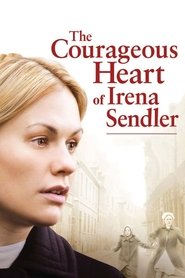
The Courageous Heart of Irena Sendler
2009
star 7.3Irena Sendler is a Catholic social worker who has sympathized with the Jews since her childhood, when her physician father died of typhus contracted while treating poor Jewish patients. When she initially proposes saving Jewish children from the Warsaw Ghetto, her idea is met with skepticism by fellow workers, her parish priest, and even her own mother Janina.General Nil
2009
General Nil
2009
star 6.9The tale about last years of the legendary Home Army commander, General August Emil Fieldorf "Nil".The Lost Patrol
2009
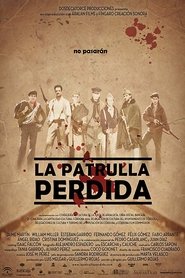
The Lost Patrol
2009
star 71936. Somewhere in Andalusian countryside, a patrol of Spanish Republican soldiers cross the enemy lines to destroy a very important railroad for enemies communications.Toyo's Camera
2009
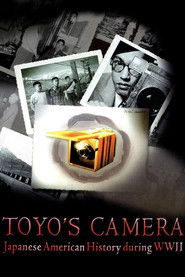
Toyo's Camera
2009
Even though bringing in cameras to the internment camps was prohibited, one man managed to smuggle in his own camera lens and build a camera to document life behind barbed wires, with the help of other craftsmen in the camp. That man was Toyo Miyatake, a successful issei (first generation immigrant) photographer and owner of a photo-shop in the Los Angeles Little Tokyo district, and of one of the many Americans who was interned with his family against his will. With his makeshift camera, Miyatake captured the dire conditions of life in the camps during World War II as well as the resilient spirit of his companions, many of whom were American citizens who went on to fight for their country overseas. Miyatake said, "It is my duty to record the facts, as a photographer, so that this kind of thing should never happen again."Lieutenant Suvorov
2009
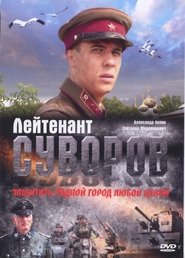
Lieutenant Suvorov
2009
The lieutenant Suvorov and his small group of soldiers come to an abandoned village where only few people are left, and among them there is a schoolteacher with children. Suvorov is quite sure that the front line soon will be here. The lieutenant and his soldiers stay in the village and start their first fight with Nazis, giving time the others to leave…The Priest
2009
The Priest
2009
star 5.9Father Alexander is trying to maintain peaceful life for his church amidst the Nazi occupation during WWII.John Rabe
2009
John Rabe
2009
star 7.1A true-story account of a German businessman who saved more than 200,000 Chinese during the Nanjing massacre in 1937-38.Don't Burn
2009
Don't Burn
2009
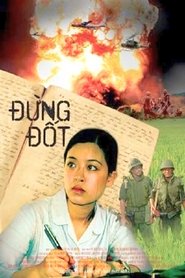
star 6.2In the spring of 2005, a mother living in Hanoi receives a diary of her late daughter, a young doctor working at a field hospital during the war. Kept for over thirty years by an American veteran, the diary is an account of her life spanning two years, from April 1968 until her death in June 1970.Morristown: Where America Survived
2009
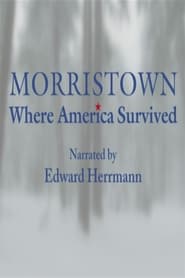
A thirty-minute High Definition documentary which revisits that winter of 1779-80 when Washington’s troops arrived at the densely-wooded area just south of Morristown known as Jockey Hollow, to build a log hut city for their winter camp. The film is an eye-opening look at how the camp saved the army – and the American Revolution – from the brink of disaster. Based on John T. Cunningham’s book The Uncertain Revolution and shot on location at Morristown National Historical Park, Morristown: Where America Survived is narrated by award-winning actor Edward Herrmann, who has voiced many history documentaries over his extensive career. The program was produced by New Jersey Network.Olimpius Inferno
2009
Olimpius Inferno
2009
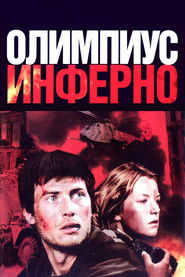
star 4.2The movie is based on the events in South Ossetia in August 2008, and portraying a brutal Georgian army engaging in ethnic cleansing at the behest of its omnipresent American masters.A Call to Arms
2009
A Call to Arms
2009
star 6A documentary which traces the controversial Anthrax Vaccine Immunization Program (AVIP) in the United States and the United Kingdom.By the Will of Chingis Khan
2009
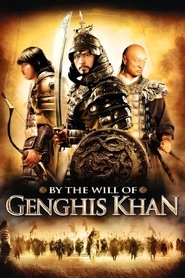
star 4.7Three childhood friends. Three sworn brothers. One was initiated into the sacrament and grew up to be a great shaman. The other two followed the path of war and the nation recognised them as leaders. But only one of them was to become the ruler of the entire steppe. He was chosen by the Eternal Blue Sky and the Sky itself put him on a trial. Love for a woman will make him a warrior. Allegiance to the law will lead him to fratricide. Striving for peace will force him to start war. The council of nine tribes, speaking nine tongues, proclaimed him the sovereign and gave him the name of an ancient deity - Genghis Kahn.St. George Shoots the Dragon
2009
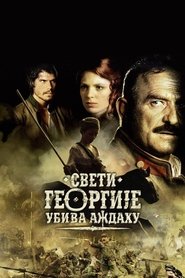
star 6Love triangle story between the village gendarme Đorđe, his wife Katarina and the young disabled war veteran Gavrilo during the time between First Balkan War and World War I.Quiet Nights Of Blood And Pain
2009
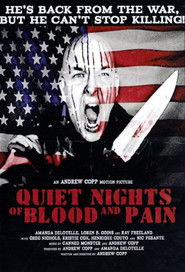
star 6The movie deals with two soldiers home from the Iraq war suffering from Post Traumatic Stress Disorder, but in vastly different ways. One sees her life falling apart in night-terrors, flashbacks, insomnia, and a total lack of government support. The other still believes he is fighting the war now that he is back on American soil. Still convinced he is supposed to torture and kill any and everyone who can be viewed as Anti-American. Soon they will be at a crossroads and blood will be flooding the American streets.Safe Haven: The Warsaw Zoo
2009
As the Nazis liquidate the Warsaw Ghetto, many will die. Three hundred will live when they find safe haven at the Warsaw Zoo..303
2009
.303
2009
star 5.8A short but harrowing look at the horrors of war and how the smallest of errors can have tragic consequences as two British paratroopers land in Nazi-occupied Sicily (beautifully filmed in and around Victoria Gate in Valletta) in 1943.Escape from Auschwitz
2009
The truth about the Auschwitz death camp was one of the most closely guarded secrets of the Third Reich. Prisoners who tried to escape were killed in public as an example to other inmates. Very few ever made it out alive. Escape From Auschwitz tells the incredible story of two young Slovak Jews, Rudolph Vrba and Alfred Wetzler, who managed to escape, determined to tell the world about the atrocities being committed by the Nazis at the camp, which resulted in the saving of thousands of lives.A Trip To Karabakh 2 Conflict Zone
2009
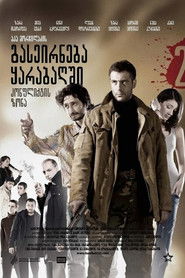
star 8The Soviet Union has collapsed. Civil and ethnic wars have broken out in Georgia, Azerbaijan, and Armenia, three republics in the Caucasus. The post-Soviet Caucasus have turned into one large conflict zone. Two radically different people with different ideals, problems, and goals are united by the conflict zone. Gogliko, a Tbilisi street boy, and Spartak, a Sukhumi sniper, are forced to solve problems of the street and problems of the state together. For one, the goal is to get back the money he lost gambling; for the other, it is to carry out a general's absurd military mission. In spite of it all, their paths cross and their lives are changed forever.Red Sands
2009
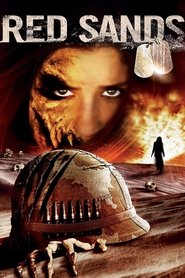
Red Sands
2009
star 4.3A group of U.S. soldiers on a mission in the Middle East find themselves with nothing to do in their free time. Out of sheer boredom they end up destroying an old statue in the desert, only to unleash a horrific entity.