New History Movies on Amazon Video - Page 51
All Services
Free Services
 Netflix
 Amazon Prime Video
 Apple iTunes
 Apple TV Plus
 Disney Plus
 Google Play Movies
 Paramount Plus
 Hulu
Hulu
 HBO Max
 YouTube
 fuboTV
 Peacock
 Peacock Premium
 Amazon Video
 The Roku Channel
 AMC+
AMC on Demand
AMC+
AMC on Demand
 Kocowa
 Hoopla
 The CW
 Vudu
Vudu
 Starz
Starz
 Showtime
 PBS
PBS
 Pantaflix
 FXNow
FXNow
 Tubi TV
 Kanopy
 Comedy Central
 Crunchyroll
 Microsoft Store
 Redbox
 Sun Nxt
 ABC
ABC
 DIRECTV
 Crackle
 Fandor
 Plex
Plex
Netflix
Amazon Prime Video
Apple iTunes
Apple TV Plus
Disney Plus
Google Play Movies
Paramount Plus
Hulu
HBO Max
YouTube
fuboTV
Peacock
Peacock Premium
Amazon Video
The Roku Channel
AMC+
AMC on Demand
Kocowa
Hoopla
The CW
Vudu
Starz
Showtime
PBS
Pantaflix
FXNow
Tubi TV
Kanopy
Comedy Central
Crunchyroll
Microsoft Store
Redbox
Sun Nxt
ABC
DIRECTV
Crackle
Fandor
Plex

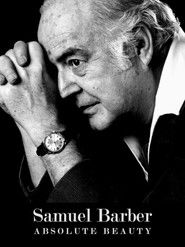
Samuel Barber: Absolute Beauty
2017
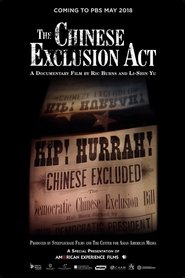
star 10Known for his mournful "Adagio for Strings," Samuel Barber was never quite fashionable. This acclaimed film is a probing exploration of his music and melancholia. Performance, oral history, musicology, and biography combine to explore the life and music of one of America’s greatest composers. Features Thomas Hampson, Leonard Slatkin, Marin Alsop and many more of the world's leading experts on Barber's music, with tributes from composers Leonard Bernstein, Aaron Copland, Virgil Thomson and William Schuman. The film was broadcast on PBS, and screened at nine film festivals internationally, with three best-of awards. It was named a Recording of the Year 2017 by MusicWeb International.The Chinese Exclusion Act
2017
star 8A sweeping chronicle of the entire exclusion era - the latter part of the 1800s, when anti-Chinese agitation led to federal laws targeting Chinese abroad and those already in the country. Go far beyond the legislation with the survival and growth of Chinese American communities in the face of prejudice and outright violence, the “paper” sons and daughters who emigrated despite the seemingly impassable barriers, and the legal challenges that produced some of the most momentous decisions in Supreme Court history.Bet on Revenge
2017
Bet on Revenge
2017
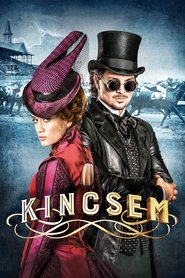
star 6.7The new owner of a brilliant race horse finds love while carrying out his revenge on the man who murdered his father.Dateline: Saigon
2017
Dateline: Saigon
2017
star 8How does a nation slip into war? Dateline-Saigon profiles the controversial reporting of five Pulitzer Prize-winning journalists -The New York Times' David Halberstam, the Associated Press' Malcolm Browne, Peter Arnett, and legendary photojournalist Horst Faas, and UPI's Neil Sheehan -- during the early years of the Vietnam War as President John F. Kennedy is secretly committing US troops to what is initially dismissed by some as 'a nice little war in a land of tigers and elephants.' 'When the government is telling the truth, reporters become a relatively unimportant conduit to what is happening,' Halberstam tells us. 'But when the government doesn't tell the truth, begins to twist the truth, hide the truth, then the journalist becomes involuntarily infinitely more important.'Viceroy's House
2017
Viceroy's House
2017
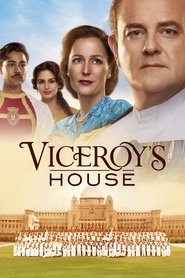
star 6.6In 1947, Lord Mountbatten assumes the post of last Viceroy, charged with handing India back to its people, living upstairs at the house which was the home of British rulers, whilst 500 Hindu, Muslim and Sikh servants lived downstairs.Oh, Dior!
2017
Oh, Dior!
2017
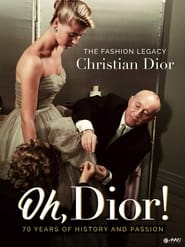
star 8Oh, Dior is an exclusive and sophisticated documentary on the French designer Christian Dior, celebrating the 70th anniversary of the brand.Cromwell's Head
2017
Cromwell's Head
2017
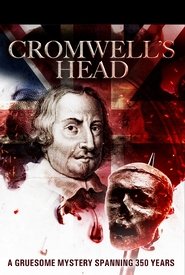
star 6The story of Oliver Cromwell's head is perhaps the most bizarre, yet least well known, of all tales from English history. From regal burial to exhumation and decapitation, this relic of our only non-royal ruler has travelled a most peculiar path. It has been a gruesome warning to traitors, a secret prize for a soldier, an attraction at an 18th-century peep show, and an object of veneration and derision until it was finally laid to rest in a secret ceremony. CROMWELL'S HEAD, is a one-hour documentary, telling the full story of this extraordinary artifact. CROMWELL'S HEAD unravels a mystery and brings to light a variety of strange tales. By looking at the passions, public and private, aroused by Cromwell and his head, it illuminates how British attitudes to monarchy, democracy and radicalism were formed - and how they have changed, since our civil war over 350 years agoThe 86
2017
The 86
2017
star 6.4Inspired by true events, "The 86" highlights the activities of a band of 86 street thugs that were famous for their strong presence in the venezuelan capital city during the 1980's.Veeram
2017
Veeram
2017
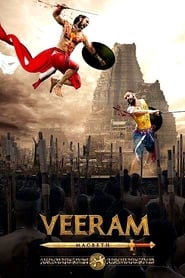
star 6.7Veeram is based on the ballads of North Malabar and narrates the tale of the brave and ambitious Kalarippayattu warrior, Chandu, whose story resembles that of William Shakespeare's Macbeth.Hitler's Hollywood
2017
Hitler's Hollywood
2017
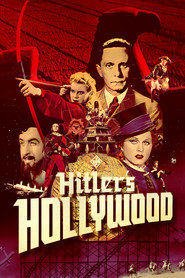
star 6.4Film journalist and critic Rüdiger Suchsland examines German cinema from 1933, when the Nazis came into power, until 1945, when the Third Reich collapsed. (A sequel to From Caligari to Hitler, 2015.)Newsies
2017
Newsies
2017
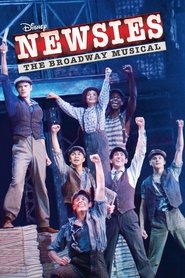
star 8A week in the life of the exploited, child newspaper sellers in turn-of-the-century New York. When their publisher, Joseph Pulitzer, tries to squeeze a little more profit out of their labours, they organize a strike, only to be confronted with the Pulitzer's hard-ball tactics.Martin Luther: The Idea that Changed the World
2017
star 7The year 2017 marks the 500th anniversary of one on the most important events in Western civilization: the birth of an idea that continues to shape the life of every American today. In 1517, power was in the hands of the few, thought was controlled by the chosen, and common people lived lives without hope. On October 31 of that year, a penniless monk named Martin Luther sparked the revolution that would change everything. He had no army. In fact, he preached nonviolence so powerfully that — 400 years later — Michael King would change his name to Martin Luther King to show solidarity with the original movement. This movement, the Protestant Reformation, changed Western culture at its core, sparking the drive toward individualism, freedom of religion, women's rights, separation of church and state, and even free public education. Without the Reformation, there would have been no pilgrims, no Puritans, and no America in the way we know it.Cartier The little red box
2017
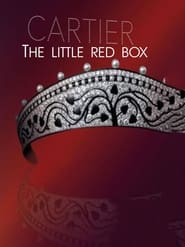
For 160 years, the Maison Cartier has inspired awe, desire and covetousness in men and women before its jewellery box, the most recognizable in the world. To paraphrase Jean Cocteau: "Cartier is still a subtle magician "whose able to hang the moon at the tip of a string of sun"".Norfolk & Western 611
2017
Remastered with new footage and interviews, the 611 returns to her hometown of Roanoke, Virginia in this nearly-hour long steam special.Bitter Harvest
2017
Bitter Harvest
2017
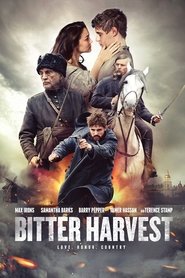
star 6Set between the two World Wars and based on true historical events, Bitter Harvest conveys the untold story of the Holodomor, the genocidal famine engineered by the tyrant Joseph Stalin. The film displays a powerful tale of love, honour, rebellion and survival at a time when Ukraine was forced to adjust to the horrifying territorial ambitions of the burgeoning Soviet Union.Double Play
2017
Double Play
2017
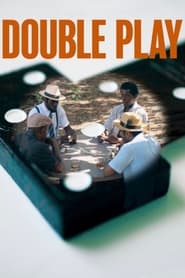
star 3.5Double Play is about anolder man named Ostrik who returns to Curaçao and his childhood after many years abroad. Ostrik reminisces about 1973 and the events surrounding a game his father played which had major consequences for Ostrik’s youth. The dramatic poverty and colourful landscapes provide the background for the leads who represent Curaçao’s melting pot: a story of pride and humiliation, money and love, ambition and hope.Storm: Letter of Fire
2017
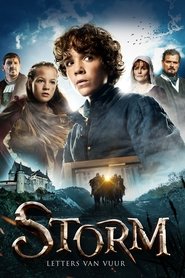
star 6.4The film is set in 1521 Antwerp, in a Europe ravaged by religious wars, and during the early years of the Reformation. It tells the story of the twelve year old, Falko Voeten – a printer’s son. When Falko’s father, Klaas Voeten, a printer of forbidden literature, is caught by the Inquisition for printing a letter written by Maarten Luther; Falko is unwittingly propelled into helping his father and into searching for the letter. Threatened by the Inquisition but aided by Marieke, a Catholic orphan girl from the underground sewers, Falko is faced with a race against time if he is to save his father from being executed for heresy.Voevoda
2017
Voevoda
2017
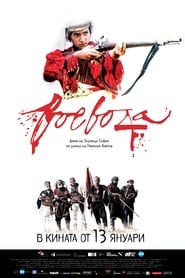
star 7.2At the end of the 18th century in Bulgaria under Ottoman slavery, a young woman leaves home and family to become leader of a guerrilla gang.Gautamiputra Satakarni
2017
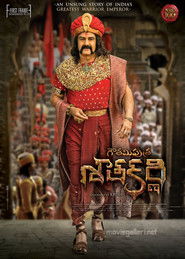
star 5.6The emperor of Satavahana kingdom, Satakarni comes across many challenges when he attempts to convince his wife that their son is bound to take part in battles and vanquish his enemies.