New History Movies on Free Services - Page 101
All Services
Free Services
 Netflix
 Amazon Prime Video
 Apple iTunes
 Apple TV Plus
 Disney Plus
 Google Play Movies
 Paramount Plus
 Hulu
Hulu
 HBO Max
 YouTube
 fuboTV
 Peacock
 Peacock Premium
 Amazon Video
 The Roku Channel
 AMC+
AMC on Demand
AMC+
AMC on Demand
 Kocowa
 Hoopla
 The CW
 Vudu
Vudu
 Starz
Starz
 Showtime
 PBS
PBS
 Pantaflix
 FXNow
FXNow
 Tubi TV
 Kanopy
 Comedy Central
 Crunchyroll
 Microsoft Store
 Redbox
 Sun Nxt
 ABC
ABC
 DIRECTV
 Crackle
 Fandor
 Plex
Plex
Netflix
Amazon Prime Video
Apple iTunes
Apple TV Plus
Disney Plus
Google Play Movies
Paramount Plus
Hulu
HBO Max
YouTube
fuboTV
Peacock
Peacock Premium
Amazon Video
The Roku Channel
AMC+
AMC on Demand
Kocowa
Hoopla
The CW
Vudu
Starz
Showtime
PBS
Pantaflix
FXNow
Tubi TV
Kanopy
Comedy Central
Crunchyroll
Microsoft Store
Redbox
Sun Nxt
ABC
DIRECTV
Crackle
Fandor
Plex

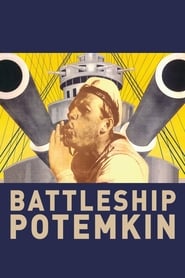
Battleship Potemkin
1925
Battleship Potemkin
1925
star 7.6A dramatized account of a great Russian naval mutiny and a resultant public demonstration, showing support, which brought on a police massacre.The Iron Horse
1925
The Iron Horse
1925
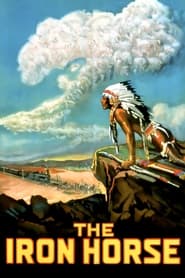
star 6.7Brandon, a surveyor, dreams of building a railway to the west. He sets off with his son, Davy, to survey a route. They discover a new pass which will shave 200 miles off the expected distance, but they are set upon by a party of Cheyenne. One of them, a white renegade with only two fingers on his right hand, kills Brandon and scalps him. Davy is all alone now.Romola
1924
Romola
1924
star 6.6In Renaissance Florence, a Florentine trader meets a shipwrecked stranger, who introduces himself as Tito Melema, a young Italianate-Greek scholar. Tito becomes acquainted with several other Florentines, including Nello the barber and a young girl named Tessa. He is also introduced to a blind scholar named Bardo de' Bardi, and his daughter Romola. As Tito becomes settled in Florence, assisting Bardo with classical studies, he falls in love with Romola.Helen of Troy
1924
Helen of Troy
1924
star 6.1Helena is a 1924 German silent drama film directed by Manfred Noa and starring Edy Darclea, Vladimir Gajdarov and Albert Steinrück. The film was based on the poem the Iliad by Homer. It was released in two separate parts: The Rape of Helen and The Fall of Troy. It was produced by Bavaria Film at the Emelka Studios in Munich. The film was made on an epic scale with thousands of extras, and large sets which rivalled those of the larger Berlin-based UFA.The Ten Commandments
1923
The Ten Commandments
1923
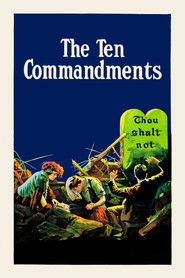
star 6.5The first part tells the story of Moses leading the Jews from Egypt to the Promised Land, his receipt of the tablets and the worship of the golden calf. The second part shows the efficacy of the commandments in modern life through a story set in San Francisco. Two brothers, rivals for the love of Mary, also come into conflict when John discovers Dan used shoddy materials to construct a cathedral.Scaramouche
1923
Scaramouche
1923
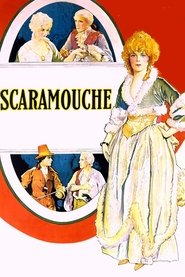
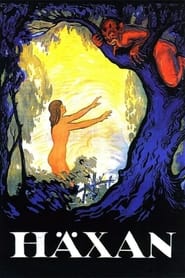
star 7.2A law student becomes an outlaw French revolutionary when he decides to avenge the unjust killing of his friend. To get close to the aristocrat who has killed his friend, the student adopts the identity of Scaramouche the clown.Häxan
1922
Häxan
1922
star 7.6Grave robbing, torture, possessed nuns, and a satanic Sabbath: Benjamin Christensen's legendary film uses a series of dramatic vignettes to explore the scientific hypothesis that the witches of the Middle Ages suffered the same hysteria as turn-of-the-century psychiatric patients. But the film itself is far from serious-- instead it's a witches' brew of the scary, gross, and darkly humorous.Orphans of the Storm
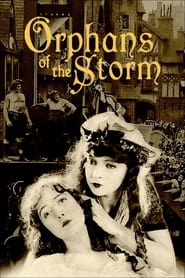
1921
Orphans of the Storm
1921
star 6.8France, on the eve of the French Revolution. Henriette and Louise have been raised together as sisters. When the plague that takes their parents' lives causes Louise's blindness, they decide to travel to Paris in search of a cure, but they separate when a lustful aristocrat crosses their path.Anna Boleyn
1920
Anna Boleyn
1920
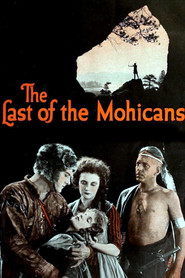
star 6.8The story of the ill-fated second wife of the English king Henry VIII, whose marriage to the Henry led to momentous political and religious turmoil in England.The Last of the Mohicans
1920
star 6.2As Alice and Cora Munro attempt to find their father, a British officer in the French and Indian War, they are set upon by French soldiers and their cohorts, Huron tribesmen led by the evil Magua. Fighting to rescue the women are Chingachgook and his son Uncas, the last of the Mohican tribe, and their white ally, the frontiersman Natty Bumppo, known as Hawkeye.Sir Arne's Treasure
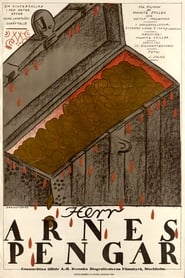
1919
Sir Arne's Treasure
1919
star 7.1Three Scottish officers, including Sir Archi, murder Sir Arne and his household for a coffin filled with gold. The only survivor is Elsalill, who moves to relatives in Marstrand. There she meets a charming young officer- Sir Archi- and she soon understands that he was one of the murderers.A Mormon Maid
1917
A Mormon Maid
1917
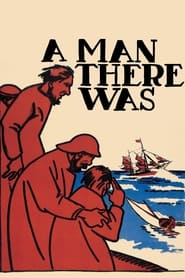
star 5This silent melodrama is set against the 1840s westward migration of the Mormons. Dora, a young woman, and her family are saved from an Indian attack by a Mormon community traveling to Utah. They join the wagon train. Dora is pursued by two men, one a recent convert, the other a scheming elder with a stable of wives. The Mormon elder wants her in his harem. When the mother kills herself from revulsion toward polygamy, the daughter must consider her own future and the man she loves. One of Mae Murray's few surviving films, this was intended by Robert Leonard to be a thoughtful drama about the goods and evils of Mormonism, but today it is generally considered pure anti-Mormon propaganda.A Man There Was
1917
A Man There Was
1917
star 7Terje Vigen, a sailor, suffers the loss of his family through the inflexibility of another man. Years later, when his enemy's family finds itself dependent on his benevolence, Terje must decide whether to avenge himself.Joan the Woman
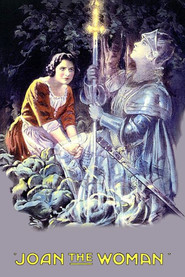
1916
Joan the Woman
1916
star 5.6A WWI English officer is inspired the night before a dangerous mission by a vision of Joan of Arc, whose story he relives.Winning a Continent
1916
Winning a Continent
1916
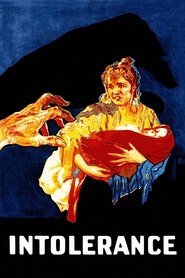
star 5This epic film was one of the first South African dramatic film productions. It tells the story of the Boers’ Great Trek at the end of the 1830s, concluding with a hegemonic reconstruction of the 1838 Battle of Blood River, where a few hundred armed Afrikaners defeated several thousand Zulus.Intolerance: Love's Struggle Throughout the Ages
1916
star 7.1The story of a poor young woman, separated by prejudice from her husband and baby, is interwoven with tales of intolerance from throughout history.The Dumb Girl of Portici
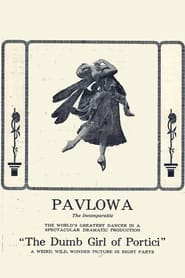
1916
star 7Fenella, a poor Italian girl, falls in love with a Spanish nobleman, but their affair triggers a revolution and national catastrophe.Hearts in Exile
1915
Hearts in Exile
1915
star 3.5In Czarist Russia, attractive Anna Ivanovna has consecrated her life to work among Russia's persecuted poor. She dispenses food, medicine, and funds to the needy, from a busy charity headquarters. Two men, separate in station, are in love with Ivanovna: Poor doctor Paul helps as much as he can, and wealthy merchant Serge donates money. The relentless and lascivious Chief of Police, also attracted by Ivanova's beauty and virtue, determines to possess her, and sentences all three to fifteen years in Siberia and East Russia on false charges.The Birth of a Nation
1915
star 5.9Two families, abolitionist Northerners the Stonemans and Southern landowners the Camerons, intertwine. When Confederate colonel Ben Cameron is captured in battle, nurse Elsie Stoneman petitions for his pardon. In Reconstruction-era South Carolina, Cameron founds the Ku Klux Klan, battling Elsie's congressman father and his African-American protégé, Silas Lynch.Cabiria
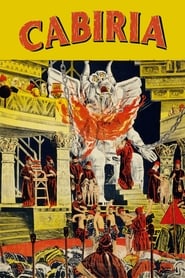
1914
Cabiria
1914
star 7.2Young Cabiria is kidnapped by pirates and sold as a slave in Carthage. Just as she's to be sacrificed to Moloch, Cabiria is rescued by Fulvius Axilla, a good-hearted Roman spy, and his powerful slave, Maciste. The trio are broken up as Cabiria is entrusted to a woman of noble birth. With Cabiria's fate unknown, Maciste punished for his heroism, and Fulvius sent away to fight for Rome, is there any hope of our heroes reuniting?