New History Movies on Free Services - Page 69
All Services
Free Services
 Netflix
 Amazon Prime Video
 Apple iTunes
 Apple TV Plus
 Disney Plus
 Google Play Movies
 Paramount Plus
 Hulu
Hulu
 HBO Max
 YouTube
 fuboTV
 Peacock
 Peacock Premium
 Amazon Video
 The Roku Channel
 AMC+
AMC on Demand
AMC+
AMC on Demand
 Kocowa
 Hoopla
 The CW
 Vudu
Vudu
 Starz
Starz
 Showtime
 PBS
PBS
 Pantaflix
 FXNow
FXNow
 Tubi TV
 Kanopy
 Comedy Central
 Crunchyroll
 Microsoft Store
 Redbox
 Sun Nxt
 ABC
ABC
 DIRECTV
 Crackle
 Fandor
 Plex
Plex
Netflix
Amazon Prime Video
Apple iTunes
Apple TV Plus
Disney Plus
Google Play Movies
Paramount Plus
Hulu
HBO Max
YouTube
fuboTV
Peacock
Peacock Premium
Amazon Video
The Roku Channel
AMC+
AMC on Demand
Kocowa
Hoopla
The CW
Vudu
Starz
Showtime
PBS
Pantaflix
FXNow
Tubi TV
Kanopy
Comedy Central
Crunchyroll
Microsoft Store
Redbox
Sun Nxt
ABC
DIRECTV
Crackle
Fandor
Plex

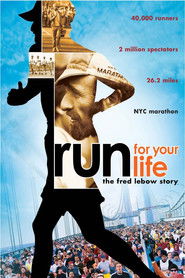
Run for Your Life
2008
Run for Your Life
2008
star 7.9Without one eccentric first-generation Jewish immigrant from Transylvania, the New York City Marathon simply wouldn't exist. Ehrlich's fun, loving, and inspirational tribute to the late Fred Lebow shows how one man's imagination, determination, and love for running created one of the world's most popular sporting events.Unconquered: Allan Houser and the Legacy of One Apache Family
2008
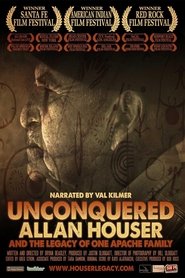
In decades past, Native American artists who wanted to sell to mainstream collectors had little choice but to create predictable, Hollywood-style western scenes. Then came a generation of painters and sculptors led by Allan Houser (or Haozous), a Chiricahua Apache artist with no interest in stereotyped imagery and a belief that his own rich heritage was compatible with modernist ideas and techniques. Narrated by actor Val Kilmer and originally commissioned as part of an exhibit of Houser’s work at the Oklahoma History Center, this program depicts the artist’s tribal ancestry, his rise to regional and national acclaim, and the continuing success of his sons as they expand upon and depart from their father’s achievements. Key works are documented, as is Houser’s tenure at the Santa Fe–based Institute of American Indian Arts.North Face
2008
North Face
2008
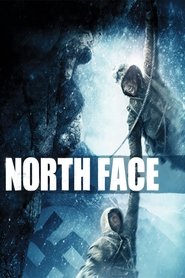
star 7.2North Face tells the story of two German climbers Toni Kurz and Andreas Hinterstoisser and their attempt to scale the deadly North Face of the Eiger.A Woman in Berlin
2008
A Woman in Berlin
2008
star 6.6A woman tries to survive the invasion of Berlin by the Soviet troops during the last days of World War II.Passchendaele
2008
Passchendaele
2008
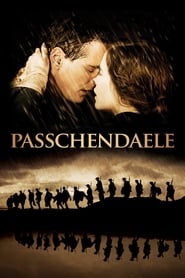
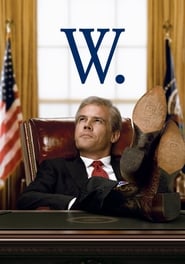
star 6.1Sergeant Michael Dunne fights in the 10th Battalion, AKA The "Fighting Tenth" with the 1st Canadian Division and participated in all major Canadian battles of the war, and set the record for highest number of individual bravery awards for a single battleW.
2008
W.
2008
star 6.2The story of the eventful life of George W. Bush—his struggles and triumphs, how he found both his wife and his faith—and the critical days leading up to his decision to invade Iraq.Killing Kasztner
2008
Killing Kasztner
2008
How much should you negotiate with the enemy? In Israel, the debate over that question evoked fury to the point of assassination. Such was the case of Kasztner. Dr Israel (Rezso) Kasztner, a Hungarian Jew who tried to rescue the last million Jews of Europe by negotiating face to face with Nazi leader Adolf Eichmann, was gunned down by another Jew who never set foot in Nazi Europe. After 50 years, his assassin Ze'ev Eckstein breaks his silence on the fateful night he shot and killed Kasztner. (Storyville)Séraphine
2008
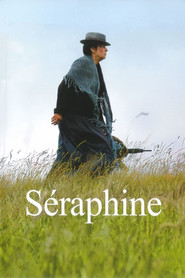
Séraphine
2008
star 6.7The tragic story of French naïve painter Séraphine Louis aka Séraphine de Senlis (1864-1942), a humble servant who becomes a gifted self-taught painter. Discovered by prominent critic and collector William Uhde, she came to prominence between the wars grouped with other naïve painters like Henri Rouseau only to descend into madness and obscurity with the onset of the Great Depression and World War II.The Lucky Ones
2008
The Lucky Ones
2008
star 6.4The story revolves around three soldiers — Colee, T.K. and Cheaver — who return from the Iraq War after suffering injuries and learn that life has moved on without them. They end up on an unexpected road trip across the U.S.The Baader Meinhof Complex
2008
star 7When German police viciously quell a protest against the shah of Iran, popular journalist Ulrike Meinhof rebels against her dishonest marriage, walks away from her children and joins radical anarchist Andreas Baader. Together with Baader's girlfriend, Gudrun Ensslin, they form the violent Red Faction Army, and together perpetrate a slew of terrorist attacks as a way of disrupting the fabric of what they see as an increasingly fascist state.It's Hard Being Loved by Jerks
2008
star 6.8The murder of Dutch filmmaker Theo van Gogh by an Islamic extremist in 2004, followed by the publishing of twelve satirical cartoons depicting the prophet Mohammed that was commissioned for the Danish newspaper Jyllands-Posten, provides the incendiary framework for Daniel Leconte's provocative documentary, It's Hard Being Loved by Jerks.Picasso and Braque Go to the Movies
2008
star 4.4The influence that artists Pablo Picasso and George Braque had on the world of cinema is the subject of this documentary from filmmaker Arne Glimcher. A lifelong lover of film, Picasso was intrigued by the machines used to create moving pictures, as well as the images they produced. In this film, artists such as Martin Scorsese, Julian Schnabel, Chuck Close, and the late Robert Rauschenberg reveal how Picasso and Braque's shared love of film helped to create some of the greatest art of the 20th Century. ~ Jason Buchanan, RoviThe Duchess
2008
The Duchess
2008
star 7A chronicle of the life of 18th century aristocrat Georgiana, Duchess of Devonshire, who was reviled for her extravagant political and personal life.Me and Orson Welles
2008
Me and Orson Welles
2008
star 6.4New York, 1937. A teenager hired to star in Orson Welles' production of Julius Caesar becomes attracted to a career-driven production assistant.God on Trial
2008
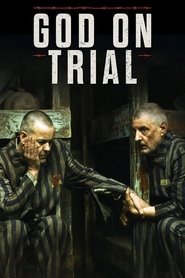
God on Trial
2008
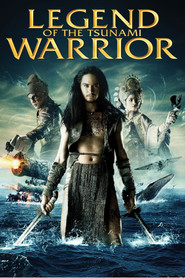
star 6.8In the Jewish tradition of arguing with God, Jewish prisoners in Auschwitz decide to put God on Trial.Legend of the Tsunami Warrior
2008
star 5.9As sea pirates threaten to invade their kingdoms, three queens of Langkasuka must band together to defend their lands and peoples.Red Cliff
2008
Red Cliff
2008
star 7.1In 208 A.D., in the final days of the Han Dynasty, shrewd Prime Minster Cao convinced the fickle Emperor Han the only way to unite all of China was to declare war on the kingdoms of Xu in the west and East Wu in the south. Thus began a military campaign of unprecedented scale. Left with no other hope for survival, the kingdoms of Xu and East Wu formed an unlikely alliance.The Twisted Tale Of Bloody Mary
2008
She was loved, she was a princess, heir to the throne - but the childhood fairytale turned to lifelong nightmare for Mary Tudor, Henry VIII's first child. When Henry divorced her mother and married Anne Boleyn, Mary became an outcast and a threat to the Protestant succession. By a twist of fate, on the death of her brother, she became queen at last in 1553, but her attempts to make England Catholic again were a disaster for her and the country. History has called her "Bloody Mary" for the burning of the Protestants, but how fair is this? This film paints another picture, of a woman true to her beliefs, pushed towards a terrible psychological disintegration.Big Bang in Tunguska
2008
Big Bang in Tunguska
2008
star 7.4At 7:14 am on 30 June 1908, the largest explosion recorded in human history to date reverberated throughout our planet. The force of the explosion was two thousand times that of the Hiroshima bomb. A woodland area the size of Luxembourg was eradicated in the Siberian taiga. This incident is recorded in history books as the Tunguska catastrophe. To this day, internationally renowned scientists of various disciplines argue about the causes of this disastrous explosion. The documentary discusses the latest and most controversial insights of these leading scientists. It identifies the reasons why Tunguska has evolved into a phenomenon and points out the curious results produced by this mythical event in culture and economy.The Lost Pyramid
2008
The Lost Pyramid
2008
star 6A study of the ruined Egyptian pyramid of the 4th dynasty pharaoh Djedefre, including evidence from a ten-year excavation which supports new theories about his reign and the pyramid's importance.