New History Movies on Hoopla - Page 30
All Services
Free Services
 Netflix
 Amazon Prime Video
 Apple iTunes
 Apple TV Plus
 Disney Plus
 Google Play Movies
 Paramount Plus
 Hulu
Hulu
 HBO Max
 YouTube
 fuboTV
 Peacock
 Peacock Premium
 Amazon Video
 The Roku Channel
 AMC+
AMC on Demand
AMC+
AMC on Demand
 Kocowa
 Hoopla
 The CW
 Vudu
Vudu
 Starz
Starz
 Showtime
 PBS
PBS
 Pantaflix
 FXNow
FXNow
 Tubi TV
 Kanopy
 Comedy Central
 Crunchyroll
 Microsoft Store
 Redbox
 Sun Nxt
 ABC
ABC
 DIRECTV
 Crackle
 Fandor
 Plex
Plex
Netflix
Amazon Prime Video
Apple iTunes
Apple TV Plus
Disney Plus
Google Play Movies
Paramount Plus
Hulu
HBO Max
YouTube
fuboTV
Peacock
Peacock Premium
Amazon Video
The Roku Channel
AMC+
AMC on Demand
Kocowa
Hoopla
The CW
Vudu
Starz
Showtime
PBS
Pantaflix
FXNow
Tubi TV
Kanopy
Comedy Central
Crunchyroll
Microsoft Store
Redbox
Sun Nxt
ABC
DIRECTV
Crackle
Fandor
Plex

Army of Crime
2009
Army of Crime
2009
star 6.4This gripping historical drama recounts the story of Armenian-born Missak Manouchian, a woodworker and political activist who led an immigrant laborer division of the Parisian Resistance on 30 operations against the Nazis in 1943. The Nazis branded the group an Army of Crime, an anti-immigrant propaganda stunt that backfired as the team's members became martyrs for the Resistance.The Pagan Queen
2009
The Pagan Queen
2009
star 4A visionary Slavic queen and her faithful allies draw on everything in their power to overthrow the queen's despotic husband.The Family: Inside the Manson Cult
2009
This film looks back at the twisted world of hate, fear, sexual transgression and mind-control of one of the world's most notorious villain's, Charles Manson. He once had dreams of a Hollywood recording career. Fame was elusive, so he chose infamy. This is the story of how one man transformed a harmless group of hippies into a gang of brutal murderers. What evil lurked in this strange man's heart?Agora
2009
Agora
2009
star 7A historical drama set in Roman Egypt, concerning philosopher Hypatia of Alexandria and her relationship with her slave Davus, who is torn between his love for her and the possibility of gaining his freedom by joining the rising tide of Christianity.Rabbit à la Berlin
2009
Rabbit à la Berlin
2009
star 6.4The untold story about wild rabbits which lived between the Berlin Walls. For 28 years Death Zone was their safest home. Full of grass, no predators, guards protecting them from human disturbance. They were closed but happy. When their population grew up to thousands, guards started to remove them. But rabbits survived and stayed there. Unfortunately one day the wall fell down. Rabbits had to abandon comfortable system. They moved to West Berlin and have been living there in a few colonies since then. They are still learning how to live in the free world, same as we - the citizens of Eastern Europe.John Rabe
2009
John Rabe
2009
star 7.1A true-story account of a German businessman who saved more than 200,000 Chinese during the Nanjing massacre in 1937-38.The Athlete
2009
The Athlete
2009
star 5.9Running the streets of Rome in 1960, an unknown, barefooted Ethiopian man stunned the world by winning Olympic gold in the marathon. Overnight, Abebe Bikila became a sports legend. A hero in his own country and to the continent, Bikila was the first African to win a gold medal, and four years later in Tokyo would become the first person in history to win consecutive Olympic gold medals in the marathon.Prayers for Bobby
2009
Prayers for Bobby
2009
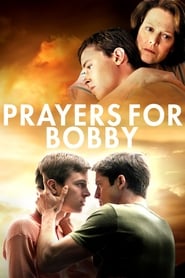
star 8.1Bobby Griffith was his mother's favorite son, the perfect all-American boy growing up under deeply religious influences in Walnut Creek, California. Bobby was also gay. Struggling with a conflict no one knew of, much less understood, Bobby finally came out to his family.Wesley
2009
Wesley
2009
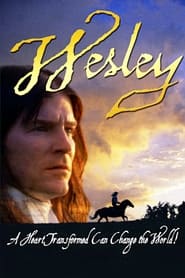
star 7.7The year is 1732. John Wesley, an irritatingly self-righteous instructor at Oxford is offered the chance to go to the new colony of Georgia, where he hopes to preach to the Indians. John struggles with his failure and fears and is finally experiences the peace he longed for: "I felt my heart strangely warmed." Wesley begins to preach about his experience of saving faith, but is turned out of most churches in London. Despite opposition, mob violence that seeks to break up their meetings, Wesley and his "Methodies" establish social ministries to the poor that transformed the face of England. Today, almost 75 million people worldwide trace their spiritual heritage back to John Wesley.Defiance
2008
Defiance
2008
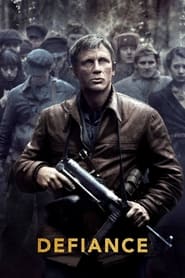
star 6.8Based on a true story, during World War II, four Jewish brothers escape their Nazi-occupied homeland of West Belarus in Poland and join the Soviet partisans to combat the Nazis. The brothers begin the rescue of roughly 1,200 Jews still trapped in the ghettos of Poland.Max Manus: Man of War
2008
star 7.1Max Manus is a Norwegian 2008 biographic war film based on the real events of the life of resistance fighter Max Manus (1914–96), after his contribution in the Winter War against the Soviet Union. The story follows Manus through the outbreak of World War II in Norway until peacetime in 1945.North Face
2008
North Face
2008
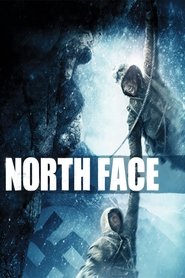
star 7.2North Face tells the story of two German climbers Toni Kurz and Andreas Hinterstoisser and their attempt to scale the deadly North Face of the Eiger.A Woman in Berlin
2008
A Woman in Berlin
2008
star 6.6A woman tries to survive the invasion of Berlin by the Soviet troops during the last days of World War II.Passchendaele
2008
Passchendaele
2008
star 6.1Sergeant Michael Dunne fights in the 10th Battalion, AKA The "Fighting Tenth" with the 1st Canadian Division and participated in all major Canadian battles of the war, and set the record for highest number of individual bravery awards for a single battleW.
2008
W.
2008
star 6.2The story of the eventful life of George W. Bush—his struggles and triumphs, how he found both his wife and his faith—and the critical days leading up to his decision to invade Iraq.Killing Kasztner
2008
Killing Kasztner
2008
How much should you negotiate with the enemy? In Israel, the debate over that question evoked fury to the point of assassination. Such was the case of Kasztner. Dr Israel (Rezso) Kasztner, a Hungarian Jew who tried to rescue the last million Jews of Europe by negotiating face to face with Nazi leader Adolf Eichmann, was gunned down by another Jew who never set foot in Nazi Europe. After 50 years, his assassin Ze'ev Eckstein breaks his silence on the fateful night he shot and killed Kasztner. (Storyville)Séraphine
2008
Séraphine
2008
star 6.7The tragic story of French naïve painter Séraphine Louis aka Séraphine de Senlis (1864-1942), a humble servant who becomes a gifted self-taught painter. Discovered by prominent critic and collector William Uhde, she came to prominence between the wars grouped with other naïve painters like Henri Rouseau only to descend into madness and obscurity with the onset of the Great Depression and World War II.The Lucky Ones
2008
The Lucky Ones
2008
star 6.4The story revolves around three soldiers — Colee, T.K. and Cheaver — who return from the Iraq War after suffering injuries and learn that life has moved on without them. They end up on an unexpected road trip across the U.S.The Baader Meinhof Complex
2008
star 7When German police viciously quell a protest against the shah of Iran, popular journalist Ulrike Meinhof rebels against her dishonest marriage, walks away from her children and joins radical anarchist Andreas Baader. Together with Baader's girlfriend, Gudrun Ensslin, they form the violent Red Faction Army, and together perpetrate a slew of terrorist attacks as a way of disrupting the fabric of what they see as an increasingly fascist state.It's Hard Being Loved by Jerks
2008
star 6.8The murder of Dutch filmmaker Theo van Gogh by an Islamic extremist in 2004, followed by the publishing of twelve satirical cartoons depicting the prophet Mohammed that was commissioned for the Danish newspaper Jyllands-Posten, provides the incendiary framework for Daniel Leconte's provocative documentary, It's Hard Being Loved by Jerks.