New Movies on Kanopy - Page 448
All Services
Free Services
 Netflix
 Amazon Prime Video
 Apple iTunes
 Apple TV Plus
 Disney Plus
 Google Play Movies
 Paramount Plus
 Hulu
Hulu
 HBO Max
 YouTube
 fuboTV
 Peacock
 Peacock Premium
 Amazon Video
 The Roku Channel
 AMC+
AMC on Demand
AMC+
AMC on Demand
 Kocowa
 Hoopla
 The CW
 Vudu
Vudu
 Starz
Starz
 Showtime
 PBS
PBS
 Pantaflix
 FXNow
FXNow
 Tubi TV
 Kanopy
 Comedy Central
 Crunchyroll
 Microsoft Store
 Redbox
 Sun Nxt
 ABC
ABC
 DIRECTV
 Crackle
 Fandor
 Plex
Plex
Netflix
Amazon Prime Video
Apple iTunes
Apple TV Plus
Disney Plus
Google Play Movies
Paramount Plus
Hulu
HBO Max
YouTube
fuboTV
Peacock
Peacock Premium
Amazon Video
The Roku Channel
AMC+
AMC on Demand
Kocowa
Hoopla
The CW
Vudu
Starz
Showtime
PBS
Pantaflix
FXNow
Tubi TV
Kanopy
Comedy Central
Crunchyroll
Microsoft Store
Redbox
Sun Nxt
ABC
DIRECTV
Crackle
Fandor
Plex

Indians Like Us
2013
Indians Like Us
2013
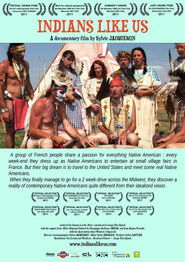
Every weekend, a small group of French citizens dress up in Native regalia and make appearances at various village fairs alongside their countrymen in France. However, in order to fulfill their dream, they must travel to the United States and meet "real Indians." Together, they finally manage a two-week drive across the Midwest and discover that the reality of contemporary Native Americans is quite different from their portrayed envisioning. Filled with unforeseen emotion, their road movie visits Pine Ridge, Wounded Knee, and Little Big Horn, and along the way, it captures surreal and enlightening encounters on both sides.Cloudette
2013
Cloudette
2013
Sometimes being small has its advantages. When Cloudette wants to do something big, she discovers that a little cloud can make a big difference.Seoul Station
2013
Seoul Station
2013
August 2011, Seoul station was ‘reborn’ restoring the historical traces it once had. It was named as ‘Cultural Station 284’. To commemorate this very day, an opening exhibition was held, named as ‘COUNTDOWN’. However, among all the fine works of art alongside the exhibition, the best piece of art was not to be found. To be precise, that very piece of art was not available at that time. That work of art needed time to be established. After observing and speculating the abject moments of the restoration process, finally, it was completed.Innocence Betrayed
2013
Innocence Betrayed
2013
star 6In 1990 and 1991, three Aboriginal children were murdered in a small country town in Australia. Over 20 years later, the parents of those children are still fighting for justice.(NULL)
2013
(NULL)
2013
star 8.1An unknown girl breaks out of her daily grind by undergoing an intense audio-visual trip.Getting to Know Jon Scieszka
2013
star 5.4A light-hearted romp with beloved, award winning author/illustrator and the first National Ambassador for Young People's Literature. Get to know him as he discusses his life and aspirations.Valley of the Heroes
2013
Valley of the Heroes
2013
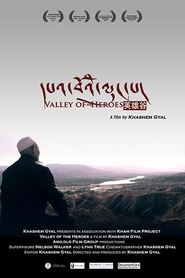
This documentary, a project of Kham Film Project, offers a rare portrait of Tibetan Muslims in the Hualong area of eastern Tibet/Qinghai Province. Issues of identity and language are explored in this intimate and sensitive film.Joystick Warriors
2013
Joystick Warriors
2013
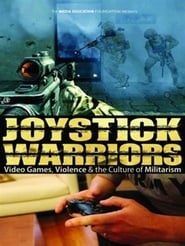
For years, there has been widespread speculation, but very little consensus, about the relationship between violent video games and violence in the real world. Joystick Warriors provides the clearest account yet of the latest research on this issue. Drawing on the insights of media scholars, military analysts, combat veterans, and gamers themselves, the film trains its sights on the wildly popular genre of first-person shooter games, exploring how the immersive experience they offer links up with the larger stories we tell ourselves as a culture about violence, militarism, guns, and manhood. Along the way, it examines the game industry's longstanding working relationship with the US military and the American gun industry, and offers a riveting examination of the games themselves -- showing how they work to sanitize, glamorize, and normalize violence while cultivating dangerously regressive attitudes and ideas about masculinity and militarism.Memory of Forgotten War
2013
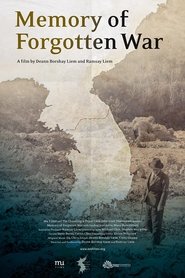
Unknown or forgotten by most Americans, the Korean War divided a people with several millenniums of shared history. Memory of Forgotten War conveys the human costs of military conflict through deeply personal accounts of four Korean American survivors whose experiences and memories embrace the full circle of the war: its outbreak and the day-to-day struggle for survival, separation from family members across the DMZ, the aftermath of a devastated Korean peninsula, and immigration to the United States. Each person reunites with relatives in North Korea conveying beyond words the meaning of four decades of family loss. Their stories belie the notion that war ends for civilians when the guns are silenced and foreshadow the futures of countless others displaced by ongoing military conflict today.Megastorm Aftermath
2013
Megastorm Aftermath
2013
star 7.2In October 2012, Superstorm Sandy cut a path of devastation across the Caribbean and the East Coast of the United States, killing hundreds and causing tens of billions of dollars in damage.The Tulip Bubble
2013
The Tulip Bubble
2013
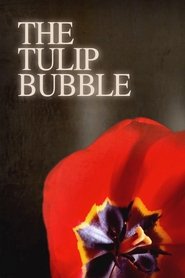
It was the first big bust in the history of booms -- the burst of the tulip bubble. Once, tulip bulbs were worth their weight in gold and became the object of fantastic financial speculation. But, then...Leon Trotsky: A Personality in the 20th Century
2013
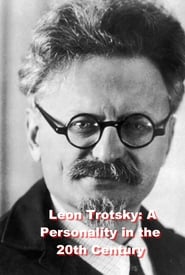
Leon Trotsky is considered one of the most controversial revolutionary figures of his time. Was he a practical revolutionary or a naive idealist? On the practical side, he was the mastermind behind the Bolshevik seizure of power in 1917, and was totally ruthless during the ensuing Civil War. As an idealist, he was committed to the pursuit of international revolution, but created many political enemies. After Lenin's death, Trotsky lost in a power struggle with Stalin, and later was expelled from the Communist Party. Trotsky was exiled from the Soviet Union, eventually finding refuge in Mexico. In 1940, Stalin ordered his assassination, and Trotsky died after being struck in the head with an ice-pick. History records that Trotsky was a master theoretician, a skillful propagandist and a brilliant orator.Absence
2013
Absence
2013
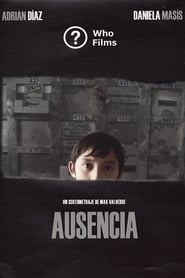
Luis died prematurely. Since then, Enrique's life has been sleeping beside his father's tomb. He tries to play with other kids, he tries hard to play the game of his life. Yet, he ends up curled up in his solitude, curled up next to his dad's tomb. This absence gets interrupted by Mary and Gold - a girl and her doll - who bloom in his life one casual day. The girl is both truth and lie. Mary is hope and she manages to make communication possible between father and son again, once again. But, unlike death, the opened door can't last forever.William Yang: My Generation
2013
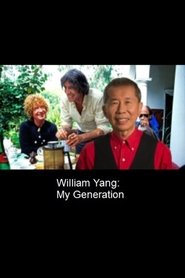
star 7In the ’70s and ’80s, photographer William Yang captured Sydney’s emerging artistic, literary, theatrical and queer circles; as well as his friendships with artists, writers and fashion designers such as Brett Whiteley, Patrick White, Linda Jackson and Jenny Kee. With myriad images and his trademark candid narration, Yang leads us though this beguilingly decadent and creative era.A Gesar Bard's Tale
2013
A Gesar Bard's Tale
2013
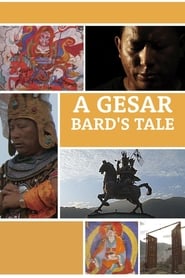
As a boy, Dawa was an illiterate Tibetan nomad whose life revolved around herding yaks. At 13, his life changed: through a series of visions, Dawa acquired the gift of telling the epic story of Tibet’s King Gesar. Now, at 35, Dawa receives a salary from the government as a guardian of national cultural heritage and is regarded as a holy man by his community. When an earthquake reduces his hometown to rubble, redevelopment of the region takes a giant leap forward. In the midst of such seismic shifts, Dawa seeks healing from King Gesar and other divine protectors of the land.Catching Hell in the City of Angels
2013
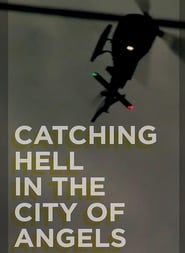
star 6A feature length documentary film representing the 'B' side to the 2012 release 'Something from Nothing: The Art of Rap'. A hard hitting story of life and death in South Central Los Angeles. A struggle beyond the nearby Hollywood limelight among people for whom state intervention comes mostly with a siren attached. Amsterdam Film Festival Winner World Cinema Documentary Editing Award 2014.Young Lakota
2013
Young Lakota
2013
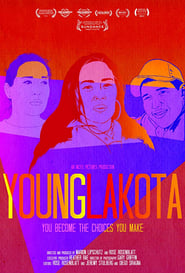
star 8Three young people living in South Dakota's Pine Ridge Reservation are faced with difficult challenges.Raising Shrimp
2013
Raising Shrimp
2013
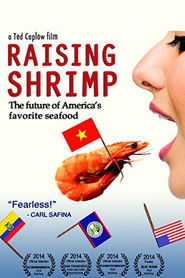
America's most popular and iconic seafood is really a cheap foreign import. Raising Shrimp paints the economic and medical perils of an outsourced food supply,and follows Ted, an engineer, and Andy, an ecologist, on a quest for a better shrimp. In Texas, they find fishermen pushed from riches to rags by imports. In Belize, they find shrimp farmers striving for a natural balance with jungles and lagoons, but again globalization takes its toll, and the best farm collapses. Back home in the U.S. pioneering farmers harness the power of bacteria to grow shrimp inside a darkened warehouse without any waste. Encouraged, Andy and Ted see that raising shrimp this way offers hope for all.The Stolen: Spain's Missing Babies
2013
Up to 300,000 babies in Spain were stolen from 'undesirable' families and trafficked by an unholy alliance of doctors, the Catholic Church and Franco's Secret police. Now, decades on, some of these stolen children are trying to find their biological families.Play: A Vygotskian Approach
2013
This film offers both theoretical and practical perspectives on dramatic play. Using enchanting sequences of young children playing house, doctor's office, rescue squadron, and trick or treating, the theoretical positions of Lev Vygotsky and other prominent theorists have taken in systematically studying play are illustrated. This film carefully reviews the traditional ways of studying play: the Freudian-Eriksonian emphasis on its emotional content, the Piagetian view of its importance in symbolic representation and the social psychological approach of looking at how play contributes to socialization. Lev Vygotsky's unique contribution of seeing play as an arena in which a child can begin to master her own behavior is carefully detailed. The video ends with practical suggestions for fostering high level play in early childhood settings.