New Comedy Movies on Kanopy - Page 74
All Services
Free Services
 Netflix
 Amazon Prime Video
 Apple iTunes
 Apple TV Plus
 Disney Plus
 Google Play Movies
 Paramount Plus
 Hulu
Hulu
 HBO Max
 YouTube
 fuboTV
 Peacock
 Peacock Premium
 Amazon Video
 The Roku Channel
 AMC+
AMC on Demand
AMC+
AMC on Demand
 Kocowa
 Hoopla
 The CW
 Vudu
Vudu
 Starz
Starz
 Showtime
 PBS
PBS
 Pantaflix
 FXNow
FXNow
 Tubi TV
 Kanopy
 Comedy Central
 Crunchyroll
 Microsoft Store
 Redbox
 Sun Nxt
 ABC
ABC
 DIRECTV
 Crackle
 Fandor
 Plex
Plex
Netflix
Amazon Prime Video
Apple iTunes
Apple TV Plus
Disney Plus
Google Play Movies
Paramount Plus
Hulu
HBO Max
YouTube
fuboTV
Peacock
Peacock Premium
Amazon Video
The Roku Channel
AMC+
AMC on Demand
Kocowa
Hoopla
The CW
Vudu
Starz
Showtime
PBS
Pantaflix
FXNow
Tubi TV
Kanopy
Comedy Central
Crunchyroll
Microsoft Store
Redbox
Sun Nxt
ABC
DIRECTV
Crackle
Fandor
Plex

The Spirit Compendium
2008
Tom’s girlfriend dies in a tragic accident and he plunges into depression. May is shunned by the people around her because she claims she can see spirits. Sam is an expert masseuse and gives Tom great massages. Sam’s family loses their fortune and is forced to move in with his friend Tom, sleeping naked on the same bed. The three friends embrace on a journey that begins with the mysterious disappearance of Tom’s father, who leaves Tom with only a spiritual book and an ancient Tibetan Dzi Bead. It is not until Sam is trapped in a spiritual realm that they realise the importance of the items.Angus, Thongs and Perfect Snogging
2008
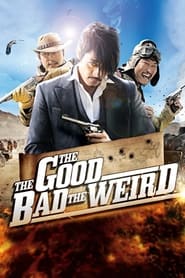
star 6.5Georgia Nicolson is fourteen, lives with nosey parents who don't understand her, an annoying three year old sister and has to wear a beret to school. She would, however, rather be blonde, have a smaller nose and a boyfriend. Revolving around her hilarious journal entries, prepare to be engulfed in the world of the soaring joys and bottomless angst of being a teenager.The Good, the Bad, the Weird
2008
star 7.2The story of three Korean outlaws in 1930s Manchuria and their dealings with the Japanese army and Chinese and Russian bandits. The Good (a bounty hunter), the Bad (a hitman), and the Weird (a thief) battle the army and the bandits in a race to use a treasure map to uncover the riches of legend.Miss Conception
2008
Miss Conception
2008
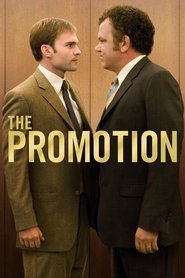
star 4.3Georgina is an ambitious young London professional who learns she has only one month left in which to conceive a child. After exhausting all possibilities with her baby-phobic boyfriend, Georgina turns to her wildly optimistic friend Clem, with whom she sets out to identify and "land" the perfect father for her child.The Promotion
2008
The Promotion
2008
star 5.3Two assistant managers of a corporate grocery store vie for a coveted promotion.JCVD
2008
JCVD
2008
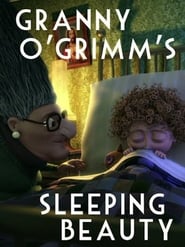
star 6.6Between his tax problems and his legal battle with his wife for the custody of his daughter, these are hard times for the action movie star who finds that even Steven Seagal has pinched a role from him! This fictionalized version of Jean-Claude Van Damme returns to the country of his birth to seek the peace and tranquility he can no longer enjoy in the United States, but inadvertently gets involved in a bank robbery with hostages.Granny O'Grimm's Sleeping Beauty
2008
star 5.7Granny O'Grimm, a seemingly sweet old lady, loses the plot as she tells her version of Sleeping Beauty to her terrified granddaughter.A Christmas Tale
2008
A Christmas Tale
2008
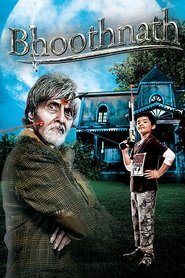
star 6.8When their regal matriarch falls ill, the troubled Vuillard family come together for a hesitant Christmastime reunion. Among them is rebellious ne'er-do-well Henri and the uptight Elizabeth. Together under the same roof for the first time in many years, their intricate, long denied resentments and yearnings emerge again.Bhoothnath
2008
Bhoothnath
2008
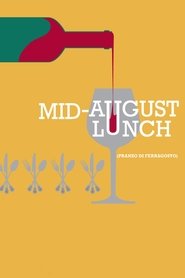
star 6.1Moving into a new house, a family witnesses an unfriendly ghost who wants to drive them away from the house. However, he befriends a little boy who changes his outlook forever.Mid-August Lunch
2008
Mid-August Lunch
2008
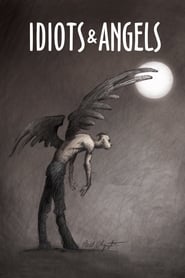
star 6.8Gianni is a middle-aged man living in Rome with his imposing and demanding elderly mother. His only outlet from her and the increasing debt into which they are sinking, are the increasingly frequent quiet sessions at the local tavern. As an Oriental saying goes, 'Moments of crisis are moments of opportunities'. These appear during the celebration of the holiday of Ferragosto on 15 August. That's when everybody leaves town to have fun. Opportunity knocks on Gianni's door in the most unexpected way.Idiots and Angels
2008
Idiots and Angels
2008
star 6.8Angel, a selfish rotter is hanging around in a local bar, groping the wife of the barman and dealing with weapons. One morning he wakes up finding a pair of wings growing at his back. These wings do good deeds against his nature. But suddenly he finds himself fighting those who want these wings for their own dark plans.Happy-Go-Lucky
2008
Happy-Go-Lucky
2008
star 6.6A look at a few chapters in the life of Poppy, a cheery, colorful, North London schoolteacher whose optimism tends to exasperate those around her.Make-Out with Violence
2008
star 4.4A genre-bending tale of a boy trying to fulfill his unrequited love for a girl who has risen from the dead. It tells the story of twin brothers Patrick and Carol Darling, newly graduated from high school and struggling to come to terms with the mysterious disappearance of their friend, the bright and beautiful Wendy Hearst. When a drive through the countryside surrounding their suburban community leads to the discovery of Wendy's mysteriously animated corpse, the boys secretly transport the un-dead Wendy to an empty house in hopes of somehow bringing her back to life. As the sweltering summer pushes on, they must maintain the appearance of normalcy for their friends and family as they search for ways to revive the Wendy they once knew, or, failing that, to satisfy their own quests for love amongst the living and the dead.George Carlin: It's Bad for Ya!
2008
star 7.9It's Bad For Ya, Carlin's Emmy nominated 14th and final HBO special from March of 2008 features Carlin's noted irreverent and unapologetic observations on topics ranging from death, religion, bureaucracy, patriotism, overprotected children and big business to the pungent examinations of modern language and the decrepit state of the American culture.Charlie Bartlett
2008
Charlie Bartlett
2008
star 6.7Awkward teenager Charlie Bartlett has trouble fitting in at a new high school. Charlie needs some friends fast, and decides that the best way to find them is to appoint himself the resident psychiatrist. He becomes one of the most popular guys in school by doling out advice and, occasionally, medication, to the student body.Welcome to the Sticks
2008
star 6.7Although living a comfortable life in Salon-de-Provence, a charming town in the South of France, Julie has been feeling depressed for a while. To please her, Philippe Abrams, a post office administrator, her husband, tries to obtain a transfer to a seaside town, on the French Riviera, at any cost. The trouble is that he is caught red-handed while trying to scam an inspector. Philippe is immediately banished to the distant unheard of town of Bergues, in the Far North of France...Mister Lonely
2008
Mister Lonely
2008
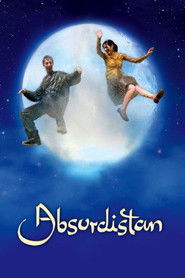
star 6.5In Paris, a young American who works as a Michael Jackson lookalike meets Marilyn Monroe, who invites him to her commune in Scotland, where she lives with Charlie Chaplin and her daughter, Shirley Temple.Absurdistan
2008
Absurdistan
2008
star 6.1An allegorical comedy centered on two childhood sweethearts who seem destined for one another until the women of their isolated village, angered by male indifference toward the water shortage, go on a sex strike that threatens the young couple's first night of love.The Great Buck Howard
2008
star 6When a law school dropout answers an advertisement to be a personal assistant he unknowingly signs on to work for a belligerent has-been magician struggling to resurrect his career. This leads to a journey across the country staging the comeback of a lifetime.Teeth
2008
Teeth
2008
star 5.4Dawn is an active member of her high-school chastity club but, when she meets Tobey, nature takes its course, and the pair answer the call. They suddenly learn she is a living example of the vagina dentata myth, when the encounter takes a grisly turn.