New History Movies on Kanopy - Page 32
All Services
Free Services
 Netflix
 Amazon Prime Video
 Apple iTunes
 Apple TV Plus
 Disney Plus
 Google Play Movies
 Paramount Plus
 Hulu
Hulu
 HBO Max
 YouTube
 fuboTV
 Peacock
 Peacock Premium
 Amazon Video
 The Roku Channel
 AMC+
AMC on Demand
AMC+
AMC on Demand
 Kocowa
 Hoopla
 The CW
 Vudu
Vudu
 Starz
Starz
 Showtime
 PBS
PBS
 Pantaflix
 FXNow
FXNow
 Tubi TV
 Kanopy
 Comedy Central
 Crunchyroll
 Microsoft Store
 Redbox
 Sun Nxt
 ABC
ABC
 DIRECTV
 Crackle
 Fandor
 Plex
Plex
Netflix
Amazon Prime Video
Apple iTunes
Apple TV Plus
Disney Plus
Google Play Movies
Paramount Plus
Hulu
HBO Max
YouTube
fuboTV
Peacock
Peacock Premium
Amazon Video
The Roku Channel
AMC+
AMC on Demand
Kocowa
Hoopla
The CW
Vudu
Starz
Showtime
PBS
Pantaflix
FXNow
Tubi TV
Kanopy
Comedy Central
Crunchyroll
Microsoft Store
Redbox
Sun Nxt
ABC
DIRECTV
Crackle
Fandor
Plex

Ip Man 2
2010
Ip Man 2
2010
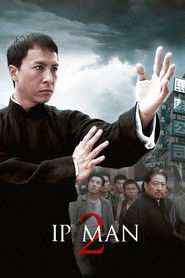
star 7.5Having defeated the best fighters of the Imperial Japanese army in occupied Shanghai, Ip Man and his family settle in post-war Hong Kong. Struggling to make a living, Master Ip opens a kung fu school to bring his celebrated art of Wing Chun to the troubled youth of Hong Kong. His growing reputation soon brings challenges from powerful enemies, including pre-eminent Hung Gar master, Hung Quan.Behind the Burly Q
2010
Behind the Burly Q
2010
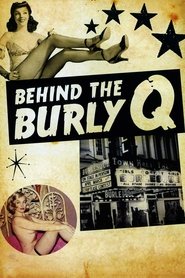
star 4.9Dive into more than a century of decadence with this tantalizing look at the evolution of burlesque. Cabaret star Leslie Zemeckis traces the art form from vaudeville-style variety show through its extinction and contemporary rebirth. Vintage photos, film clips and ads illustrate burlesque's resilient history and how the public's sexual appetite kept it alive amid moral and legal ado.Not the Messiah (He's a Very Naughty Boy)
2010
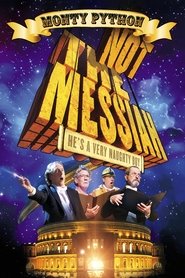
star 6.9Not The Messiah (He's a Very Naughty Boy) is a comic oratorio based on Monty Python's Life of Brian, which retells the tragic tale of Mandy, impregnated by a Roman soldier, giving birth to Brian, a reluctant revolutionary of the People's Front of Judea who falls in love with Judith, gets mistaken for a Messiah and is arrested by the Romans and sentenced to be crucified. It ranges in reference from Handel, through a naughty Mozart duet, to the Festival of Nine Carols, Bob Dylan, and the classic finale "Always Look on the Bright Side of Life".The Round Up
2010
The Round Up
2010
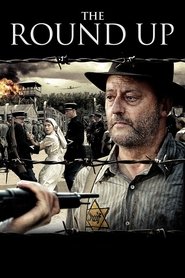
star 7.5A faithful retelling of the 1942 "Vel' d'Hiv Roundup" and the events surrounding it.Reel Injun
2010
Reel Injun
2010
star 7The evolution of the depiction of the various Native American peoples in cinema, from the silent era to the present day: how their image on the screen has changed the way to understand their history and culture.Secrets of Stonehenge
2010
star 8Dated to the late Stone Age, Stonehenge may be the best-known and most mysterious relic of prehistory. Every year, a million visitors are drawn to England to gaze upon the famous circle of stones, but the monument's meaning has continued to elude us. Now investigations inside and around Stonehenge have kicked off a dramatic new era of discovery and debate over who built Stonehenge and for what purpose. How did prehistoric people quarry, transport, sculpt, and erect these giant stones? Granted exclusive access to the dig site at Bluestonehenge, a prehistoric stone-circle monument recently discovered about a mile from Stonehenge, NOVA cameras join a new generation of researchers finding important clues to this enduring mystery.Creation
2009
Creation
2009
star 6.4A psychological, heart-wrenching love story that provides a unique and inside look at Charles Darwin. Torn between faith and science, he struggles to finish his legendary book "On the Origin of the Species," which goes on to become the foundation for evolutionary biology.Vision – From the Life of Hildegard von Bingen
2009
star 6Hildegard von Bingen was truly a woman ahead of her time. A visionary in every sense of the word, this famed 12th-century Benedictine nun was a Christian mystic, composer, philosopher, playwright, poet, naturalist, scientist, physician, herbalist and ecological activist.The Time That Remains
2009
star 7.1An examination of the creation of the state of Israel in 1948 through to the present day. A semi-biographic film, in four chapters, about a family spanning from 1948 until recent times. Combined with intimate memories of each member, the film attempts to portray the daily life of those Palestinians who remained in their land and were labelled "Israeli-Arabs," living as a minority in their own homeland.Carmel
2009
Carmel
2009
star 7Israeli filmmaker Amos Gitaï offers a look impressionist long history of armed conflict in their nation.Che: Rise and Fall
2009
Che: Rise and Fall
2009
Che: Rise and Fall, was entirely shot in Cuba at the time the remains of the legendary warrior were being airlifted from Bolivia to his final resting place in Santa Clara. The documentary brings out, for the first time, the voice of his brothers in arms in Sierra Maestra, Congo and Bolivia. But above all, that of Alberto Granados with whom the young CHE Guevara rode on a motorcycle out of Argentina on a trip that will end, tragically, sixteen years later in the jungles of Bolivia.Vincere
2009
Vincere
2009
star 6.7The story of the descent into madness of Mussolini's secret first wife, Ida Dasler, who was seduced by his passion and vigor but blind to the fascist dictator's many flaws.Agora
2009
Agora
2009
star 7A historical drama set in Roman Egypt, concerning philosopher Hypatia of Alexandria and her relationship with her slave Davus, who is torn between his love for her and the possibility of gaining his freedom by joining the rising tide of Christianity.City of Life and Death
2009
star 7.4In 1937, during the height of the Second Sino-Japanese War, the Imperial Japanese Army has just captured Nanjing, then-capital of the Republic of China. What followed was known as the Nanking Massacre, or the Rape of Nanking, a six week period wherein tens of thousands of Chinese soldiers and civilians were killed.Aluku liba
2009
Aluku liba
2009
star 5After years of serving in the army and drifting across the Amazon, Loeti yearns to go back to his land, to find his roots, and be amongst his people, the Aluku, the first Maroons of French Guiana and Suriname. One night, due to a crackdown on illegal gold mining, Loeti is forced to flee the site where he is working. Lost in the Amazon forest, he must use what is left of his childhood knowledge of the forest, to find his way back and combat the many deadly perils that lurk with every step. He is guided by the spirits, the animals, a compass, and his prayers. An intense reunion confronts Loeti with a changing world where old traditions and values are both challenged and influenced by the invading modern world. Loeti must deal with his past and grapple with what remains of the Aluku's ancient African customs by immersing himself in their magical world.Journey to 10,000 BC
2009
Journey to 10,000 BC
2009
star 4.710,000 B.C. was a time of cataclysmic change on Earth. Extreme climactic fluctuations hurled the planet into a minor ice age; megafauna like the saber-toothed tiger and woolly mammoth were suddenly becoming extinct; and early humans began to inhabit North America. Cold and hungry, their fragile communities undertook perilous hunting expeditions. The slaughter of a single mammoth, weighing nearly ten tons, could be the difference between survival and death. Journey to 10,000 BC. brings this unique and thrilling period to life, and investigates the geologic and climate changes that scientists are just beginning to understand. In a major forensic investigation, History visits early human archaeological sites to uncover fossilized bones, ancient dwellings, and stone weapons, and uses state-of-the-art CGI to recreate the treacherous mammoth hunts and the devastating impact of a comet colliding with Earth.Defiance
2008
Defiance
2008
star 6.8Based on a true story, during World War II, four Jewish brothers escape their Nazi-occupied homeland of West Belarus in Poland and join the Soviet partisans to combat the Nazis. The brothers begin the rescue of roughly 1,200 Jews still trapped in the ghettos of Poland.Max Manus: Man of War
2008
star 7.1Max Manus is a Norwegian 2008 biographic war film based on the real events of the life of resistance fighter Max Manus (1914–96), after his contribution in the Winter War against the Soviet Union. The story follows Manus through the outbreak of World War II in Norway until peacetime in 1945.Ip Man
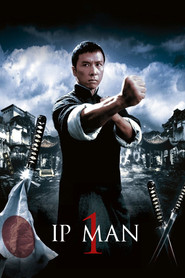
2008
Ip Man
2008
star 7.8A semi-biographical account of Yip Man, the first martial arts master to teach the Chinese martial art of Wing Chun. The film focuses on events surrounding Ip that took place in the city of Foshan between the 1930s to 1940s during the Second Sino-Japanese War. Directed by Wilson Yip, the film stars Donnie Yen in the lead role, and features fight choreography by Sammo Hung.Unconquered: Allan Houser and the Legacy of One Apache Family
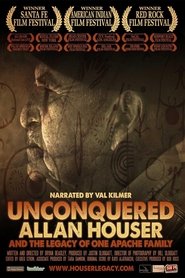
2008
In decades past, Native American artists who wanted to sell to mainstream collectors had little choice but to create predictable, Hollywood-style western scenes. Then came a generation of painters and sculptors led by Allan Houser (or Haozous), a Chiricahua Apache artist with no interest in stereotyped imagery and a belief that his own rich heritage was compatible with modernist ideas and techniques. Narrated by actor Val Kilmer and originally commissioned as part of an exhibit of Houser’s work at the Oklahoma History Center, this program depicts the artist’s tribal ancestry, his rise to regional and national acclaim, and the continuing success of his sons as they expand upon and depart from their father’s achievements. Key works are documented, as is Houser’s tenure at the Santa Fe–based Institute of American Indian Arts.