New History Movies on The Roku Channel - Page 14
All Services
Free Services
 Netflix
 Amazon Prime Video
 Apple iTunes
 Apple TV Plus
 Disney Plus
 Google Play Movies
 Paramount Plus
 Hulu
Hulu
 HBO Max
 YouTube
 fuboTV
 Peacock
 Peacock Premium
 Amazon Video
 The Roku Channel
 AMC+
AMC on Demand
AMC+
AMC on Demand
 Kocowa
 Hoopla
 The CW
 Vudu
Vudu
 Starz
Starz
 Showtime
 PBS
PBS
 Pantaflix
 FXNow
FXNow
 Tubi TV
 Kanopy
 Comedy Central
 Crunchyroll
 Microsoft Store
 Redbox
 Sun Nxt
 ABC
ABC
 DIRECTV
 Crackle
 Fandor
 Plex
Plex
Netflix
Amazon Prime Video
Apple iTunes
Apple TV Plus
Disney Plus
Google Play Movies
Paramount Plus
Hulu
HBO Max
YouTube
fuboTV
Peacock
Peacock Premium
Amazon Video
The Roku Channel
AMC+
AMC on Demand
Kocowa
Hoopla
The CW
Vudu
Starz
Showtime
PBS
Pantaflix
FXNow
Tubi TV
Kanopy
Comedy Central
Crunchyroll
Microsoft Store
Redbox
Sun Nxt
ABC
DIRECTV
Crackle
Fandor
Plex

Man in Red Bandana
2017
Man in Red Bandana
2017
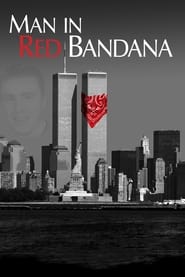
star 8.5"Man in Red Bandana" is about Welles Remy Crowther, an extraordinary 9/11 hero. However, how his heroics became known is even more remarkable. Eight months after the disaster, his parents learned about how their son spent his last hour due to an ordinary object ... a red bandana. This revelation dramatically shifts their perspective on their loss. After hearing his remarkable story and how it unfolds, viewers will see how the actions of one man have touched 1,000s. This inspirational segment of the film depicts the unique, diverse and folklore ways that Welles is honored throughout the United States including in art, sports and song. Even President Barack Obama pays homage to this young man in the film. Our uplifting ending culminates in the revelation of a secret about Welles that can only be described as "perfect".El Che
2017
El Che
2017
star 5.8Ernesto "Che" Guevara's controversial story told by the Mexican writer Paco Ignacio Taibo II. He revisits places where the guerrilla and revolutionary leader has passed and interviews people who knew Che, making revelations about this important figure in Cuba's political history.Temple
2017
Temple
2017
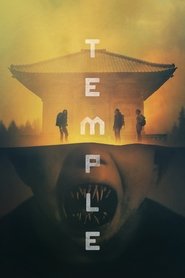
star 3.9Three American tourists follow a mysterious map deep into the jungles of Japan searching for an ancient temple. When spirits entrap them, their adventure quickly becomes a horrific nightmare.Paradise Club
2017
Paradise Club
2017
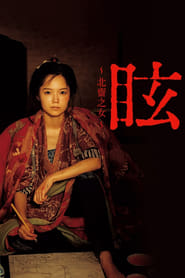
star 2.9During the height of the social revolution, a young dancer searches for salvation when she chooses to leave paradise.Final Portrait
2017
Final Portrait
2017
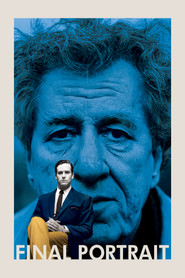
star 6Paris, 1964. The Swiss sculptor and painter Alberto Giacometti, one of the most accomplished and respected artists of his generation, asks his friend, the American writer James Lord, to sit for a portrait, assuring him that it will take no longer than two or three hours, an afternoon at the most.A Taxi Driver
2017
A Taxi Driver
2017
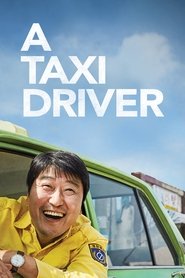
star 8May, 1980. Man-seob is a taxi driver in Seoul who lives from hand to mouth, raising his young daughter alone. One day, he hears that there is a foreigner who will pay big money for a drive down to Gwangju city. Not knowing that he’s a German journalist with a hidden agenda, Man-seob takes the job.The Battleship Island
2017
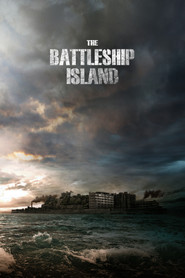
star 7.1During the Japanese colonial era, roughly 400 Korean people, who were forced onto Battleship Island 'Hashima Island' to mine for coal, attempt to escape.The Summer of Love
2017
The Summer of Love
2017
star 7.2In 1967 an expressive, colourful musical force painted a backdrop of social change, fashion, love, turmoil and war. The world remembers the Summer of Love in 1967 as one of those moments when a unique and creative explosion of music and popular culture arrived in the UK and USA.Brotherhood of Blades II: The Infernal Battlefield
2017
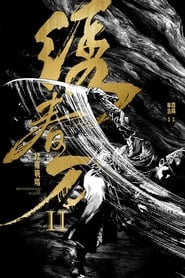
star 6.8An imperial guard searches for the truth behind a conspiracy that framed him and his partners. The proof of his innocence lies with a wanted woman named Bei Zhai... but will she reveal what she knows? In this intense prequel to BROTHERHOOD OF BLADES, the only thing he can truly trust is his sword.God of War
2017
God of War
2017
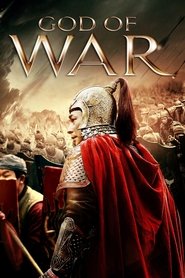
star 6.4During the 16th century, pirates rule the Chinese coastline, pillaging the small villages and terrorizing the citizens. When maverick leader Commander Yu enlists the help of a sharp young general, they devise a plan to defeat the pirates. A violent clash of wit and weapons will decide who will rule the land.Bikini Blue
2017
Bikini Blue
2017
star 3A historical drama set in 1950s Britain. Dora Szumski, 30, is an Englishwoman married to a Polish immigrant, Eryk, a former Polish Army officer, who is left with no choice by the post-war balance of power, condemned to die in his homeland or emigrate. After an unsuccessful suicide attempt, Eryk stays in Mabledon Park, a psychiatric hospital designed for former Polish soldiers suffering from war trauma. Erik's illness resulting from a past that has been haunted and concealed from his wife not only becomes a barrier to the couple's future, but also a threat to Erik's life. Dora decides to find out what the secret of her husband's illness is.Kurara: The Dazzling Life of Hokusai's Daughter
2017
star 8.1Oei, later known as Katsushika Oi, was born the third daughter of Edo’s talented painter Katsushika Hokusai and his second wife Koto. Although Oei became the wife of a town painter for a time, her love of the paintbrush more than her husband spelt disaster and she comes back home to Hokusai from the family she had married into. This is how Oei starts to help her father out in his painting of the “insurmountable high wall”. Meanwhile, Oei can only talk to the painter Ikeda Zenjiro, who is her father’s student, about her pain and worries. Zenjiro has taken Edo by storm as Keisai Eisen, the master of ukiyo-e portraying beautiful women. He visits regularly because he admires Hokusai and secretly likes Oei although their relationship is like childhood friends. Oei respects her father whose paintings fascinated her and continues to work as a painter who supports him behind the scenes. When Hokusai’s masterpiece Thirty-six Views of Mount Fuji was completed, she was also by his side.Amazon Adventure
2017
Amazon Adventure
2017
star 4This film follows scientist Henry Bates as he explores the Amazon for proof of natural selection.Far Western
2017
Far Western
2017
star 4The phenomenal story of the transplant of American country music to post-World War II Japan.The Spacewalker
2017
The Spacewalker
2017
star 7March 1965. In the heat of the Cold War, the USA and the USSR are competing for supremacy in space. What both superpowers aim for in this race, is to be the first to have a man walk in outer space. To accomplish that, no price is too high and no risk is too great. Now it’s up to the unlikely duo of a seasoned war veteran and a hot-headed test-pilot to fulfill this mission. Two men in a tiny spaceship, without proper testing, facing the complete unknown. They were supposed to do what no man has done before—and no man imagined what would happen next.Mad to Be Normal
2017
Mad to Be Normal
2017
star 5.9The story of Scottish psychiatrist RD Laing and his unique community at Kingsley Hall, East London in the 1960s.Veeram
2017
Veeram
2017
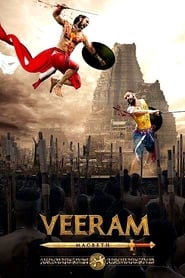
star 6.7Veeram is based on the ballads of North Malabar and narrates the tale of the brave and ambitious Kalarippayattu warrior, Chandu, whose story resembles that of William Shakespeare's Macbeth.Martin Luther: The Idea that Changed the World
2017
star 7The year 2017 marks the 500th anniversary of one on the most important events in Western civilization: the birth of an idea that continues to shape the life of every American today. In 1517, power was in the hands of the few, thought was controlled by the chosen, and common people lived lives without hope. On October 31 of that year, a penniless monk named Martin Luther sparked the revolution that would change everything. He had no army. In fact, he preached nonviolence so powerfully that — 400 years later — Michael King would change his name to Martin Luther King to show solidarity with the original movement. This movement, the Protestant Reformation, changed Western culture at its core, sparking the drive toward individualism, freedom of religion, women's rights, separation of church and state, and even free public education. Without the Reformation, there would have been no pilgrims, no Puritans, and no America in the way we know it.Double Play
2017
Double Play
2017
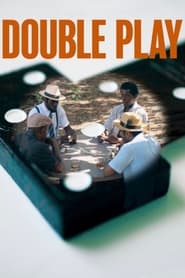
star 3.5Double Play is about anolder man named Ostrik who returns to Curaçao and his childhood after many years abroad. Ostrik reminisces about 1973 and the events surrounding a game his father played which had major consequences for Ostrik’s youth. The dramatic poverty and colourful landscapes provide the background for the leads who represent Curaçao’s melting pot: a story of pride and humiliation, money and love, ambition and hope.