New History Movies on Tub Tv - Page 305
All Services
Free Services
 Netflix
 Amazon Prime Video
 Apple iTunes
 Apple TV Plus
 Disney Plus
 Google Play Movies
 Paramount Plus
 Hulu
Hulu
 HBO Max
 YouTube
 fuboTV
 Peacock
 Peacock Premium
 Amazon Video
 The Roku Channel
 AMC+
AMC on Demand
AMC+
AMC on Demand
 Kocowa
 Hoopla
 The CW
 Vudu
Vudu
 Starz
Starz
 Showtime
 PBS
PBS
 Pantaflix
 FXNow
FXNow
 Tubi TV
 Kanopy
 Comedy Central
 Crunchyroll
 Microsoft Store
 Redbox
 Sun Nxt
 ABC
ABC
 DIRECTV
 Crackle
 Fandor
 Plex
Plex
Netflix
Amazon Prime Video
Apple iTunes
Apple TV Plus
Disney Plus
Google Play Movies
Paramount Plus
Hulu
HBO Max
YouTube
fuboTV
Peacock
Peacock Premium
Amazon Video
The Roku Channel
AMC+
AMC on Demand
Kocowa
Hoopla
The CW
Vudu
Starz
Showtime
PBS
Pantaflix
FXNow
Tubi TV
Kanopy
Comedy Central
Crunchyroll
Microsoft Store
Redbox
Sun Nxt
ABC
DIRECTV
Crackle
Fandor
Plex

Someone
2017
Someone
2017
star 7At the end of World War II, Red Army soldiers bent on brutal revenge for past atrocities attack a German city. Compassion comes from an unlikely source. Based on a true story.The Fortress
2017
The Fortress
2017
star 6.8Ancient Korea, 17th century. The powerful Khan of the Jurchen tribe of Manchuria, who fights the Ming dinasty to gain China, becomes the first ruler of the Qing dinasty and demands from King In-jo of Joseon to bow before him; but he refuses, being loyal to the Mings. On December 14th, 1636, the Qing horde invades Joseon, so King In-jo and his court shelter in the mountain fortress of Namhan and prepare to defend the kingdom.Deposits
2017
Deposits
2017
Deposits concerns the connection of all the ‘Disappeared’, who are the remains of those murdered by the Provisional Irish Republican Army, and those killed centuries earlier by the British Redcoats. What they have in common is that they are buried without trace, but they are also connected by their hopes of discovery.1948: Creation & Catastrophe
2017
star 8The shocking story of the establishment of the state of Israel told from the perspective of those who lived through the end of the British Mandate for Palestine in 1948.Kokoschka: Work and Life
2017
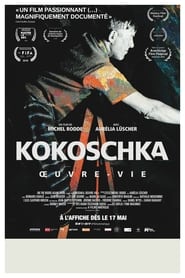
Painter, poet and playwright, teacher and freethinker, lover and traveler, Austrian artist Oskar Kokoschka (1886-1980) was a rare individual who remained lucid and passionate throughout his long life.Z dala od orkiestry
2017
Z dala od orkiestry
2017
Fury of Heart
2017
Fury of Heart
2017
star 5In the 1870s, Mongols have lived under the pressure of the Qing Dynasty for over 150 years. The Emperor's high taxation has caused chaos and turmoil among the people. Citizens everywhere are suffering from disease and starvation. Anyone who goes against the Emperor's order must suffer the consequences.Goodbye Christopher Robin
2017
star 7The behind the scenes story of the life of A.A. Milne and the creation of the Winnie the Pooh stories inspired by his son Christopher Robin.The Legend of King Solomon
2017
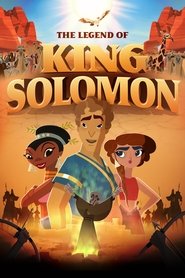
star 6.1Eager to impress the Queen of Sheeba, a young Solomon accidentally releases the devil Asmodeus from his prison. With the Kingdom of Jerusalem in peril, Solomon and Princess Naama work together to find an end to Asmodeus' evil rule.The Miner
2017
The Miner
2017
star 6.62009, Slovenia. For 30 years, Alija, the miner, has been one of the many Bosnian immigrant workers. Due to the crisis, miners are losing jobs. Alija is sent to check an abandoned mine. His task is to quickly make sure the mine is empty before management sells the company. But in the mine, Alija finds hidden proof of executions after WWII. He is told to stop digging and report the mine empty. He decides to continue, although he is risking his job. Alija discovers thousands of executed people. He informs the police. He found women among the dead. Some of them were civilians, missing persons, just like his sister that was lost in the 1995 genocide in Bosnia. Alija is convinced the victims need to be brought out, identified and buried. But there is no interest in doing that. The mine is proclaimed a WWII military grave and walled in. The dead will stay unburied. Alija loses his job and struggles to preserve his dignity.The Porchlight Sessions
2017
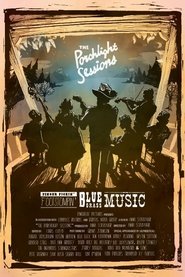
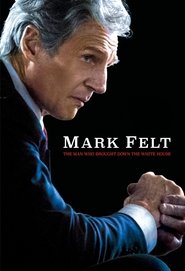
A rare look at the inventiveness of the human spirit through reimagining the history of Bluegrass Music from Bill Monroe to today's musicians.Mark Felt: The Man Who Brought Down the White House
2017
star 6.2The story of Mark Felt, who under the name "Deep Throat" helped journalists Bob Woodward and Carl Bernstein uncover the Watergate scandal in 1974.Zama
2017
Zama
2017
star 6.6In a remote South American colony in the late 18th century, officer Zama of the Spanish crown waits in vain for a transfer to a more prestigious location. He suffers small humiliations and petty politicking as he increasingly succumbs to lust and paranoia.Rockin’ Down The Curtain: The 70ies. Glitter And Gloom
2017
During the Soviet time, choosing the fate of a rock musician was similar to being a dissident.My Nephew Emmett
2017
My Nephew Emmett
2017
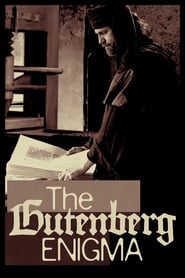
star 6.3This visually ravishing and thought-provoking work portrays one of the USA’s great shames—the 1955 murder of 14-year-old Emmett Till by two white men in Mississippi—and movingly reminds us of this dark episode’s enduring relevance.The Gutenberg Enigma
2017
The Gutenberg Enigma
2017
star 7.5A portrait of the inventor of the letterpress, who was a key figure in the history of mankind, but also an enthusiastic inventor, a daring businessman, a tenacious troublemaker: the life of Johannes Gutenberg (circa 1400-68).A Night at the Garden
2017
star 6.3Archival footage of an American Nazi rally that attracted 20,000 people at Madison Square Garden in 1939, shortly before the beginning of World War II.Egypt's Great Pyramid: The New Evidence
2017
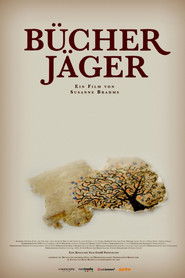
star 8Egypt's Great Pyramid may be humanity's greatest achievement: a skyscraper of stone built without computers or complex machinery. This super-sized tomb has fascinated historians and archaeologists for centuries, but exactly how the ancient Egyptians finished the monument and fitted its two and a half million blocks in a quarter of a century has long remained an enigma. Today the secrets of the pyramid are finally being revealed thanks to a series of new findings. At the foot of the monument, archaeologists are uncovering the last surviving relic of the pharaoh Khufu, whose tomb it is: a huge ceremonial boat buried in flat-pack form for more than 4500 years. It's a clue that points to the important role that ships and water could have played in the pyramids' construction. This documentary follows investigations that reveal how strong the link between pyramids and boats is. It's a story of more than how Egypt built a pyramid: it's about how the pyramid helped build the modern world.Book Hunters
2017
Book Hunters
2017
star 8When chaos reigns, while barbaric and fanatical rulers, both ecclesiastical and secular, systematically burn entire libraries, book hunters, secret heroes of history, travel the world saving and copying texts, threatened by the madness of censors, with the noble purpose of preventing the ultimate loss of human knowledge.