New History Movies on Tub Tv - Page 314
All Services
Free Services
 Netflix
 Amazon Prime Video
 Apple iTunes
 Apple TV Plus
 Disney Plus
 Google Play Movies
 Paramount Plus
 Hulu
Hulu
 HBO Max
 YouTube
 fuboTV
 Peacock
 Peacock Premium
 Amazon Video
 The Roku Channel
 AMC+
AMC on Demand
AMC+
AMC on Demand
 Kocowa
 Hoopla
 The CW
 Vudu
Vudu
 Starz
Starz
 Showtime
 PBS
PBS
 Pantaflix
 FXNow
FXNow
 Tubi TV
 Kanopy
 Comedy Central
 Crunchyroll
 Microsoft Store
 Redbox
 Sun Nxt
 ABC
ABC
 DIRECTV
 Crackle
 Fandor
 Plex
Plex
Netflix
Amazon Prime Video
Apple iTunes
Apple TV Plus
Disney Plus
Google Play Movies
Paramount Plus
Hulu
HBO Max
YouTube
fuboTV
Peacock
Peacock Premium
Amazon Video
The Roku Channel
AMC+
AMC on Demand
Kocowa
Hoopla
The CW
Vudu
Starz
Showtime
PBS
Pantaflix
FXNow
Tubi TV
Kanopy
Comedy Central
Crunchyroll
Microsoft Store
Redbox
Sun Nxt
ABC
DIRECTV
Crackle
Fandor
Plex

Tokyo Phoenix
2017
Tokyo Phoenix
2017
star 7.5In 150 years, twice marked by total destruction —a terrible earthquake in 1923 and incendiary bombings in 1945— followed by a spectacular rebirth, Tokyo, the old city of Edo, has become the largest and most futuristic capital in the world in a transformation process fueled by the exceptional resilience of its inhabitants, and nourished by a unique phenomenon of cultural hybridization.Tatara Samurai
2017
Tatara Samurai
2017
star 5.5In 16th century Japan, a young man has to choose between becoming a master steel maker like his father and grandfather before him, or becoming a samurai so that he can help protect his village from attacks by the various clans which want the high-quality steel made there.Foreign Prayer
2017
Foreign Prayer
2017
star 8.3Nazi-occupied Crimea, 1944. A boy named Itzhak turns to Saide Arifova, a local Tatar Muslim woman, for help, explaining that he and a group of other Jewish orphans are hiding from the Nazis. Arifova faces a moral dilemma: should she try to help them or save herself by refusing? Despite the impending danger, she decides to protect the children by hiding them in plain sight, and disguising them as Tatars and adopting them into the local community.Love Letter Rescue Squad
2017
"Our history was disappearing as quickly as we were making it." With that realization, Deborah Edel and Joan Nestle co-founded the Lesbian Herstory Archives, the world's largest collection of materials by and about lesbians. More than 40 years later, Deb must consider the future of the collection.Midnight
2017
Midnight
2017
star 10A 200 year-old vampire who drives for a ridesharing app picks up a passenger who bears an uncanny resemblance to a long lost love.Chinese Chariots Revealed
2017
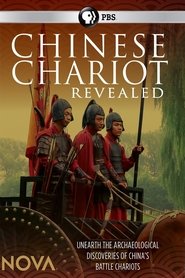
star 8For over 1,000 years, chariots were indispensable weapons in ancient China. The art of chariot driving and special warfare were used there for longer than anywhere else. Their contribution to the unification of the Chinese empire is undisputed. New archaeological discoveries reveal how the Chinese developed and perfected this sophisticated weapon. In the Bronze Age, over 3,000 years ago, chariots and other war equipment arrived in China from Central Asia via the Hexi Corridor. In addition to trade and new alliances, their spread was mainly due to the Zhou dynasty's incessant military campaigns against rebellious vassal states and the constant attacks by the mobile cavalries of its northern neighbors. Manned with spearmen or archers, the chariots were a decisive weapon in battle.The Black Death
2017
Anime nere: Heinrich Himmler & Adolf Eichmann
2017
This documentary is designed to present the lives and activities of Heinrich Himmler (head of the SS - the super police created by Hitler as the main tool of oppression - until 1928) and Adolf Eichmann (head of the Department of Jewish Affairs of the Gestapo from 1941 to 1945 and head of operations in the deportation of 3 million Jews to extermination camps.Anime nere: Goering y Goebbels
2017
Hitler was undoubtedly the cruelest figure of Nazism, but not the only one. This documentary reconstructs the stories of crimes committed by Paul Joseph Goebbels and Hermann Wilhem Goering, up to the Nuremberg war crimes trial that took place between 1945 and 1946.Glanz und Elend deutscher Zarinnen
2017
Between love madness, scandals, intrigue and happiness - the stories of German princesses on the Russian tzar's throne were shaped by strokes of fate. Princess Charlotte of Prussia was married on exactly her 19th birthday in 1817 with the future Russian Tsar. She joined a long line of German princesses at the Tsar's court, beginning with Catherine the Great and extending to the last Russian Empress. 200 years later, her descendant Maria in St. Petersburg is searching for the traces of these German women.Newton's Grace
2017
Newton's Grace
2017
star 5John Newton was a troubled young man with a violent temper and a penchant for vulgarity that literally made his fellow sailors blush. Whipped for desertion and sold into slavery, it seemed his life would end early in a West African grave...until he was rescued by a ship captain sent by his father. Following a powerful conversion experience during a storm at sea, Newton would eventually become a pastor in the Church of England and the writer of several of the church's most beloved hymns, including "Amazing Grace".Deus ex Machina
2017
Deus ex Machina
2017
star 8A young, unbelieving couple is being pursued by a terrifying monster. They try to hide in a church, where they meet a priest who seems friendly at first glance, but it soon becomes clear that the priest has less than honorable plans for them. They are trapped.La planta insolente
2017
La planta insolente
2017
The film reproduces the historical moment when Cipriano Castro, then president of Venezuela, proclaimed: "The insolent plant of the foreigner has desecrated the sacred soil of the fatherland!" While the coasts were invaded by imperial forces in 1902.Stars
2017
Stars
2017
star 5.2A story of passion, rivalry, love, and friendship. Jan Banas, acclaimed Silesian football player of the 1960s and 1970s, struggles to makes his dreams come true on and off the field. Stars is the story of a great love between young people torn by passion and ambition.Lahoriye
2017
Lahoriye
2017
star 5.2Lahoriye is the story of love. The love which does not see boundaries, the love which does not see nations. Kikar Singh (Amrinder Gill) is a clerk at DTO office and his family holds a piece of land which is right at the LOC. The people living in Border areas are familiar with the situation. Right across the land in Pakistan is a Kinnow farm where Ameeran (Sargun Mehta) works and live with her family. Kikar falls for Ameeran and slowly slowly even Ameeran falls for Kikar. What follows next is a tale of romance which is worth watching on the big screen.Calvin, Zwingli, and Brother Klaus
2017
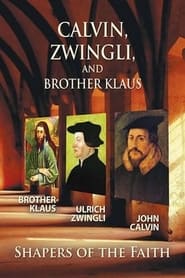
John Calvin, Ulrich Zwingli, and Brother Klaus (Niklaus von Flüe) were three very different men who shaped the Christian faith in Switzerland. With this docudrama, award-winning filmmaker Rainer Wälde celebrates the 500th anniversary of the Protestant Reformation and the 600th anniversary of the birth of Brother Klaus, Switzerland’s most famous saint.Mango Dreams
2017
Mango Dreams
2017
star 7.3A Hindu doctor with dementia and a Muslim auto rickshaw driver form an unlikely friendship as they cross India in search of the doctor's childhood home.