New History Movies on Tub Tv - Page 396
All Services
Free Services
 Netflix
 Amazon Prime Video
 Apple iTunes
 Apple TV Plus
 Disney Plus
 Google Play Movies
 Paramount Plus
 Hulu
Hulu
 HBO Max
 YouTube
 fuboTV
 Peacock
 Peacock Premium
 Amazon Video
 The Roku Channel
 AMC+
AMC on Demand
AMC+
AMC on Demand
 Kocowa
 Hoopla
 The CW
 Vudu
Vudu
 Starz
Starz
 Showtime
 PBS
PBS
 Pantaflix
 FXNow
FXNow
 Tubi TV
 Kanopy
 Comedy Central
 Crunchyroll
 Microsoft Store
 Redbox
 Sun Nxt
 ABC
ABC
 DIRECTV
 Crackle
 Fandor
 Plex
Plex
Netflix
Amazon Prime Video
Apple iTunes
Apple TV Plus
Disney Plus
Google Play Movies
Paramount Plus
Hulu
HBO Max
YouTube
fuboTV
Peacock
Peacock Premium
Amazon Video
The Roku Channel
AMC+
AMC on Demand
Kocowa
Hoopla
The CW
Vudu
Starz
Showtime
PBS
Pantaflix
FXNow
Tubi TV
Kanopy
Comedy Central
Crunchyroll
Microsoft Store
Redbox
Sun Nxt
ABC
DIRECTV
Crackle
Fandor
Plex

D-Day's Sunken Secrets
2014
June 6 1944 saw the world’s biggest amphibious assault, one of the most important military campaigns in history and a pivotal moment in the Second World War. For generations, historians, archaeologists and other experts, in their attempts to reconstruct the events of the day, have scoured every battlefield – except one. Just off the coast of Normandy is a lost graveyard, where hundreds of objects lie on the sea bed.Grey Wolf: The Escape of Adolf Hitler
2014
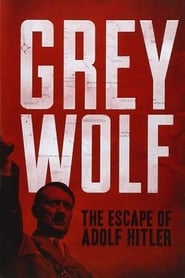
star 5.8History tells us that Hitler died on April 30th 1945 by committing suicide with a single gunshot to the head; but what if history is wrong? Based on interviews with eye witnesses and years of dedicated research, this film dramatisation explores the possibility that Hitler didn't die in Germany at the end of the war, but instead escaped from Berlin by air and made his way to Argentina. This is the gripping story of what might have happened; the CIA s possible involvement, his life in Patagonia, the escape routes and the astonishing fact that Hitler may have had two daughters.Children of War
2014
Children of War
2014
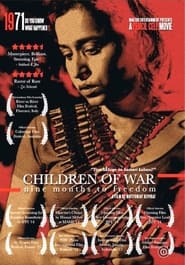
star 4.7Children of War is a movie based on the true events of the 1971 Genocide. Can we, in search of power, become animals? A genocide; neglected! The first use of rape as a weapon of war; undocumented! The lives of millions; unaccounted! The culprits; unpunished!Waterloo: The Last Battle
2014
star 7.5This is the thrilling tale of one of the most famous battles in history. Hour by hour and often minute by minute, Waterloo describes the battle's twists and turns. Based on the written testimonies of actual combatants, Waterloo describes, without romanticising, the experience of battle, the hopes, fears, suffering, and death.FC Dinamo: FC Red Star - The War of Liberation Began at Maksimir Stadium
2014
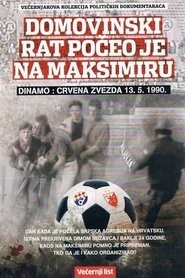
A documentary that explores the events of the disrupted football match between Dinamo (Zagreb) and Crvena Zvezda (Beograd) on May 13th 1990. As fighting broke out the match was cancelled and the events are explored with testimonies from members of Bad Blue Boys and the police of the time. The event is considered by many as the start of the Croatian war for independence (Domovinski rat).The Secret Service Agent's Memories 2
2014
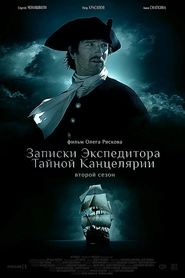
star 4.5Russia in the early 18th century: Naval officer Plakhov has fallen in love with a young woman. When she is threatened by a stranger, he kills him and is thereby sentenced to death. However, the head of the secret service decides to send Plakhov on a mission instead.Bialik - King of the Jews
2014
star 7.3By the age of thirty he’d already become the most famous poet in the Jewish world. He spent very few years living in Tel Aviv, but he loved the city dearly. Some 100,000 people attended his funeral in 1934. “King of the Jews” is a portrait of the most beloved Jew of his day, Chaim Nachman Bialik. Combining special animation, a voice track by Chaim Topol, rare archival footage, long-forgotten photographs, poems by Bialik performed by Ninet and interviews with the foremost Bialik researchers and fans in Israel and around the world, this film retells the story of the little boy from the shtetl, who became King of the Jews.Nazi Death Camp: The Great Escape
2014
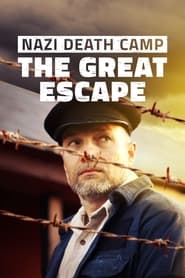
star 7.5The secret Nazi death camp at Sobibor was created solely for the mass extermination of Jews. But on the 14th October 1943, in one of the biggest and most successful prison revolts of WWII, the inmates fought back.Your Day Is My Night
2014
Your Day Is My Night
2014
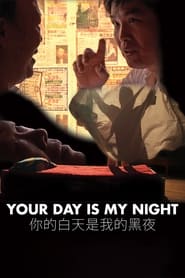
star 5.5Immigrant residents of a “shift-bed” apartment in the heart of New York City’s Chinatown share their stories of personal and political upheaval. As the bed transforms into a stage, the film reveals the collective history of the Chinese in the United States through conversations, autobiographical monologues, and theatrical movement pieces. Shot in the kitchens, bedrooms, wedding halls, cafés, and mahjong parlors of Chinatown, this provocative hybrid documentary addresses issues of privacy, intimacy, and urban life.Oiesan
2014
Oiesan
2014
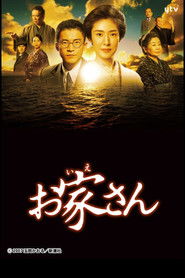
Traces the rise of the company Suzuki Shoten from the 1880's to 1919. After the death of her husband, Yoni Suzuki and her general manager built the company from a small sugar importer into Japan's largest trading and manufacturing company.Warsaw Uprising
2014
Warsaw Uprising
2014
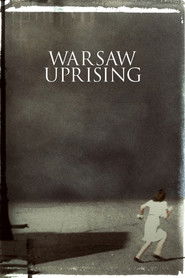
star 7.1It tells the story of the Warsaw Uprising of 1944 through the eyes of a US airman, escaper from the Nazi Stalag camp and two young reporters, cameramen for the Bureau of Information and Propaganda of the Polish Home Army. Their mission: documenting the Uprising by shooting newsreels for the “Palladium” cinema. Looking for the right shots, they go deeper and deeper – literally and figuratively – into the heart of the Uprising. Traumatic truth becomes obvious. Aware of being witnesses of indescribable events, they realize their duties: to document them and preserve the rolls of film at any cost…The Hornet's Nest
2014
The Hornet's Nest
2014
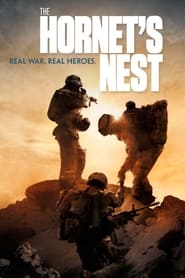
star 6.3Armed only with their cameras, Peabody and Emmy Award-winning conflict Journalist Mike Boettcher, and his son, Carlos, provide unprecedented access into the longest war in U.S. history: they are embed with U.S. troops during nine days of intense combat in Afghanistan.The French Revolution: Tearing Up History
2014
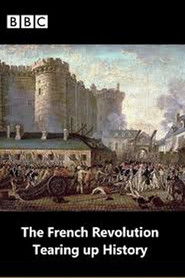
In this documentary, filmed on location in Paris, Richard Clay argues that the French Revolution of 1789 was not quite as clear-cut in terms of its progress as might first have been assumedYunus Emre: Aşkın Sesi
2014
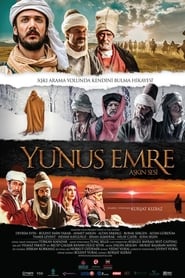
star 7We follow the story of Yunus, who lives in one of the Anatolian villages ravaged by war and violence, and his transformation into Yunus Emre, a figure of global significance whose thoughts and poems blend love and passion. His great regret at choosing to console himself with wheat will drive him to seek answers. This quest will be so profound that he will set out on the road, bidding farewell to everyone he loves, especially his beloved Balım Kız. On his journey to attain the greatest love of all, Divine Love, he will seek guidance from all the saints of Anatolia, unaware that what he seeks is already within him.A testa alta: I martiri di Fiesole
2014
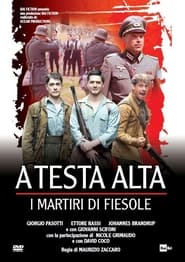
star 5.8In July 1944, the Germans discover a link between a small country barracks of the Arma dei Carabinieri Reali and the Resistance and one of the carabinieri, Sebastiano Pandolfo, and a young partisan are shot. Three other carabinieri (Alberto La Rocca, Vittorio Marandola, and Fulvio Sbarretti) manage to escape and try to join the Resistance, but the Germans take ten civilians hostage and threaten to kill them if the carabinieri do not surrender. Upon hearing the news, just before they reach the partisans, the three carabinieri choose to surrender to honor the role of the carabinieri as guarantors of legality and justice, thus saving the lives of the ten hostages.Kya Dilli Kya Lahore
2014
Kya Dilli Kya Lahore
2014
star 7.5In 1948, a cross-fire erupts at an isolated stretch of Indo-Pak border, leaving only two soldiers alive. One is an Indian soldier of Pakistani origin while the other happens to be a Pakistani soldier of Indian origin. An ironic story of pride and survival begins when - in an attempt to evade danger, they bump into each other. And amidst continuous exchange of bullets, altercations and murkier situations, it evolves into a journey of human connection with an unforeseeable end.Public Enemies
2014
Public Enemies
2014
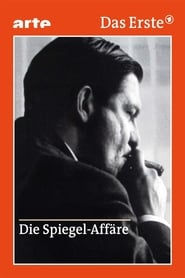
star 4.9Under the slogan of the arms race of the superpowers, which escalates in the Cuban Missile Crisis in 1962 and brings the world to the brink of nuclear war, two exemplary post-war male figures challenge an almost archaic feud: Defense Minister Franz Josef Strauss and journalist Rudolf Augstein.Philosophy in the Kitchen
2014
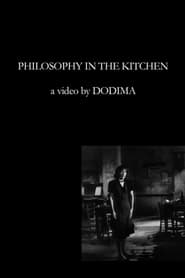
The work is a split-screen video essay that explores how housework has changed the cinema. Well before other forms of labor in the new global economy erased the line between work and life, housework (from cleaning and cooking to child-rearing) was always that with which we are never done. It seizes all of life incessantly, requiring that we envision new forms of expression and tactics of resistance.The Forest
2014
The Forest
2014
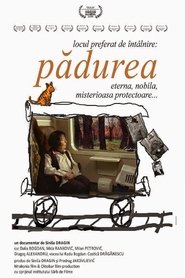
In 1947, Yugoslav President Josip Broz Tito visited, for the first time, Romania. Its communist regime gave him, as present, a painting from a great Romanian artist Ion Andeescu: 'The Leafless Forest'. In the 60s, a young art critic, Radu Bogdan, decided to elaborate a monograph dedicated to the great painter, including reproduction of the painting given to Tito. After countless problems, he obtained the permission to photograph the painting. The moment they took the painting off the wall, they found - a microphone. Somebody was spying on Tito...