New History Movies on Tub Tv - Page 430
All Services
Free Services
 Netflix
 Amazon Prime Video
 Apple iTunes
 Apple TV Plus
 Disney Plus
 Google Play Movies
 Paramount Plus
 Hulu
Hulu
 HBO Max
 YouTube
 fuboTV
 Peacock
 Peacock Premium
 Amazon Video
 The Roku Channel
 AMC+
AMC on Demand
AMC+
AMC on Demand
 Kocowa
 Hoopla
 The CW
 Vudu
Vudu
 Starz
Starz
 Showtime
 PBS
PBS
 Pantaflix
 FXNow
FXNow
 Tubi TV
 Kanopy
 Comedy Central
 Crunchyroll
 Microsoft Store
 Redbox
 Sun Nxt
 ABC
ABC
 DIRECTV
 Crackle
 Fandor
 Plex
Plex
Netflix
Amazon Prime Video
Apple iTunes
Apple TV Plus
Disney Plus
Google Play Movies
Paramount Plus
Hulu
HBO Max
YouTube
fuboTV
Peacock
Peacock Premium
Amazon Video
The Roku Channel
AMC+
AMC on Demand
Kocowa
Hoopla
The CW
Vudu
Starz
Showtime
PBS
Pantaflix
FXNow
Tubi TV
Kanopy
Comedy Central
Crunchyroll
Microsoft Store
Redbox
Sun Nxt
ABC
DIRECTV
Crackle
Fandor
Plex

The Last War Crime
2012
The Last War Crime
2012
star 6Epic political fantasy drama, envisioning what would have happened if Dick Cheney had been indicted for ordering torture, which was used to get the false confessions to make a fraudulent case for war.Well Received the Death of an Artist
2012
We follow the career of failed filmmaker, Jeigh Pressley as he humorously drinks himself to death.Habibie & Ainun
2012
Habibie & Ainun
2012
star 7.6Habibie wanted to unite Indonesia by designing airplanes. He met his soulmate and underwent his struggle to become the 3rd president of Indonesia.The Mystery of San Nicandro
2012
Documentary on the Jews of San Nicandro, Italy; a community of Christians who converted to Judaism during Fascist ItalyRome's Lost Empire
2012
Rome's Lost Empire
2012
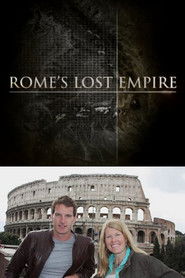
star 9Dan Snow attempts to use the latest satellite technology to reveal the secrets of the Roman Empire, identifying lost cities, amphitheatres and forts.Maya Underworld: The Real Doomsday
2012
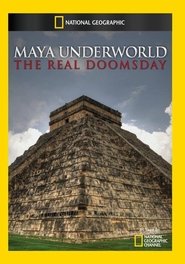
star 7Venturing into vast underwater graveyards of Maya human sacrifices, journalist and host of NGC’s Don’t Tell My Mother Diego Buñuel searches through a watery maze to unearth new revelations about the most infamous date in the Maya calendar: December 21, 2012 – doomsday.The Walls Talk
2012
The Walls Talk
2012
star 3A tragic and epic love that transcends time and generations unites Maria and Javier forever. During important periods in Mexico (The War of Independence, the Revolution and current times) these souls play out their destiny facing political squabbles, social pressures, family hatred and historical battles, seeking to make a relationship flower which seems fated to die.WWII From Space
2012
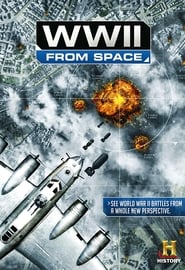
WWII From Space
2012
star 7.3WWII from Space delivers World War II in a way you've never experienced it before. This HISTORY special uses an all-seeing CGI eye that offers a satellite view of the conflict, allowing you to experience it in a way that puts key events and tipping points in a global perspective. By re-creating groundbreaking moments that could never have been captured on camera, and by illustrating the importance of simultaneity and the hidden effects of crucial incidents, HISTORY presents the war's monumental moments in a never-before-seen context. And with new information brought to the forefront, you'll better understand how a nation ranked 19th in the world's militaries in 1939 emerged six years later as the planet's only atomic superpower.The Last Sentence
2012
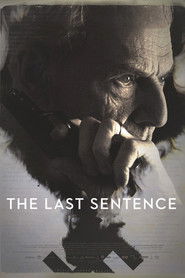
The Last Sentence
2012
star 6.1Renowned journalist Torgny Segerstedt declares war against Hitler as he criticizes Swedish politicians who tried to look away from the tyranny of the Nazis with the good excuse of “neutralism”. His only weapon is his pen and his life is full of gossip such as an affair with his boss’ wife, a love scandal with a secretary younger than his daughter, and the suicide of his wife. However, he continues to fight a one man battle against Hitler and the Nazi regime until his death, throwing the question “Can one person really change history?” to the audience.Hyde Park on Hudson
2012
Hyde Park on Hudson
2012
star 5.2The story of the love affair between FDR and his distant cousin Margaret Stuckley, centered around the weekend in 1939 when the King and Queen of the United Kingdom visited upstate New York.Amnesia Diaries
2012
Amnesia Diaries
2012
The director creates a parallel of thirty years of her life (mid-1980s to 2012) and the evolution of her country, Greece. The loss of her lover, revived in archive photographs and 8 mm movies, is the background for her despair facing contemporaneous Greece, seen by her in the streets and viewed on television broadcasts from American and Russian channels.Supremo
2012
Saint Barbara
2012
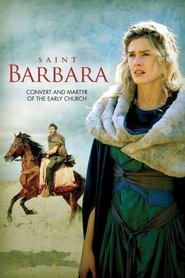
Saint Barbara
2012
star 6.1The beautiful daughter of the Roman governor during a time of fierce Christian persecution is a nonbeliver. But when a slave raised alongside her like a sister is condemned to death for her Christian faith, she valiantly attempts to save her.La conspiración
2012
Man Made Place
2012
Man Made Place
2012
star 8.5China is currently marked by a phase of rapidly growing urbanization. The film in this context deals with two particular cities. Yum en a derelict ghost town and Or dos a mythic city of the future,both are deserted. They exist because of completely different reasons. The film shows through impressive images how these two cities and the relation of inhabitants to these cities are developing in China in times of urban growth.Buscando al comandante Andresito
2012
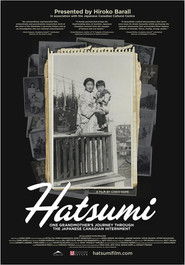
Heredia travels in search of traces of Andrés Guazurarí (1778-1821?) in the lands of Corrientes and Misiones, while trying to decipher why official history wanted to erase his name from the memory of the Argentine people.Hatsumi
2012
Hatsumi
2012
In Japanese, “shi kata ga nai” means “it can't be helped”. As a phrase, it represents the philosophical basis of the Japanese cultural reserve, through which adversity is never acknowledged. Nancy Okura is a Canadian of Japanese decent. During the Second World War, she was involuntarily removed from her home and relocated to an internment camp by the Government of Canada. Shi kata ga nai prevented Nancy Okura from ever speaking about her internment.Stay In Algeria
2012
Stay In Algeria
2012
star 10Algeria, summer 1962, eight hundred thousand French people left their native land in a tragic exodus. But 200,000 of them decided to attempt the adventure of independent Algeria. Over the following decades, political developments would push many of these pieds-noirs into exile towards France. But some never left. Germaine, Adrien, Cécile, Guy, Jean-Paul, Marie-France, Denis and Félix, Algerians of European origin, are among them. Some have Algerian nationality, others do not. Some speak Arabic, others do not. They are the last witnesses to the little-known history of these Europeans who remained out of loyalty to an ideal, a taste for adventure and an unconditional love for a land where they were born, despite all the ups and downs that the free Algeria in full construction had to go through.Adesuwa
2012
Adesuwa
2012
In 1752, conflict breaks out when the beautiful Princess Adesuwa, betrothed to the king and ruler of the Benin Empire, is abducted.