New History Movies on Tubi TV - Page 50
All Services
Free Services
 Netflix
 Amazon Prime Video
 Apple iTunes
 Apple TV Plus
 Disney Plus
 Google Play Movies
 Paramount Plus
 Hulu
Hulu
 HBO Max
 YouTube
 fuboTV
 Peacock
 Peacock Premium
 Amazon Video
 The Roku Channel
 AMC+
AMC on Demand
AMC+
AMC on Demand
 Kocowa
 Hoopla
 The CW
 Vudu
Vudu
 Starz
Starz
 Showtime
 PBS
PBS
 Pantaflix
 FXNow
FXNow
 Tubi TV
 Kanopy
 Comedy Central
 Crunchyroll
 Microsoft Store
 Redbox
 Sun Nxt
 ABC
ABC
 DIRECTV
 Crackle
 Fandor
 Plex
Plex
Netflix
Amazon Prime Video
Apple iTunes
Apple TV Plus
Disney Plus
Google Play Movies
Paramount Plus
Hulu
HBO Max
YouTube
fuboTV
Peacock
Peacock Premium
Amazon Video
The Roku Channel
AMC+
AMC on Demand
Kocowa
Hoopla
The CW
Vudu
Starz
Showtime
PBS
Pantaflix
FXNow
Tubi TV
Kanopy
Comedy Central
Crunchyroll
Microsoft Store
Redbox
Sun Nxt
ABC
DIRECTV
Crackle
Fandor
Plex

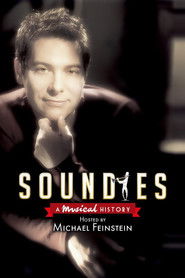
Soundies: A Musical History Hosted by Michael Feinstein
2007
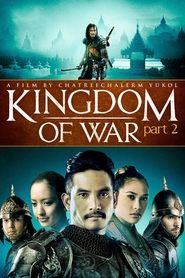
star 5Before MTV and the age of television, there were Soundies. First appearing in 1941, these three minute black-and-white films featured artists of the Big Band, Jazz and Swing era, like Duke Ellington, Count Basie, Louis Jordan, Louis Armstrong, Gene Krupa, The Mills Brothers, Les Paul, Cab Calloway, and Fats Waller. The Soundies helped launch the careers of Doris Day, Nat King Cole, Liberace, and Dorothy Dandridge, among others. Viewed for a dime through a special machine called a Panoram, a movie jukebox, these forerunners to the music video could be seen in nightclubs, roadhouses, restaurants and other public venues across the U.S. These classic films remain as glorious time capsules of music, social history, popular culture, and tell the story of a crossroads in our country, when the uncertainties of war, race relations, and emerging technologies combined to write one of the most influential chapters in our nation¹s history.King Naresuan Part: 2
2007
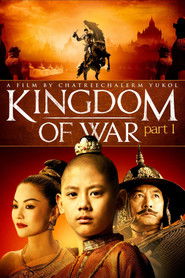
star 6.6Prince Naresuan is now the crown prince of Ayutthaya, and the king of Burma is dead. While the new Burmese king is waging war, the crown prince plots to assassinate Naresuan.King Naresuan Part: 1
2007
star 6.2The film concerns the life of King Naresuan, who liberated the Siamese from the control of Burma. Born in 1555, he was taken to Burma as a child hostage; there he became acquainted with sword fighting and became a threat to the Burmese empire.The Real Joan of Arc
2007
The Real Joan of Arc
2007
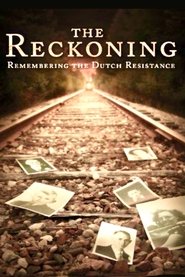
The myth of Joan of Arc has fascinated people the world over. In the collective memory, she is the young shepherd girl who died at the stake having saved France. But 15th century chronicles report that following events in Rouen, certain people refused to believe she was dead and that another woman was burned instead.The Reckoning: Remembering the Dutch Resistance
2007
The documentary that captures the compelling story and eyewitness account of six survivors in war-torn Netherlands during World War II.Factory Girl
2006
Factory Girl
2006
star 6In the mid-1960s, wealthy debutant Edie Sedgwick meets artist Andy Warhol. She joins Warhol's famous Factory and becomes his muse. Although she seems to have it all, Edie cannot have the love she craves from Andy, and she has an affair with a charismatic musician, who pushes her to seek independence from the artist and the milieu.A Tudor Feast at Christmas
2006
star 7.7A group of historians and archaeologists prepare a Tudor feast as it would have been over 400 years ago, including the use of period clothes, recipes from the era, food sourced from the land and the absence of modern conveniences.Housewife, 49
2006
Housewife, 49
2006
star 6Downtrodden wife and mother Nella's life takes an unexpected turn for the better after she joins the Women's Voluntary Service office in Barrow-in-Furness during the Second World War. However, her new-found happiness is shattered when her son Cliff leaves to join the troops - provoking a painful confrontation with her husband Will.Ever Again
2006
Ever Again
2006
star 4Ever Again examines the sweeping resurgence of antisemitism in 21st century Europe and its connection to global terrorism.Apocalypto
2006
Apocalypto
2006
star 7.6Set in the Mayan civilization, when a man's idyllic presence is brutally disrupted by a violent invading force, he is taken on a perilous journey to a world ruled by fear and oppression where a harrowing end awaits him. Through a twist of fate and spurred by the power of his love for his woman and his family he will make a desperate break to return home and to ultimately save his way of life.The Singing Revolution
2006
star 6Most people don't think about singing when they think about revolutions. But song was the weapon of choice when, between 1986 and 1991, Estonians sought to free themselves from decades of Soviet occupation. During those years, hundreds of thousands gathered in public to sing forbidden patriotic songs and to rally for independence. "The young people, without any political party, and without any politicians, just came together ... not only tens of thousands but hundreds of thousands ... to gather and to sing and to give this nation a new spirit," remarks Mart Laar, a Singing Revolution leader featured in the film and the first post-Soviet Prime Minister of Estonia. "This was the idea of the Singing Revolution." James Tusty and Maureen Castle Tusty's "The Singing Revolution" tells the moving story of how the Estonian people peacefully regained their freedom--and helped topple an empire along the way.Goya's Ghosts
2006
Goya's Ghosts
2006
star 6.6Painter Francisco Goya becomes involved with the Spanish Inquisition after his muse, Inés, is arrested by the church for heresy. Her family turns to him, hoping that his connection with fanatical Inquisitor Lorenzo, whom he is painting, can secure her release.O Jerusalem
2006
O Jerusalem
2006
star 5.9A tale of friendship between two men, one Jewish and the other Arab, as the state of Israel is being created.One Night with the King
2006
star 6.7In Biblical times, a girl disguises her Jewish origins when the Persian king comes looking for a new bride among his subjects.Xavier
2006
Xavier
2006
star 10Fourth Week Films and the New Orleans Jesuit Province present Xavier, a new PBS-style documentary film on the life of the famed 16th-century Jesuit missionary Francis Xavier. Narrated by Liam Neeson, Xavier tells the missionary's compelling story through dramatizations, interviews, contemporary location shots, paintings and engravings, maps, and most importantly, the extant letters of Xavier. The film features interviews with distinguished scholars of Jesuit and Renaissance history including Ingrid Rowland (Notre Dame University), Andrew Ross (University of Edinburgh), Lourdes del Costa (University of Goa, India), Anthony Ucerler, SJ (Jesuit Historical Institute in Rome), Gauvin Bailey (Clark University) and John O'Malley, SJ, (Weston Jesuit School of Theology).Flyboys
2006
Flyboys
2006
star 6.5The adventures of the Lafayette Escadrille, young Americans who volunteered for the French military before the U.S. entered World War I, and became the country's first fighter pilots.The Banquet
2006
The Banquet
2006
star 6.1Crown Prince Wu Luan is in love with Little Wan but left heartbroken when she marries his father, the emperor. The emperor's brother, Li, kills him and Wu Luan tries to avenge his father's death.El Cantante
2006
El Cantante
2006
star 7.1The rise and fall of salsa singer, Héctor Lavoe (1946-1993), as told from the perspective of his wife Puchi, who looks back from 2002.Freedom's Fury
2006
Freedom's Fury
2006
star 6.5A documentary on the 1956 Olympic semifinal water polo match between Hungary and Russia. Held in Australia, the match occurred as Russian forces were in Budapest, stomping out a popular revolt.