Popular Documentary Movies
All Services
Free Services
 Netflix
 Amazon Prime Video
 Apple iTunes
 Apple TV Plus
 Disney Plus
 Google Play Movies
 Paramount Plus
 Hulu
Hulu
 HBO Max
 YouTube
 fuboTV
 Peacock
 Peacock Premium
 Amazon Video
 The Roku Channel
 AMC+
AMC on Demand
AMC+
AMC on Demand
 Kocowa
 Hoopla
 The CW
 Vudu
Vudu
 Starz
Starz
 Showtime
 PBS
PBS
 Pantaflix
 FXNow
FXNow
 Tubi TV
 Kanopy
 Comedy Central
 Crunchyroll
 Microsoft Store
 Redbox
 Sun Nxt
 ABC
ABC
 DIRECTV
 Crackle
 Fandor
 Plex
Plex
Netflix
Amazon Prime Video
Apple iTunes
Apple TV Plus
Disney Plus
Google Play Movies
Paramount Plus
Hulu
HBO Max
YouTube
fuboTV
Peacock
Peacock Premium
Amazon Video
The Roku Channel
AMC+
AMC on Demand
Kocowa
Hoopla
The CW
Vudu
Starz
Showtime
PBS
Pantaflix
FXNow
Tubi TV
Kanopy
Comedy Central
Crunchyroll
Microsoft Store
Redbox
Sun Nxt
ABC
DIRECTV
Crackle
Fandor
Plex

The Muppets Celebrate Jim Henson
1990
star 6.9While the Muppets prepare a tribute to the late Jim Henson, they learn about the life and career of the renowned puppeteer/film maker.20 Moves
2016
20 Moves
2016
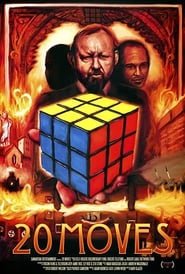
star 520 Moves is the story of how the best-selling puzzle toy came to market and the impact it had on the world around it. Tom Kremer stumbled upon an unwanted, unpatented puzzle game at the Nuremberg Toy Fair in 1979. It had been invented in Hungary in 1974 by Professor Erno Rubik who used it as a pedagogical aid for his architecture students and would go on to be played with by 1/5th of the world's population. We explore the cube's story - from its creation behind the Iron Curtain to the role it played in the fall of communism and the creation of free market trading in the former communist nations. We show how the cube was brought to the west - how it was introduced and marketed and what caused it to be the biggest fad of the 1980's. The cube would go on to symbolize an entire generation like nothing before it. The many faces, layers, and sides of 20 Moves is exactly like the cube. With each act our audience discovers another twist, another turn, another solve in the history of the Cube.Murder in Monaco
2025
Murder in Monaco
2025
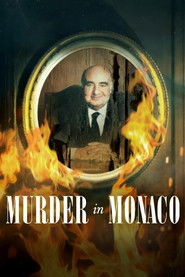
star 6.6Monaco, 1999. One of the world's richest men dies in his penthouse. This documentary unpacks the mysterious murder of billionaire banker, Edmond Safra.Predators
2025
Predators
2025
star 5.7In the mid-aughts, Dateline NBC’s To Catch a Predator drew millions of weekly viewers to watch sting operations: men planning to meet minors for sex would instead be confronted by polished host Chris Hansen, then by the police — all on hidden camera.Capturing Avatar
2010
Capturing Avatar
2010
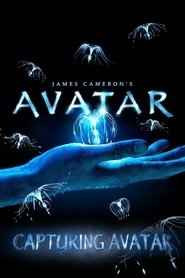
star 7Capturing Avatar is a feature length behind-the-scenes documentary about the making of Avatar. It uses footage from the film's development, as well as stock footage from as far back as the production of Titanic in 1995. Also included are numerous interviews with cast, artists, and other crew members. The documentary was released as a bonus feature on the extended collector's edition of Avatar.The Summers of It – Chapter One: You'll Float Too
2019
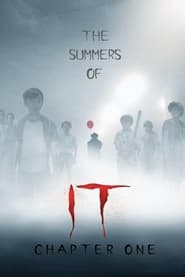
star 8.3This documentary focuses on the actors and their journey over two summers to create the remake to the original IT, by Stephen King. The documentary originally released as bonus material, bundled with IT: Chapter Two.Messi
2014
Messi
2014
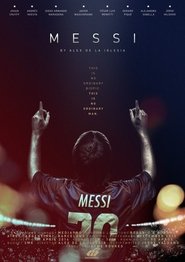
star 7.5His teachers, coaches, childhood friends and Barça teammates, together with journalists, writers and prominent figures from the history of football, come together in a restaurant to analyze and pick apart Messi's personality both on and off the field, and to look back at some of the most significant moments in his life. Viewed from Álex de la Iglesia's unique perspective, Messi recreates the player's childhood and teenage years, from his very first steps, with a football always at his feet, through to the decision to leave Rosario for Barcelona, the separation from his family, and the role played in his career by individuals such as Ronaldinho, Rijkaard, Rexach and Guardiola.Nuclear Now
2023
Nuclear Now
2023
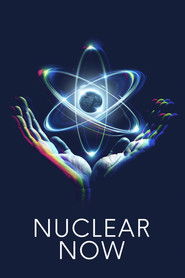
star 7With unprecedented access to the nuclear industry in France, Russia, and the United States, Nuclear Now explores the possibility for the global community to overcome the challenges of climate change and energy poverty to reach a brighter future through the power of nuclear energy. Beneath our feet, Uranium atoms in the Earth’s crust hold incredibly concentrated energy. Science unlocked this energy in the mid-20th century, first for bombs and then to power submarines. The United States led the effort to generate electricity from this new source. Yet in the mid-20th century as societies began the transition to nuclear power and away from fossil fuels, a long-term PR campaign to scare the public began, funded in part by coal and oil interests.Ride Away
2025
Ride Away
2025
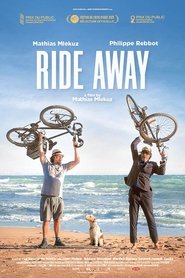
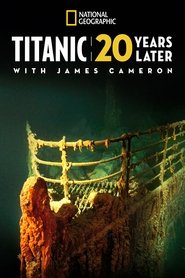
star 7.2From the Atlantic to the Black Sea, Mathias and Philippe, two old friends, embark on a bicycle journey that Mathias’s son made before his tragic death. The two men ride through the ordeals with tenderness, humor and emotion.Titanic: 20 Years Later with James Cameron
2017
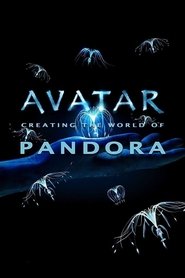
star 6.7For the 20th anniversary of "Titanic," James Cameron reopens the file on the disaster.Avatar: Creating the World of Pandora
2010
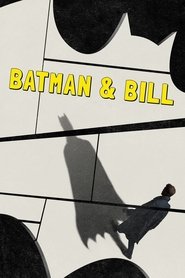
star 6.4The Making-of James Cameron's Avatar. It shows interesting parts of the work on the set.Batman & Bill
2017
Batman & Bill
2017
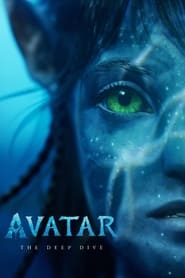
star 7.1Everyone thinks that Bob Kane created Batman, but that’s not the whole truth. One author makes it his crusade to make it known that Bill Finger, a struggling writer, actually helped invent the iconic superhero, from concept to costume to the very character we all know and love. Bruce Wayne may be Batman’s secret identity, but his creator was always a true mystery.Avatar: The Deep Dive - A Special Edition of 20/20
2022
star 7.1An inside look at one of the most anticipated movie sequels ever with James Cameron and cast.Manufacturing Dissent
2007
star 5.5"Michael Moore doesn't like documentaries. That's why he doesn't make them." A documentary that looks to distinguish what's fact, fiction, legend, and otherwise as a camera crew trails Michael Moore as he tours with his film, Fahrenheit 9/11.Underground Breath
2025
Underground Breath
2025
A documentary feature that combines behind-the-scenes footage from director Juval Marlon's previous films with freshly shot interviews and performances to reflect on the character of underground exploitation cinema.Mia
2017
Mia
2017
star 6.1Mia recounts her most intimate confessions, uncensored, in her first approach to a totally new world of domination and submission.The Summers of It - Chapter Two: It Ends
2019
star 7.1This documentary focuses on the actors and their journey over two summers to create the remake to the original IT, by Stephen King. The documentary originally released as bonus material, bundled with IT: Chapter Two.Chelsea Hotel
1981
Chelsea Hotel
1981
star 8This TV documentary shows some of the colourful residents of and people connected with the New York Chelsea Hotel. Some highlights include Andy Warhol and William Burroughs having dinner; Quentin Crisp pontificating in a blue rinse hairdo on his balcony and Nico forgetting what she is talking about halfway through a dour rendition of "Chelsea Girls". A number of lesser-known characters also appear, linked together by a tour guide walking around the building and some sub-Shining sequences of a child cycling round the landings on a rickety tricycle.Paper Ruscha
2015
Paper Ruscha
2015
Renowned Los Angeles artist Ed Ruscha prints his newest work,”ZOOT SOOT” at Aardvark Letterpress.XXXXXXX
2016
XXXXXXX
2016
star 6.9A tarot card reading as a starting point. A disruptive relationship as a point. Translation of the cards' symbols to a joint. Of the domestic exploration for finding my voice.