Popular History Movies on Amazon Video - Page 101
All Services
Free Services
 Netflix
 Amazon Prime Video
 Apple iTunes
 Apple TV Plus
 Disney Plus
 Google Play Movies
 Paramount Plus
 Hulu
Hulu
 HBO Max
 YouTube
 fuboTV
 Peacock
 Peacock Premium
 Amazon Video
 The Roku Channel
 AMC+
AMC on Demand
AMC+
AMC on Demand
 Kocowa
 Hoopla
 The CW
 Vudu
Vudu
 Starz
Starz
 Showtime
 PBS
PBS
 Pantaflix
 FXNow
FXNow
 Tubi TV
 Kanopy
 Comedy Central
 Crunchyroll
 Microsoft Store
 Redbox
 Sun Nxt
 ABC
ABC
 DIRECTV
 Crackle
 Fandor
 Plex
Plex
Netflix
Amazon Prime Video
Apple iTunes
Apple TV Plus
Disney Plus
Google Play Movies
Paramount Plus
Hulu
HBO Max
YouTube
fuboTV
Peacock
Peacock Premium
Amazon Video
The Roku Channel
AMC+
AMC on Demand
Kocowa
Hoopla
The CW
Vudu
Starz
Showtime
PBS
Pantaflix
FXNow
Tubi TV
Kanopy
Comedy Central
Crunchyroll
Microsoft Store
Redbox
Sun Nxt
ABC
DIRECTV
Crackle
Fandor
Plex

Zoot Suit Riots
2002
Zoot Suit Riots
2002
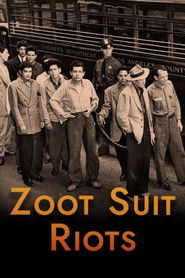
On August 1, 1942, a 22-year-old Mexican American man was stabbed to death at a party. To white Los Angelenos, the murder was just more proof that Mexican American crime was spiraling out of control. The police fanned out across LA, netting 600 young Mexican American suspects. Almost all those taken into custody were wearing the distinctive uniform of their generation: Zoot Suits. The tragic murder and the injustice of the trial that followed, coupled with sensational news coverage of both, fanned the flames of the racial hostility that was already running rife in the city. Within months of the verdict, Los Angeles was in the grip of some of the worst violence in its history.Kästner and Little Tuesday
2016
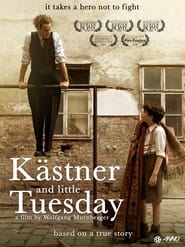
star 7.5Germany, 1931. The youth novel "Emil and the Detectives" is being filmed, which will make its author, Erich Kästner, world famous. An unusual friendship begins between the childless author and fatherless Hans, the 9-year-old playing the character Little Tuesday. Their friendship is put to the ultimate test in the Third Reich when Kästner's books are banned and little Hans becomes a Hitler Youth. Based on a true story.Le Mans 1955
2018
Le Mans 1955
2018
star 7.2The 24 Hours of Le Mans, 1955. 300.000 spectators are watching from the sidelines. It is 6:00 PM when Pierre Levegh's car ploughs into the spectator stands, scattering the crowd with his car engine's hot debris.Traders of the Lost Scrolls
1997
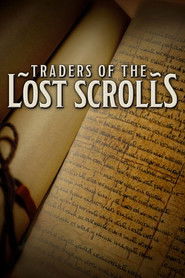
Jim Charlesworth, director of Princeton University's Dead Sea Scrolls Project believes that a large number of scrolls have yet to come to light. The programme is about his quest to track them down, an undertaking not without risks. The cliffs of Qumran still attract scroll hunters with non-academic motives - the scrolls are much sought after by private collectors and the shady figures of the black market who supply them.The War of 1812
2011
The War of 1812
2011
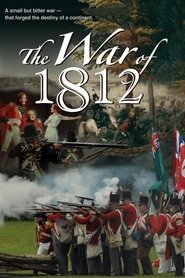
star 8The War 1812 is a two-hour film history of a deeply significant event in North American and world history. The war shaped American, Canadian and British destiny in the most literal way possible: had one or two battles or decisions gone a different way, a map of the United States today would look entirely (and shockingly) different. The fires of this war forged the nation of Canada; at the same time, the result tolled the end of Native American dreams of a separate nation. By war's end, the process of Native nation removal had already begun in the southeast, paving the way for a Cotton Kingdom powered by slavery, and a United States that had been on the verge of collapse was ready to announce its arrival as a global power. The U.S. did not win the War of 1812, but the noble experiment of democracy had managed to survive intense pressure from without, and within.Castles in the Sky
2014
Castles in the Sky
2014
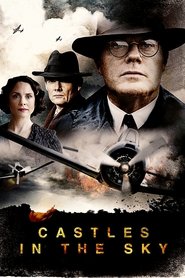
star 5.8England, while the storm clouds of Nazism menace Germany. Robert Watson Watt and a team of eccentric and brilliant meteorologists struggle to turn the mere idea of radar into a functional reality.The Visual Bible: Acts
1994
star 6.6The Visual Bible: Acts is a 1994 film that depicts the events of Book of Acts from the Bible's New Testament. All of the dialogue is word-for-word Scripture, taken directly from the New International Version of the Bible.23rd March 1931: Shaheed
2002
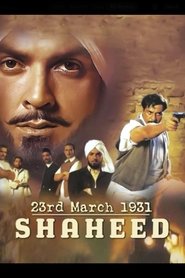
star 6Bhagat Singh, a freedom fighter, is arrested for killing the British official responsible for the death of his mentor Lala Lajpatrai. He is ultimately hanged for his misdeed.Alsina's Trench
2017
Alsina's Trench
2017
star 8Documentary film about the "zanja de Alsina", a long trench dug in the Argentinian Pampa in 1876 as way to separate the "civilized" from the "barbarians" during the massacre of indigenous peoples known as "campaña del desierto".Poisons or the World History of Poisoning
2001
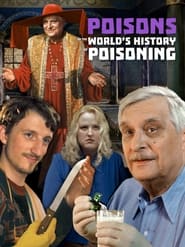
star 4.9A story of an actor named Oleg whose wife has been seduced by his neighbor. As he is thoroughly convinced of her infidelity, he would like to poison her. An old man named Prokhorov helps him to get rid of his wife by lecturing about famous deaths caused by poisoning. It is from Prokhorov we learn that many famous and not so famous like Cesare Borgia and Caligula were killed as they were poisoned.The Atlantis Puzzle
2024
The Atlantis Puzzle
2024
star 7Fascinating new translations and fresh research are transforming the myth of Atlantis from the realm of fantasy into an incredible reality. Travel across continents and centuries to unlock the secrets of Plato's final legacy - a true story of Ancient Greece, Africa, and climate change across deep time.Gunjal
2023
Gunjal
2023
When the killer of an adolescent labor activist is acquitted, journalist Shahbaz Bhatti sees glaring loopholes in the verdict, and begins a quest for justice. But each lead he follows contradicts the one before, and the twisted story reveals the ugly truth of child labor in 1990s Pakistan.As Long As I'm Famous
2020
star 5.8Writer/Director Bruce Reisman pays homage to the Golden Age of Broadway during the summer of 1948. Inspired by true events, this is the story of private, often forbidden romances of legends from Montgomery Clift to Richard Rodgers, told through the perspective of 24-year-old Sidney Lumet. This special director’s cut adds 12 minutes of previously-unseen footage.Kazakh Khanate: The Golden Throne
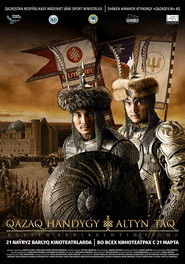
2019
star 5.2XV century. In the vast expanses of Eurasia, the descendants of Genghis Khan create their own state. The promised land of Kazakh Khanate is resisting its enemies..The Legend of Pancho Barnes and the Happy Bottom Riding Club
2009
star 6.2A documentary profile of Pasadena society girl turned adventurer and aviator, Florence Lowe "Pancho" Barnes. In the 1920's and 30's, Barnes was Hollywood's top woman stunt pilot. In the 1940's and 50's, she owned and operated the (in)famous "Happy Bottom Riding Club" - a fly-in resort located near Edwards Air Force Base.Anthony of Padua, The Saint of Miracles
1931
star 4Born Fernando de Bulhões, he was a precocious Portuguese youth, concerned with the suffering of the poor. Grown into a contemplative young man he renounces the world to join first the Augustinian Order and then the Franciscans order (where he takes the name Anthony) in his dedicated service to the faith.Hot Take: The Depp/Heard Trial
2022
star 3.1Follows the tumultuous relationship—in and out of court—of Johnny Depp and his ex-wife, Amber Heard.Nero's Sunken City
2017
Nero's Sunken City
2017
star 5Beneath the turquoise waves of the Bay of Naples lies an extraordinary underwater archeology site, the ancient Roman city of Baiae. From the first century to the third century AD, Baiae was the exclusive playground for the rich and powerful among Rome’s elite. What made Baiae such a special place? What really went on there? And why did it disappear?Leaders of Madison’s Black Renaissance
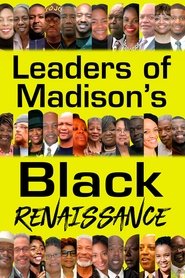
2022
star 8Despite Blacks making up only 7% of Madison WI's population, they are leading in so many important areas from education to politics, and are launching so many multi-million dollar projects that people describe this period as a "Black Renaissance."The Old Testament
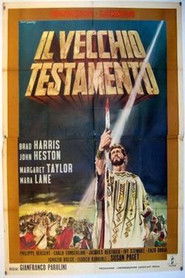
1963
The Old Testament
1963
star 7.7The Jews of Jerusalem are driven out by their Syrian rulers. They gather their forces, and return to drive out their oppressors.