Popular History Movies on Apple iTunes - Page 84
All Services
Free Services
 Netflix
 Amazon Prime Video
 Apple iTunes
 Apple TV Plus
 Disney Plus
 Google Play Movies
 Paramount Plus
 Hulu
Hulu
 HBO Max
 YouTube
 fuboTV
 Peacock
 Peacock Premium
 Amazon Video
 The Roku Channel
 AMC+
AMC on Demand
AMC+
AMC on Demand
 Kocowa
 Hoopla
 The CW
 Vudu
Vudu
 Starz
Starz
 Showtime
 PBS
PBS
 Pantaflix
 FXNow
FXNow
 Tubi TV
 Kanopy
 Comedy Central
 Crunchyroll
 Microsoft Store
 Redbox
 Sun Nxt
 ABC
ABC
 DIRECTV
 Crackle
 Fandor
 Plex
Plex
Netflix
Amazon Prime Video
Apple iTunes
Apple TV Plus
Disney Plus
Google Play Movies
Paramount Plus
Hulu
HBO Max
YouTube
fuboTV
Peacock
Peacock Premium
Amazon Video
The Roku Channel
AMC+
AMC on Demand
Kocowa
Hoopla
The CW
Vudu
Starz
Showtime
PBS
Pantaflix
FXNow
Tubi TV
Kanopy
Comedy Central
Crunchyroll
Microsoft Store
Redbox
Sun Nxt
ABC
DIRECTV
Crackle
Fandor
Plex

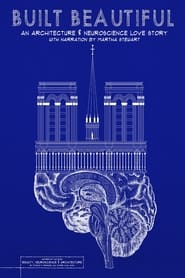
Built Beautiful: An Architecture and Neuroscience Love Story
2020
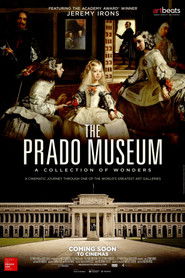
For centuries, humans have sought to express beauty in architecture and art, but it is only recently that neuroscience is helping to determine how and why beauty plays an important role in our wellbeing. Architects and neuroscientists are embarking on a new field of study in which subliminal responses to one’s built environment may influence the future of design. Experts argue that positive subliminal reactions lead to a pleasurable experience, one reminiscent of a powerful meditation session. The question remains: what makes a building beautiful - or more specifically, which elements of the built environment does the brain recognize as beautiful? Narrated by Martha Stewart.The Prado Museum: A Collection of Wonders
2019
star 7.2Actor Jeremy Irons embarks on an epic journey through the halls of the Prado Museum in Madrid, Spain, two hundred years after its inauguration, along corridors where thousands of masterpieces of all time tell the lives of rulers and common people, and tales about times of war and madness and times of peace and happiness; because, as Goya said, imagination, the mother of the arts, produces impossible monsters, but also unspeakable wonders.Death of a Nation
2018
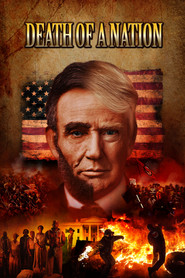
Death of a Nation
2018
star 4.1Parallels are drawn between Abraham Lincoln's presidency and the presidency of Donald Trump. Not since 1860 have the Democrats so fanatically refused to accept the result of a free election. That year, their target was Lincoln. They smeared him. They went to war to defeat him. In the end, they assassinated him.Pictures from a Revolution
1991
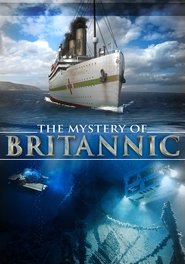
star 6.1In 1981, Susan Meiselas published "Nicaragua, June 1978 to July 1979," 70 photographs she took documenting the Sandanista revolution. Ten years later, Meiselas returns looking for the people who appear in the photographs: where are they now, what do they remember, what do they think of their country and of the revolution? She finds a woman who buried her husband when she was 14; she talks to those who fought the Guarda Nacional - some are disillusioned, some still have the fervor of revolution; she talks to mothers about their sons; she finds a Guarda member who became a Contra. And she offers her own reflections on time and history and on the moment and meaning of a photograph.The Mystery of Britannic
2017
star 4"The Mystery of Britannic" - a historical docudrama that reveals a unique scenery on the terrible fate of the sister ship of the famous Titanic, whose final destiny was to be lost while at sea. The project presents the on-screen combination of re-enacted historical events intertwined with the scientific underwater documentary.Be Still
2021
Be Still
2021
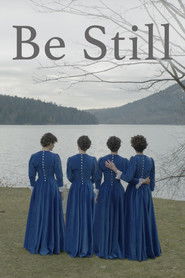
Already a successful portrait photographer, Hannah sets to reinvent this art form. Abandoning herself to a creative process that might easily be mistaken for madness, she's soon visited by mirror images of herself, as well as her daughter's ghost. Inspired by the life of photographer Hannah Maynard (1834-1918).Betrayal at Attica
2021
Betrayal at Attica
2021
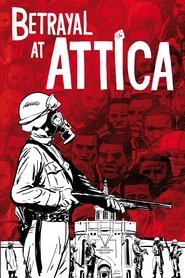
star 8On September 13, 1971 the State of New York shot and killed 39 of its own citizens, injured hundreds more, and tortured the survivors. Elizabeth Fink tells the story of the Attica prison rebellion, and how she exposed the cover up.Oscar Wilde About America
2025
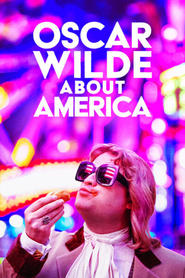
This big-hearted romp from New York City to Hollywood, CA leads Oscar to the queer joy, love, and liberation that eluded him 141 years ago, with the attendant themes of diversity, identity, and inclusion beautifully expressed in the film's original song, "Be Yourself, Everyone Else Is Taken", based on one of Wilde's most popular quotes. Filmed in London and in multiple locations across the United States, the film stars West End star Oscar Conlon-Morrey as Oscar Wilde, and features film/TV/stage veterans Rosemary Harris and Kate Burton.The 11th Green
2020
The 11th Green
2020
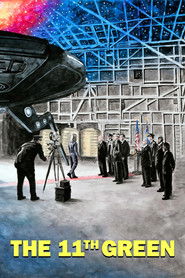
star 5A respected journalist uncovers the truth behind the mythology of President Eisenhower's long-alleged involvement in extraterrestrial events.Fish & Men
2019
Fish & Men
2019
star 3Fish & Men exposes the high cost of cheap fish in the modern seafood economy and the forces threatening local fishing communities and public health by revealing how our choices as consumers drive the global seafood trade. But, a new movement is underway – an opportunity to return sustainability to both fish and fishermen. Thriving on local communities, pioneering fishermen and celebrated chefs are leading a revolutionary new model, a ‘Catch of the Day’ revival based on local, seasonal, sustainable fish and reconnect us with those who risk their lives to harvest the bounties of the sea. Featuring the owners of Mac’s Seafood on Cape Cod and the Gloucester, Massachusetts fishing community.The Rise & Fall of Penn Station
2004
star 9.5In 1910, the Pennsylvania Railroad successfully accomplished the enormous engineering feat of building tunnels under New York City's Hudson and East Rivers, connecting the railroad to New York and New England, knitting together the entire eastern half of the United States. The tunnels terminated in what was one of the greatest architectural achievements of its time, Pennsylvania Station. Penn Station covered nearly eight acres, extended two city blocks, and housed one of the largest public spaces in the world. But just 53 years after the station’s opening, the monumental building that was supposed to last forever, to herald and represent the American Empire, was slated to be destroyed.Time Zero: The Last Year of Polaroid Film
2012
star 6.8Documentary covering the end of an era as Polaroid stops producing its signature cameras and film as well as The Impossible Project to keep instant photography alive.Heart of a Servant: The Father Flanagan Story
2024
Father Edward J. Flanagan is a familiar name to many Americans, often for the Oscar-winning 1938 film starring Spencer Tracy about Flanagan’s groundbreaking child welfare organization. But the story extends far beyond that, to a man whose name and legacy are still well-known as far as Germany and Japan. Flanagan gained influence and admiration over the course of his life from Presidents, CEOs, celebrities and more, but none mattered more to him than that of the children for whom he tirelessly worked. A sobering reminder of this was during WWII, as Flanagan saw droves of former Boys Town citizens go off to war. In fact, so many former Boys Town boys named Flanagan as their next of kin that the American War Dads Association named him as America’s No. 1 War Dad.How to Change the World
2014
star 7.1In 1971, a group of friends sail into a nuclear test zone, and their protest captures the world's imagination. Using never before seen archive that brings their extraordinary world to life, How To Change The World is the story of the pioneers who founded Greenpeace and defined the modern green movement.Obama: Building the Dream
2020
He was elected as the 44th President of the United States simply for being Obama: voters, tired of what America had become, responded to his persona, his message and what he embodied - hope. Obama was in many ways a mirror, a mirror in which millions of Americans saw reflected their personal ideals: ideals of justice, tolerance and equality. After spending two tumultuous terms in office, through a period of geopolitical upheaval and economic crisis, it is easy to forget how the young president captivated the world simply by being 'Obama'.Having Our Say: The Delany Sisters' First 100 Years
1999
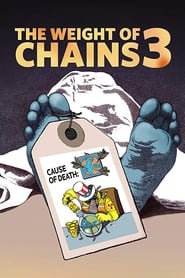
star 7.5Tells the story of Sadie and Bessie Delany, two African-American (they preferred "colored") sisters who both lived past the age of 100. They grew up on a North Carolina college campus, the daughters of the first African-American Episcopal bishop, who was born a slave, and a woman with an inter-racial background. With the support of each other and their family, they survived encounters with racism and sexism in their own different ways. Sadie quietly and sweetly broke barriers to become the first African-American home-ec teacher in New York City, while Bessie, with her own brand of outspokenness, became the second African-American dentist in New York City. At the ages of 103 and 101, they told their story to Amy Hill Hearth, a white New York Times reporter who published an article about them. The overwhelming response launched a bestselling book, a Broadway play, and this film.The Weight of Chains 3
2019
star 7.4Boris Malagurski explains how the military-industrial complex, big business and political interest groups endanger peoples' health and existence, focusing on the examples of Serbia, Cuba, Chile, Italy and Bolivia.Searchers
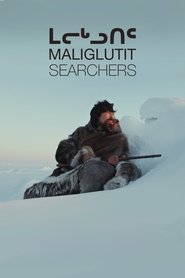
2016
Searchers
2016
star 6.8Inuk filmmaker Zacharias Kunuk (Atanarjuat: The Fast Runner) returns with this Arctic epic inspired by the classic John Ford western of the same name, about a vengeful husband who sets off in pursuit of the violent men who kidnapped his wife and destroyed his home.Angel Mountain
2021
Angel Mountain
2021
star 3Growing up in a small rural farm town in the early 1950's, sixteen- year-old Jimmy Hoffer, and his two siblings do their best to survive poverty and a crumbling family unit.Oscar Arias: Without a Shot Fired
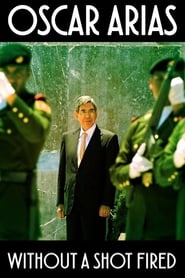
2017
star 6This is the story of a tiny country that made a decision to do something that no other country had ever done -- it decided to abolish its army and declare peace to the world. And this is the story of a young boy who grew up in that country, and how he ended up challenging -- and sometimes even convincing -- the greatest powers in the world to follow Costa Rica's example. "Oscar Arias: Without a Shot Fired" is a Don Quixote-like saga with great historical touchstones -- Ronald Reagan and Mikhail Gorbachev, Cold War politics and Communism, Central American War and Peace. It follows a slight, academic, and most unlikely hero over the course of more than fifty years, as he travels the world in a quest to stop the spread of the weapons of war. In the end, it is a story about the triumph of reason, of the sparrow triumphing over the eagle, and how the impossible dream can sometimes come true.