Popular History Movies on Hoopla - Page 36
All Services
Free Services
 Netflix
 Amazon Prime Video
 Apple iTunes
 Apple TV Plus
 Disney Plus
 Google Play Movies
 Paramount Plus
 Hulu
Hulu
 HBO Max
 YouTube
 fuboTV
 Peacock
 Peacock Premium
 Amazon Video
 The Roku Channel
 AMC+
AMC on Demand
AMC+
AMC on Demand
 Kocowa
 Hoopla
 The CW
 Vudu
Vudu
 Starz
Starz
 Showtime
 PBS
PBS
 Pantaflix
 FXNow
FXNow
 Tubi TV
 Kanopy
 Comedy Central
 Crunchyroll
 Microsoft Store
 Redbox
 Sun Nxt
 ABC
ABC
 DIRECTV
 Crackle
 Fandor
 Plex
Plex
Netflix
Amazon Prime Video
Apple iTunes
Apple TV Plus
Disney Plus
Google Play Movies
Paramount Plus
Hulu
HBO Max
YouTube
fuboTV
Peacock
Peacock Premium
Amazon Video
The Roku Channel
AMC+
AMC on Demand
Kocowa
Hoopla
The CW
Vudu
Starz
Showtime
PBS
Pantaflix
FXNow
Tubi TV
Kanopy
Comedy Central
Crunchyroll
Microsoft Store
Redbox
Sun Nxt
ABC
DIRECTV
Crackle
Fandor
Plex

1948: Creation & Catastrophe
2017
star 8The shocking story of the establishment of the state of Israel told from the perspective of those who lived through the end of the British Mandate for Palestine in 1948.The Glory Trail
1936
The Glory Trail
1936
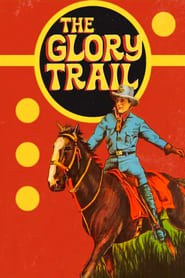
It's just after the Civil War and Captain Morgan and his confederate soldiers are establishing a town on the Bozeman trail. Colonel Strong and his union men are at the nearby fort. Things are peaceful until Riley has the Indians attack a union wagon train and leave a confederate sword at the scene.Children of Liberty
2027
Children of Liberty
2027
New York, 1941, shortly before the US enters the war. Stevie Mayer is an intelligent twelve-year-old who’s father suddenly disappears after being chased by two threatening men. Alone and unprotected, Stevie is left with a mysterious suitcase that everybody wants and nobody is who they claim to be. Thrown headlong into a mind-twisting plot, Stevie begins to suspect that his father is part of ring of Nazi spies. With the help of Miriam, a young Jewish refugee in his class, Stevie attempts to unravel the puzzle that leads to an explosive conclusion. It is a tale of non-stop adventure and a budding young love.Trail of Hope
1997
Trail of Hope
1997
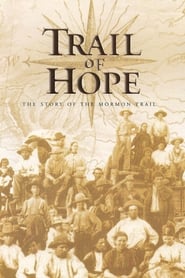
Hal Holbrook narrates this breathtaking documentary. Produced for national release on PBS Television, Trail of Hope captures the 22-year history of the Mormon Trail, a singular saga in American history. This conduit to the West was used by more than 70,000 emigrants - most of them migrating for religious reasons on their journey to the Great Basin. The great majority of these pioneers made the trek on foot across windblown plains, sunbaked deserts and frozen mountain valleys; each step a triumph in the face of tragedy, and a testament to unwavering faith.Battlebox
2023
Battlebox
2023
star 4.2With a sudden attack by the Japanese, British Major-General Maltby and his top officers struggle with the decision to either fight to the death or offer a humiliating surrender of the British Colony of Hong Kong.You'll Have the Sky: The Life and Work of Anne Morrow Lindbergh
2016
A film portrayal of a pioneering aviator and best-selling author whose extraordinary public life had a deep impact on her inner world.Carry Me Home: A Remember America Film
2016
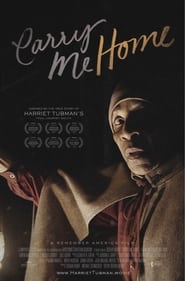
In the cold winter of 1860, a young mother trapped in slavery seizes the opportunity to escape with her family when she encounters HARRIET TUBMAN (Karen Abercrombie, War Room). Harriet leads the young family through a number of trials on the Underground Railroad, causing them all to question whether or not freedom is worth the price they must pay to obtain it.Big Bang in Tunguska
2008
Big Bang in Tunguska
2008
star 7.4At 7:14 am on 30 June 1908, the largest explosion recorded in human history to date reverberated throughout our planet. The force of the explosion was two thousand times that of the Hiroshima bomb. A woodland area the size of Luxembourg was eradicated in the Siberian taiga. This incident is recorded in history books as the Tunguska catastrophe. To this day, internationally renowned scientists of various disciplines argue about the causes of this disastrous explosion. The documentary discusses the latest and most controversial insights of these leading scientists. It identifies the reasons why Tunguska has evolved into a phenomenon and points out the curious results produced by this mythical event in culture and economy.George Washington: The Man Who Wouldn't Be King
1992
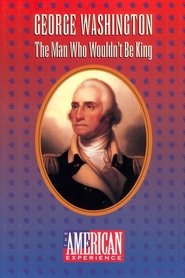
star 10The personal development of George Washington is the focus as Producer David Sutherland brings to life a uniquely human Washington who transformed himself from social climber into a patriot willing to give up everything for a higher cause.Part One: China in Revolution 1911–1949
1989
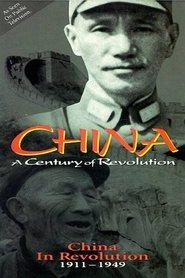
star 8The first film, China in Revolution, describes the epic upheaval that began in China with the fall of the last emperor in 1911. Over the next four decades, the Chinese people were caught up in struggles with warlords, foreign invasion and a bitter rivalry between the Chinese Communist Party and the Nationalist Party. The film highlights the two figures who came to shape events, Chang Kai-shek and Mao Zedong. First they worked as allies to unite the country and then they fought a bloody civil war that was won by the Communists in 1949.Plague at the Golden Gate
2022
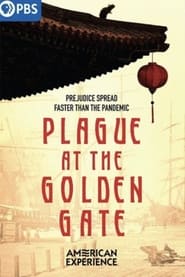
Discover how the 1900 outbreak of bubonic plague set off feat and anti-Asian sentiment in San Francisco. A fascinating medical mystery and timely examination of the relationship between the medical community, city powerbrokers and the Chinese-American community, Plague at the Golden Gate tells the gripping story of the race against time to save San Francisco and the nation from the deadly plague.Killing Kasztner
2008
Killing Kasztner
2008
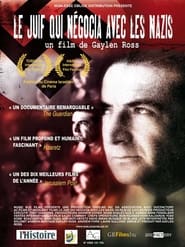
How much should you negotiate with the enemy? In Israel, the debate over that question evoked fury to the point of assassination. Such was the case of Kasztner. Dr Israel (Rezso) Kasztner, a Hungarian Jew who tried to rescue the last million Jews of Europe by negotiating face to face with Nazi leader Adolf Eichmann, was gunned down by another Jew who never set foot in Nazi Europe. After 50 years, his assassin Ze'ev Eckstein breaks his silence on the fateful night he shot and killed Kasztner. (Storyville)Göring's Secret: The Story of Hitler's Marshall
2011
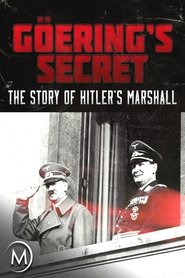
star 7These film reels had vanished for decades and no one knew about the secret passion of Hitler's second man Hermann Goering. This footage from his private collection shows for the first time how he preferred to see himself: at the height of his power, acclaimed by the masses - as in the annexation of Austria in 1938, as Commander-in-Chief of the Luftwaffe.Serial Killer Culture
2014
star 6.1Serial Killer Culture examines the reasons why artists and collectors are fascinated by serial killers.An Unknown Country: The Jewish Exiles of Ecuador
2015
Story of European Jews who fled Europe escaping the Nazi terror to find refuge in an unlikely destination: Ecuador -- barely known at the time.A Good Day to Die
2010
A Good Day to Die
2010
star 6.5Interviews and archival footage profile the life of Dennis Banks, American Indian Movement leader who looks back at his early life and the rise of the Movement.Shout Gladi Gladi
2015
Shout Gladi Gladi
2015
star 5Shout Gladi Gladi is a documentary about hope. It tells the story of one woman's quest to cure fistula and save mother's lives in Africa. Shot in Malawi and Sierra Leone (just prior to the Ebola crisis) this is an intense portrait of the people suffering from fistula and the struggle of those who are not only trying to fix this condition but curtail it through better maternal health care. In addition, it is about women's empowerment, specifically through a radical device from BBOXX, a solar powered generator that provides the women not only with electricity in a region where there is none but also as a means to make money by charging cell phones.Oscar Arias: Without a Shot Fired
2017
star 6This is the story of a tiny country that made a decision to do something that no other country had ever done -- it decided to abolish its army and declare peace to the world. And this is the story of a young boy who grew up in that country, and how he ended up challenging -- and sometimes even convincing -- the greatest powers in the world to follow Costa Rica's example. "Oscar Arias: Without a Shot Fired" is a Don Quixote-like saga with great historical touchstones -- Ronald Reagan and Mikhail Gorbachev, Cold War politics and Communism, Central American War and Peace. It follows a slight, academic, and most unlikely hero over the course of more than fifty years, as he travels the world in a quest to stop the spread of the weapons of war. In the end, it is a story about the triumph of reason, of the sparrow triumphing over the eagle, and how the impossible dream can sometimes come true.All Against All
2019
All Against All
2019
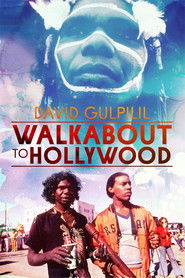
star 7This richly illustrated historical documentary investigates the mechanism of nationalist feelings that radicalise. It shows how fascism was on the rise even a decade before the founding of the NSB, due to a number of anti-democratic initiatives led by a millionaire with a predilection for one-legged women, a market vendor, a cleric, and an artist. Historians, writers and collectors of fascist curios reveal how an initially marginal and fragmented movement grew into a radical populist party.Walkabout to Hollywood
1980
Produced and directed this documentary for BBC in the 1980’s, about David Gulpilil, acclaimed Australian Aboriginal actor, dancer and musician. The film shows how Gulpilil is always working to bridge the gap between the tribal Aboriginal and Western worlds. He divides his time between a traditional tribal lifestyle and his artistic work, which has included major film roles, collaboration with contemporary dance and music groups and teaching Aboriginal dance and culture. Bill and David travel to Hollywood where David was the most popular Australian in the world at that time, with FOUR films playing in America – WALKABOUT, STORM BOY, THE LAST WAVE and MAD DOG MORGAN. After relating to both the black and native American cultures and filming a quick scene for a big Hollywood picture, he pines to head back through the Outback to his beloved Arnhem Land. Edited by Simon Dibbs and shot by Ray Henman.