Popular Movies on Kanopy - Page 412
All Services
Free Services
 Netflix
 Amazon Prime Video
 Apple iTunes
 Apple TV Plus
 Disney Plus
 Google Play Movies
 Paramount Plus
 Hulu
Hulu
 HBO Max
 YouTube
 fuboTV
 Peacock
 Peacock Premium
 Amazon Video
 The Roku Channel
 AMC+
AMC on Demand
AMC+
AMC on Demand
 Kocowa
 Hoopla
 The CW
 Vudu
Vudu
 Starz
Starz
 Showtime
 PBS
PBS
 Pantaflix
 FXNow
FXNow
 Tubi TV
 Kanopy
 Comedy Central
 Crunchyroll
 Microsoft Store
 Redbox
 Sun Nxt
 ABC
ABC
 DIRECTV
 Crackle
 Fandor
 Plex
Plex
Netflix
Amazon Prime Video
Apple iTunes
Apple TV Plus
Disney Plus
Google Play Movies
Paramount Plus
Hulu
HBO Max
YouTube
fuboTV
Peacock
Peacock Premium
Amazon Video
The Roku Channel
AMC+
AMC on Demand
Kocowa
Hoopla
The CW
Vudu
Starz
Showtime
PBS
Pantaflix
FXNow
Tubi TV
Kanopy
Comedy Central
Crunchyroll
Microsoft Store
Redbox
Sun Nxt
ABC
DIRECTV
Crackle
Fandor
Plex

Black Indians: An American Story
2004
star 6.2James Earl Jones narrates this examination of the historical relationship between American Indians and African-Americans, who often merged their cultures to work and live together while mainstream white society shunned them. Through illuminating anecdotes and interviews, descendants of fused black and Indian families discuss the complications of their mixed heritage and how their culture was largely erased on official documents.The Indomitable Teddy Roosevelt
1983
star 5Theodore Roosevelt was America's 26th president and a larger-than-life legend whose incredible story must be seen to be believed. Narrated by George C. Scott, this documentary weaves extremely rare archival footage with meticulous recreations alongside the music of John Philip Sousa in a dynamic panorama of the great events of Teddy Roosevelt in the early years of the 20th century.Bloody Nose, Empty Pockets
2020
star 6.7A portrait of the lives of a disparate group of patrons and employees at an American watering hole today.Stopping Traffic: The Movement to End Sex Trafficking
2017
star 5.2With the instant reach of social media and explosion in cyber porn, a child sex slave can be purchased online and delivered to a customer more quickly than a pizza. Stopping Traffic: The Movement to End Sex Trafficking starts the conversation on a taboo topic – with raw images of life on the streets, heart-pounding rescues and gut-wrenching, personal stories – ultimately offering a story of hope and empowerment, with the goal of engaging others in launching a movement to end modern-day slavery. With 27 million victims, human trafficking is the 2nd largest criminal enterprise in the world. Not just a back-alley enterprise in underdeveloped regions, it’s also prevalent in the U.S. and industrial nations. Stopping Traffic takes an unflinching, first-hand look at this shadowy underworld, telling the shocking story through the eyes of survivors, veteran activists, front-line rescue organizations and celebrities who support the cause, including Dolph Lundgren and Jeannie Mai.1985
2018
1985
2018
star 6.2Having been gone for three years, closeted advertising executive Adrian returns to his Texas hometown and struggles to reveal his dire circumstances to his conservative family.Acorn and the Firestorm
2017
star 5For 40 years, the community-organizing group ACORN advocated for America’s poorest communities, while its detractors accused it of promoting the worst of liberal policies. Riding high on the momentum of Barack Obama’s presidential victory in 2008, ACORN was at its political zenith when a hidden-camera video sparked a national scandal and brought it crashing down. The story involves voter fraud, a fake prostitute, and the rise of Breitbart.com.Yuli
2018
Yuli
2018
star 6.9Yuli is the nickname given to Carlos Acosta by his father, Pedro, who considers him the son of Ogun, an African god and a fighter. As a child Yuli avoids discipline and education, learning from the streets of an impoverished and abandoned Havana. His father, however, has other ideas, and knowing that his son has a natural talent for dance, sends him to the National Ballet School of Cuba. Despite his repeated escapes and initial poor behaviour, the boy is inevitably drawn to the world of dance, and begins to shape his legendary career from a young age, becoming the first black dancer to be cast in some of the most prestigious ballet roles, originally written for white dancers, in companies such as the Houston Ballet or the Royal Ballet in London.The Artist’s Garden: American Impressionism
2017
star 8.5Taking its lead from French artists like Renoir and Monet, the American impressionist movement followed its own path which over a forty-year period reveals as much about America as a nation as it does about its art as a creative power-house. It’s a story closely tied to a love of gardens and a desire to preserve nature in a rapidly urbanizing nation. Travelling to studios, gardens and iconic locations throughout the United States, UK and France, this mesmerising film is a feast for the eyes. The Artist’s Garden: American Impressionism features the sell-out exhibition The Artist’s Garden: American Impressionism and the Garden Movement, 1887–1920 that began at the Pennsylvania Academy of the Fine Arts and ended at the Florence Griswold Museum, Old Lyme, Connecticut.The Heretics
2009
The Heretics
2009
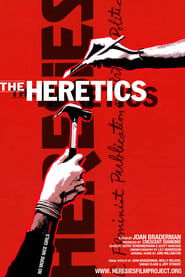
star 3.3THE HERETICS uncovers the inside story of the Second Wave of the Women’s Movement for the first time in a feature film or video. Joan Braderman, director and narrator, follows her dream of becoming a filmmaker to New York City in 1971. By chance, she joins a feminist art collective at the epicenter of the 1970’s art world in lower Manhattan. In her first person account, THE HERETICS charts the history of a feminist collective from the inside out.Desperate Souls, Dark City and the Legend of Midnight Cowboy
2023
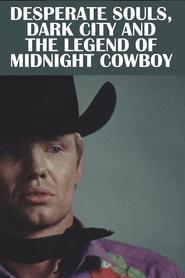
star 5.8This is not a documentary about the making of Midnight Cowboy. It is about a humane and groundbreaking masterpiece and the flawed but gifted people who made it. It is about a troubled era of cultural ferment, social and political change, about broken dreams and strivers, then and now. It is about an era that made a movie and a movie that made an era.Three Sisters
1970
Three Sisters
1970
star 3.8Nearly a thousand miles away from their beloved Moscow, Chekhov's Three Sisters live in virtual exile. Olga , a schoolmistress, attempts to support her siblings and the home that is the sole legacy of their late father.Without Lying Down: Frances Marion and the Power of Women in Hollywood
2000
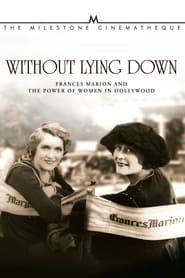
star 7From 1915-1939, Frances Marion was one of the most powerful talents in the movie industry. In one of the most liberating eras for women in film, she wrote more than 200 movies and was the world's highest paid screenwriter - man or woman. Kathy Bates gives voice to Marion's words from her letters, diaries, and memoirs. Includes commentary by silent film historian Kevin Brownlow, critic Leonard Maltin, and Marion's celebrated biographer Cari Beauchamp. Current women filmmakers reflect on the legacy left to them by Marion and the pioneering women of early Hollywood.Stretch and Bobbito: Radio That Changed Lives
2015
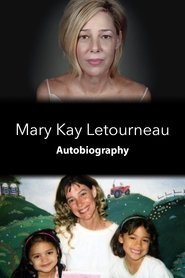
star 8Exploring the social impact of what The Source Magazine in 1998 voted, "The Best Hip Hop Radio Show Of All-Time." The documentary film is the story of quirky friends who became unlikely legends by engaging their listeners and breaking the biggest rap artists ever.Mary Kay Letourneau: Autobiography
2018
star 6The story of former teacher Mary Kay Letourneau, a Seattle grade school teacher, who stunned the world when she fell in love with her 13-year-old former sixth grade student Vili Fualaau. Their subsequent relationship ultimately sent her to prison for more than seven years, isolating her from her children and altering the course of her life forever.Wondrous Boccaccio
2015
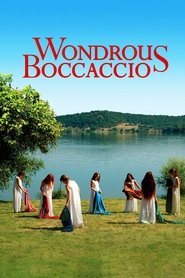
Wondrous Boccaccio
2015
star 5.8It's 1348. The plague has brutally hit Florence. A group of then young people, seven women and three men, rebel against the feeling of death that is about to swallow them. They flee the city and find refuge in an abandoned villa in the Tuscan hills. Here, between moral doubts and the tasks needed to survive, they kill time by telling each other stories until they will decide to return. The stories are varied - tragic, bizarre, funny or erotic - but common and central to all of them is the female presence.A Town Called Panic
2009
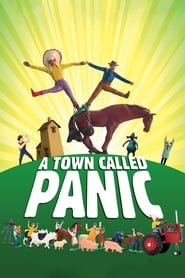
A Town Called Panic
2009
star 7.5Cowboy and Indian's only wish was to come up with a brilliant idea for Mr Horse's birthday, but when their plan ends up in utter disaster, they'll need to travel the world and back to make things right again.The Dybbuk
1937
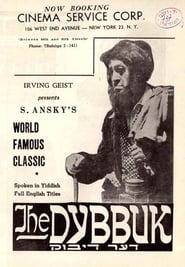
The Dybbuk
1937
star 6.3In a Polish shtetl, two young men who have grown up together betrothe their unborn children, ignoring the advice of a mysterious traveler not to pledge the lives of future generations. Soon after, one of them dies, and the wife of the other dies in childbirth. The children grow up in different towns, without ever knowing of the betrothal, but the power of the vow leads them to meet each other when they are marriageable. The young woman, Leah, is promised to another man, but Channon, the son of the father who died, is a practitioner of mysticism, and seeks to win his bride through sorcery.Ivan the Terrible, Part II: The Boyars' Plot
1958
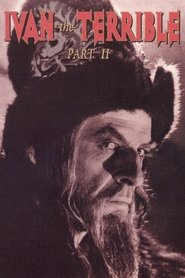
star 7.3This is the second part of a projected three-part epic biopic of Russian Czar Ivan Grozny, undertaken by Soviet film-maker Sergei Eisenstein at the behest of Josef Stalin. Production of the epic was stopped before the third part could be filmed, due to producer dissatisfaction with Eisenstein's introducing forbidden experimental filming techniques into the material, more evident in this part than the first part. As it was, this second part was banned from showings until after the deaths of both Eisenstein and Stalin, and a change of attitude by the subsequent heads of the Soviet government. In this part, as Ivan the Terrible attempts to consolidate his power by establishing a personal army, his political rivals, the Russian boyars, plot to assassinate him.The Garden
1990
The Garden
1990
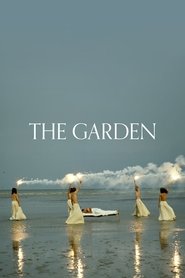
star 5.5A nearly wordless visual narrative intercuts two main stories and a couple of minor ones. A woman, perhaps the Madonna, brings forth her baby to a crowd of intrusive paparazzi; she tries to flee them. Two men who are lovers marry and are arrested by the powers that be. The men are mocked and pilloried, tarred, feathered, and beaten. Loose in this contemporary world of electrical-power transmission lines is also Jesus. The elements, particularly fire and water, content with political power, which is intolerant and murderous.The Christ Slayer
2019
The Christ Slayer
2019
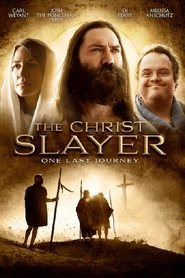
star 8Takes place at the Passover and the days that follow the crucifixion. A mix of scripture and Christian legend woven to try and create a more complete picture. It follows Longinus as the Roman soldier who put the spear to Jesus on the cross.