Popular Movies on Kanopy - Page 475
All Services
Free Services
 Netflix
 Amazon Prime Video
 Apple iTunes
 Apple TV Plus
 Disney Plus
 Google Play Movies
 Paramount Plus
 Hulu
Hulu
 HBO Max
 YouTube
 fuboTV
 Peacock
 Peacock Premium
 Amazon Video
 The Roku Channel
 AMC+
AMC on Demand
AMC+
AMC on Demand
 Kocowa
 Hoopla
 The CW
 Vudu
Vudu
 Starz
Starz
 Showtime
 PBS
PBS
 Pantaflix
 FXNow
FXNow
 Tubi TV
 Kanopy
 Comedy Central
 Crunchyroll
 Microsoft Store
 Redbox
 Sun Nxt
 ABC
ABC
 DIRECTV
 Crackle
 Fandor
 Plex
Plex
Netflix
Amazon Prime Video
Apple iTunes
Apple TV Plus
Disney Plus
Google Play Movies
Paramount Plus
Hulu
HBO Max
YouTube
fuboTV
Peacock
Peacock Premium
Amazon Video
The Roku Channel
AMC+
AMC on Demand
Kocowa
Hoopla
The CW
Vudu
Starz
Showtime
PBS
Pantaflix
FXNow
Tubi TV
Kanopy
Comedy Central
Crunchyroll
Microsoft Store
Redbox
Sun Nxt
ABC
DIRECTV
Crackle
Fandor
Plex

Tiger Raid
2016
Tiger Raid
2016
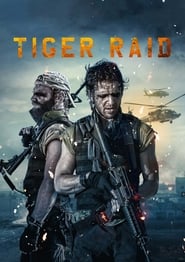
star 4.5While on a covert mission, two cold blooded mercenaries form an unlikely bond as they race across the desert in the dead of night. When their violent and desperate world implodes, past atrocities come to the surface threatening to tear each of them apart.Let There Be Light
1946
Let There Be Light
1946
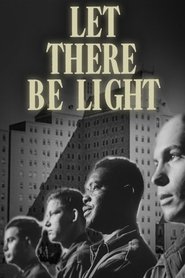
star 7.3The final entry in a trilogy of films produced for the U.S. government by John Huston. Some returning combat veterans suffer scars that are more psychological than physical. This film follows patients and staff during their treatment. It deals with what would now be called PTSD, but at the time was categorised as psychoneurosis or shell-shock. Government officials deemed this 1946 film counterproductive to postwar efforts; it was not shown publicly until 1981.Wanted for Murder
1946
Wanted for Murder
1946
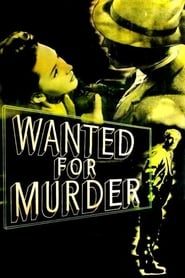
star 6.4The son of a notorious hangman is gradually becoming insane and he finds himself unable to resist the urge to strangle women to death.The Living
2014
The Living
2014
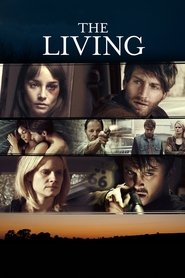
star 5.6After beating his wife in an alcohol-fueled rage, a man (Fran Kranz) tries to redeem himself, while his brother-in-law (Kenny Wormald) hires a hit man to kill him.The Obituary of Tunde Johnson
2019
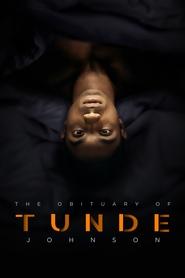
star 5.2A wealthy, Nigerian-American teenager is pulled over by police, shot to death, and immediately awakens, trapped in a terrifying time loop that forces him to confront difficult truths about his life and himself.The Butcher
2007
The Butcher
2007
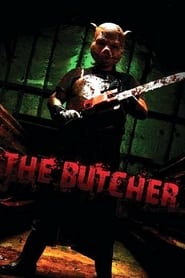
star 5.2Relentlessly gruesome, South Korean filmmaker Kim Jin-Won's torture flick chronicles the making of a snuff film from two perspectives: that of the sadistic producers and that of the unfortunate "stars." Their terror captured through vérité-style camera work, the victims are made to endure the agonizing screams of their fellow captives before meeting their own grim fate at the hands the titular butcher in his bloody abattoir.Monsters Within
2025
Monsters Within
2025
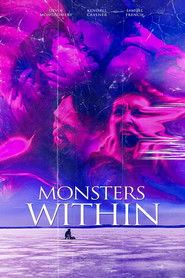
star 2.5Life brings Luke Wolf back to his hometown where his sister, who has Down Syndrome, is. Things are different, or maybe it's just that now he's different. After years of running from his problems, Luke must face his monsters.Whitney Houston & Bobbi Kristina: Didn't We Almost Have It All
2021
star 8.7An in-depth look at the parallel lives of renowned singer Whitney Houston and her daughter Bobbi Kristina.A Midwife's Tale
1998
A Midwife's Tale
1998
star 7.8To understand eighteenth-century America through a woman's eyes, historian and author Laurel Thatcher Ulrich spent eight years working through Martha Ballard's massive but cryptic diary. "A Midwife's Tale" chronicles the interwoven stories of two remarkable women: an eighteenth-century midwife and healer and the twentieth-century historian who brought her words to light.Family Viewing
1987
Family Viewing
1987
star 5.4An emotionally constrained view of the displacement of human feelings in our video saturated society. Van regularly visits his grandmother in a run-down nursing home. His father depends on phone sex for guidance meanwhile erasing family homevideos of happier times with homemade pornography. Will Van rescue his grandmother and memories of his mother in time?West of Sunshine
2018
West of Sunshine
2018
star 6.1A father has less than a day to pay back a debt to a violent loan shark, while looking after his young son.The Meaning of Hitler
2021
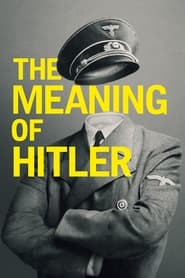
star 6.3This provocative consideration of the lasting influence and draw of Hitler provides insight into the resurgence of white supremacy, antisemitism, and the weaponization of history.Gabo & Cinema
2016
Gabo & Cinema
2016
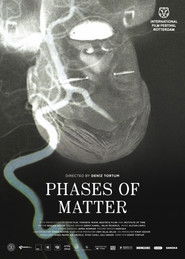
It is said that Nobel Prize winner Gabriel Garcia Marquez never allowed for a film adaptation of his singular masterpiece 'One Hundred Years of Solitude', arguably the most influential novel in any language of the second half of the twentieth century, to be produced. However, the prolific Colombian writer had strong ties to the movies.Phases of Matter
2020
Phases of Matter
2020
star 5.3Phases of Matter follows living and inanimate residents of a teaching hospital in Istanbul, moving from the operating room to the morgue, between life and other states, the real and the virtual.Cyrano de Bergerac
1925
Cyrano de Bergerac
1925
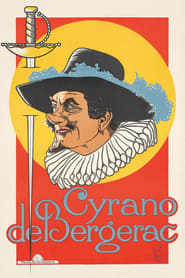
star 5.4Cyrano de Begerac is joyous, witty, a poet, a leader and filled with plenty of charisma and bravado in 17th Century France. He has only one flaw: an unusually long nose which makes him unattractive to any woman. Thus, he cannot have the woman he loves, his cousin Roxanne. Roxanne loves an officer in his army who gets tongue-tied in front of women. Who will Roxanne love? Will Cyrano ever find love? Or will he find happiness in helping the officer woo Roxanne? This is a story of split personalities, human frailty and unrequited love.Plastic Earth
2023
Plastic Earth
2023
star 6Worldwide plastic production from fossil-based sources continues to rise and contribute to climate change, pollution and environmental issues. Scientists, engineers, researchers and innovators tackle solutions to deal with the over-production of single-use plastics.Paul Bowles: The Cage Door Is Always Open
2013
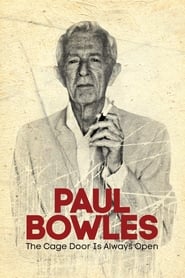
star 5The American composer and author Paul Bowles was a man with a great deal of charisma and influence. When he moved to Tangier, Morocco, in 1949, half the world followed him to the enigmatic city. His marriage with author Jane Bowles was a loving relationship of opposites, even though both were homosexual. Based on exclusive interviews with Bowles shortly before his death interwoven with anecdotes recounted by his friends and co-workers, the film portrays a daring and visionary life as well as a relationship shaped by an interdependency that encompassed much more than sexuality.The Princess of Nebraska
2008
star 5.2Sasha is a young woman from Beijing, studying in Nebraska. She flies to the Bay Area and meets up with friends, including Boshen, a gay man who was the lover of Yang, a member of Beijing's Opera who got Sasha pregnant four months before. She's made an appointment at a clinic for the next day. Boshen thinks he, she, Yang, and the baby can be a family. After a contentious dinner, Sasha meets X, a call girl on her way to a party with older men. Sasha goes too. Later, Sasha asks X to travel the world with her. Reality awaits the next day. As the annual St. Stupid's Day Parade passes by, Boshen accompanies Sasha to the clinic. What will she decide?The Polygon
2014
The Polygon
2014
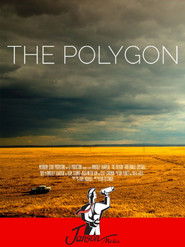
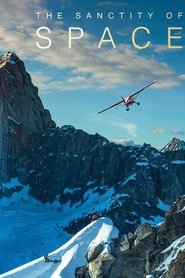
star 6.5The Polygon shines a light on the village of Sarzhal in East Kazakhstan, situated only 18kms from the perimeter of the former Semipalatinsk Test Site, that was home to over 600 nuclear detonations. Between 1949 and 1991 the Soviet Union detonated 116 above ground bombs, whose massive radioactive mushroom clouds were witnessed by thousands of innocent and unsuspecting Kazakh villagers. They gazed openmouthed at the spectacle, completely unaware that nuclear fallout was raining down on them, their children, livestock and homes. 20 years after the closure of The Polygon they are still suffering high rates of cancer, cancer related diseases and mental illness. The Polygon takes us on a journey from the twisted Cold War experiments to those victims who remain today, still suffering despite the emergence of Kazakhstan as a major economic player on the global stage.The Sanctity of Space
2022
star 5.7Seventy-five years after Brad Washburn, one of the greatest aerial mountain photographers of all time, first shot Alaska’s Denali Mountain from the open door of an airplane, climbing buddies Renan Ozturk, Freddie Wilkinson, and Zack Smith look at some of his mountain photographs and have this crazy idea. Rather than go up, their dream is to go sideways across the range’s most foreboding peaks, the Moose’s Tooth massif. It’s a fresh new way to explore the same landscape Washburn first discovered. As the group endures rough conditions, disintegrating ropes, and constant rockfall, their desire to be the first to complete the audacious line grows into an obsession. But friendships begin to fray when Renan suffers a near fatal brain injury, forcing all three partners to decide what’s most important to them.