Popular History Movies on Pantaflix - Page 216
All Services
Free Services
 Netflix
 Amazon Prime Video
 Apple iTunes
 Apple TV Plus
 Disney Plus
 Google Play Movies
 Paramount Plus
 Hulu
Hulu
 HBO Max
 YouTube
 fuboTV
 Peacock
 Peacock Premium
 Amazon Video
 The Roku Channel
 AMC+
AMC on Demand
AMC+
AMC on Demand
 Kocowa
 Hoopla
 The CW
 Vudu
Vudu
 Starz
Starz
 Showtime
 PBS
PBS
 Pantaflix
 FXNow
FXNow
 Tubi TV
 Kanopy
 Comedy Central
 Crunchyroll
 Microsoft Store
 Redbox
 Sun Nxt
 ABC
ABC
 DIRECTV
 Crackle
 Fandor
 Plex
Plex
Netflix
Amazon Prime Video
Apple iTunes
Apple TV Plus
Disney Plus
Google Play Movies
Paramount Plus
Hulu
HBO Max
YouTube
fuboTV
Peacock
Peacock Premium
Amazon Video
The Roku Channel
AMC+
AMC on Demand
Kocowa
Hoopla
The CW
Vudu
Starz
Showtime
PBS
Pantaflix
FXNow
Tubi TV
Kanopy
Comedy Central
Crunchyroll
Microsoft Store
Redbox
Sun Nxt
ABC
DIRECTV
Crackle
Fandor
Plex

Antony and Cleopatra
1980
Antony and Cleopatra
1980
The love story of the great Roman commander Anthony and the oriental beauty Cleopatra, the tragic suicide of both, is recreated.From the Life of Ostap Vyshnya
1991
Biographical film of the most dramatic period in the life of the famous Ukrainian writer Ostap Vyshnya, who in the 1930s was repressed by the Russian authorities and exiled to Siberia. Faithful wife and assistant Varvara Maslyuchenko shared his fate and followed her husband into exile.Ono
1989
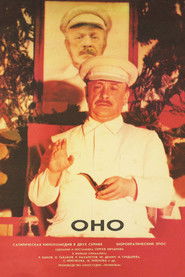
Ono
1989
star 4.9The bureaucratic epos on the dialogues and plots of Mikhail Saltykov-Shchedrin "The History of a Town". In a metaphorical and grotesque form, the film conveys the history of Russia from the calling of the Varangians until the end of the 20th century. The film traces the change of the “chiefs” of the county town of Glupov, which differ in varying degrees of tyranny and the corresponding total number of “killed” city residents. The heads of the city easily guess the former heads of the Russian state and the USSR.The Last King
2016
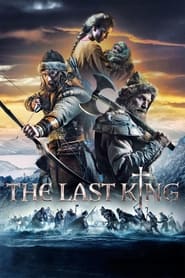
The Last King
2016
star 5.7Norway, 1204. A civil war between the birkebeiners —the king's men— and the baglers —supporters of the Norwegian aristocracy and the Church— ravages the country. Two men must protect a baby, the illegitimate son of King Håkon, who will be the future king and peacemaker, from those who want to kill him.Happy Birthday, Marsha!
2018
star 1It's a hot summer day in June, 1969. Marsha throws herself a birthday party and dreams of performing at a club in town, but no one shows up. Sylvia, Marsha’s best friend, distraught from an unsuccessful introduction between her lover and her family, gets so stoned she forgets about the party. Marsha, Sylvia, and friends eventually meet at the Stonewall Inn to celebrate Marsha's birth. When the police arrive to raid the bar, Marsha and Sylvia are among the first to fight back.The Three-Day Massacre in Guangzhou
1937
It was assisted by the Qing army and some traitors (Fan Cheng-En), who captured Guangzhou and massacred the civilians for three days until Sun Yat-Sen established the Republic of China and Chiang Kai-Shek succeeded in the Northern Expedition.Sherman's March
2007
Sherman's March
2007
This documentary chronicles General William Tecumseh Sherman's fabled "March to the Sea" through Georgia and the Carolinas, utilizing state of the art production techniques including CGI, special effects and historical re-creations.The Radicals
1989
The Radicals
1989
The story of the Anabaptist movement and two of its first leaders, Michael and Margaretha Sattler.Tun Fatimah: The Rebel Queen
0000
The short film is an adaptation of Ninot Aziz’s Kirana: Dream After the Rose, which centres on Tun Fatimah, the last queen of Melaka. The story is not a straightforward retelling of Tun Fatimah, but instead features a modern twist. The setting of the plot takes place both in present-day Melaka and the use of visual effects aims to capture the city in all its glory during the 16th century.Invasion 1897
2014
Invasion 1897
2014
star 3Igie Ehanire a research student on African Art history gets touched, he gets more perturbed about the injustice of the British invasion of Benin.H.M.S. Defiant
1962
H.M.S. Defiant
1962
star 6.5Defiant's crew is part of a fleet-wide movement to present a petition of grievances to the Admiralty. Violence must be no part of it. The continual sadism of Defiant's first officer makes this difficult, and when the captain is disabled, the chance for violence increases.The Gold Panner from Lannavaara
2025
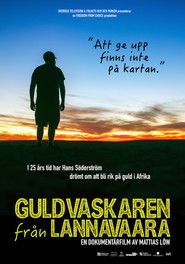
star 10A film about the gold panning adventures of Hans Söderström, an indigenous Swede. The story stretches from Scandinavia to Africa, via Asia and the Americas, but ultimately boils down to the simple boyish dream of finding gold. Lots of it.Boadicea
1927
Boadicea
1927
The life of the Celtic Queen Boudica (Boadicea) and her rebellion against the Roman Empire.Invitation
1986
Invitation
1986
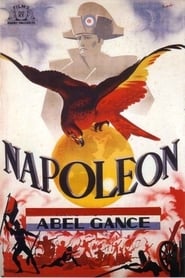
star 5The main character is Anna, an outstanding pediatrician. She survived the harsh years of war in a concentration camp and cannot accept the behavior of her daughter Natalia, who uses her connections and cares only about material goods. Anna is reminded of 1939, when Piotr, who had been missing for forty-five years, arrives in Poland. Together, they visit places that are important to them: Auschwitz, Sachsenhausen, and Ravensbruck.Napoléon Bonaparte
1935
Lights and Shadows
1988
Lights and Shadows
1988
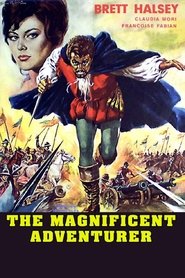
star 5.8This film within a film is based on the painting Las Meninas by Diego de Velazquez. A young boy enters the canvas of the famous picture of the Spanish king and his court. In order to return to the real world, he must convince the artist to create his famous painting. The other plot involves a film director who is not sure how his film within a film will be created. He is distracted by his troubled marriage and has difficulty focusing on his project.The Magnificent Adventurer
1963
star 6Benvenuto Cellini knows no obstacles when it comes to creating a work of art or conquering the heart of a woman.Bhuban Majhi
2017
Bhuban Majhi
2017
A Journey of 4 decade with love and passion. Things will arrive as certain threat while characters are moving through a real history. End turn to endless.Land of Mine
2015
Land of Mine
2015
star 7.8In the days following the surrender of Germany in May 1945, a group of young German prisoners of war is handed over to the Danish authorities and subsequently sent to the West Coast, where they are ordered to remove the more than two million mines that the Germans had placed in the sand along the coast. With their bare hands, crawling around in the sand, the boys are forced to perform the dangerous work under the leadership of a Danish sergeant.The Star Hour
1973
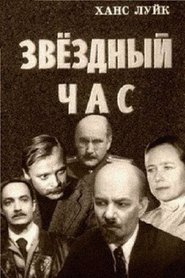
The Star Hour
1973
Based on the play by Estonian playwright Hans Luik. The action takes place in Petrograd on the eve of the October Revolution.