Popular History Movies on Pantaflix - Page 348
All Services
Free Services
 Netflix
 Amazon Prime Video
 Apple iTunes
 Apple TV Plus
 Disney Plus
 Google Play Movies
 Paramount Plus
 Hulu
Hulu
 HBO Max
 YouTube
 fuboTV
 Peacock
 Peacock Premium
 Amazon Video
 The Roku Channel
 AMC+
AMC on Demand
AMC+
AMC on Demand
 Kocowa
 Hoopla
 The CW
 Vudu
Vudu
 Starz
Starz
 Showtime
 PBS
PBS
 Pantaflix
 FXNow
FXNow
 Tubi TV
 Kanopy
 Comedy Central
 Crunchyroll
 Microsoft Store
 Redbox
 Sun Nxt
 ABC
ABC
 DIRECTV
 Crackle
 Fandor
 Plex
Plex
Netflix
Amazon Prime Video
Apple iTunes
Apple TV Plus
Disney Plus
Google Play Movies
Paramount Plus
Hulu
HBO Max
YouTube
fuboTV
Peacock
Peacock Premium
Amazon Video
The Roku Channel
AMC+
AMC on Demand
Kocowa
Hoopla
The CW
Vudu
Starz
Showtime
PBS
Pantaflix
FXNow
Tubi TV
Kanopy
Comedy Central
Crunchyroll
Microsoft Store
Redbox
Sun Nxt
ABC
DIRECTV
Crackle
Fandor
Plex

The Witches and the Grinnygog
1983
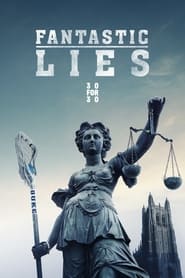
star 8An ancient church is being dismantled and moved to a new location, stone by stone. One of the gargoyles from the stones falls into the possession of a mother who takes the stone man back to her family. Soon after, four strangers show up in the village and the Sogood & Firkettle children seem to be the only ones who question the mysterious things that begin to happen. This film was originally broadcast across six 25 minute episodes with a total runtime of 150 minutes. A few years later, the US cable network Nickelodeon edited the miniseries into a 2 hour (including commercials) movie block. This 2 hour edited version was shown throughout the 1980s on US television.Fantastic Lies
2016
Fantastic Lies
2016
star 7.2One night in Durham, North Carolina, a rape accusation set fire to the reputations of three college athletes and their elite university. As the Duke lacrosse players grappled with their transition from model student to the criminally accused, several wars were launched on different fronts.Hunger for Truth
2017
Hunger for Truth
2017
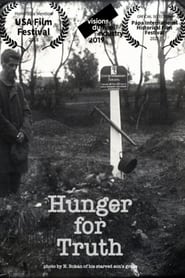
star 8In an age when disinformation muddles the truth, a newly discovered voice cuts through the historical haze. She is Rhea Clyman, a young Canadian reporter who traversed the starving Soviet heartland when Stalin’s man made famine was just beginning in Ukraine. Clyman’s newly discovered newspaper articles for Toronto and London newspapers in 1932 show her remarkable resourcefulness and courage. After she was banished from the USSR for writing about the Holodomor and the Gulag, this brave woman went on to cover Hitler’s early lethal years in power.Terra Incognita
0000
Terra Incognita
0000
A scholarly pirate, some crew members, a fanatical first mate, and their fresh-caught Irish slave are shipwrecked on an unmarked island awaiting rescue - it comes.We Will Be the World Champions
2015
star 3.6The story about the founders of the famous "Yugoslav Basketball School" and the first gold medal at the Championships in Ljubljana in 1970, is based on real events and is dedicated to personalities who have contributed to the emergence and development of basketball in their country.El siglo de Galdós
2020
El siglo de Galdós
2020
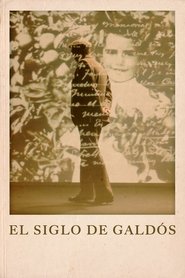
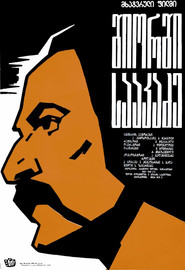
An account of the personal life and genial work of Benito Pérez Galdós (1843-1920), the greatest Spanish writer of 19th century, a journalist, a novelist, and a playwright; a free independent man who narrated with a firm hand the history of the most troubled era of modern Spain, both that of the rulers and powerful characters and that of the humble people.George Saakadze
1942
George Saakadze
1942
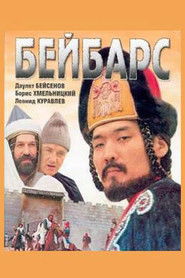
star 4.4The film tells about the struggle of the Georgian people under the leadership of the great commander George Saakadze for a centralized state.Beybars
1989
Beybars
1989
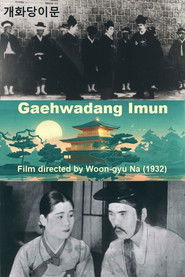
The first part of a historical film dilogy based on the story “Emshan” by Maurice Simashko. XIII century. Equal to God, Sultan Beybars — the ruler of Egypt, who has the largest fleet in the Mediterranean, crushed the Crusader troops and countless hordes of Genghis Khan’s descendant – recalls the life path he passed before ascending to the throne of the ruler.Immunity
1932
Immunity
1932
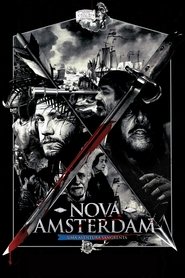
The film concerns the 3-day rule of Kim Ok-kyun (1851-1894), and his attempt to modernize Korea.New Amsterdam
2017
New Amsterdam
2017
star 9.5The arrival of the West Indian Companies to Natal in the XVII century is just the beginning of this violent story that pushes Bernarda and her family to run away from the city and from the invasion. In the Potengi Mill she meets the foreman's son Rafael and they immediately discover a passionate love. It will give them the force to try to survive during those violent years triggered by Jacob Rabbí, a German assigned by Prince John Maurice of Nassau to command the conquest.Nasser 56
1996
Nasser 56
1996
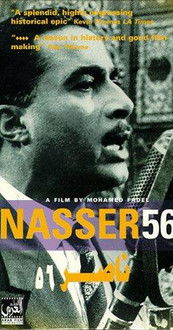
star 6.4Nasser 56 is a 1996 Egyptian historical film directed by Mohamed Fadel, starring Ahmed Zaki. The film focuses on the nationalization of the Suez Canal by Egypt's second President, Gamal Abdel Nasser, and the subsequent invasion of Egypt by Israel, the United Kingdom, and France.The Beautiful Mrs. Reynolds
1918
During the American Revolution, Alexander Hamilton and Aaron Burr are both courting beautiful Margaret Moncrieffe. Fast-forward several years and they again find themselves on opposite sides, this time about compensation for the properties of Tories--colonists who sided with the British--during the war. Hamilton falls for Maria Reynolds, who it turns out is secretly the wife of prominent pawnbroker Jacob Clingman, a friend of Burr's. The pair conspire to destroy Hamilton, who is now Secretary of the Treasury and married to the daughter of a prominent army general, by making public several love letters Hamilton had written to Mrs. Reynolds.Making Waves: The Art of Cinematic Sound
2019
star 6.8The history of cinematic sound, told by legendary sound designers and visionary filmmakers.Memorias del general Escobar
1984
After the end of the Spanish Civil War, General Antonio Escobar Huerta stoically awaits his execution, accused of military treason and sentenced to death for having sworn allegiance to the Republic. Despite being a man of deep religious convictions, Antonio Escobar decided to make an oath honoring the legally constituted government of the Second Spanish Republic against the military uprising led by Francisco Franco and supported by the Catholic Church. While waiting for his execution in prison, he recalls the beginning of the Civil War, the years of battles during which he ascended to the rank of General, and his own decisions, of which he has no regrets. With a clear conscience, Escobar waits his own execution with the calm of those who know they have done their duty. "If my life and that of all who have fallen serves to avoid this from happening again, our blood will not have been in vain" - Antonio Escobar Huerta.The Man from Dakota
1940
The Man from Dakota
1940
star 5.3A frontier scout, a Boston officer and a Russian girl escape with a map past Confederates.The Hypnotist
2019
The Hypnotist
2019
star 6.7In 1980, Finland’s most famous hypnotist Olavi Hakasalo, a.k.a Olliver Hawk, was put on trial. His mission in life had been to spread the gospel of the power of suggestion, and he was willing to risk everything to become a player of political influence on the big stage. But in the corridors of power, with a nation’s destiny at stake, an eccentric loudmouth sitting on too many secrets is considered a liability.The Birth of New China
1989
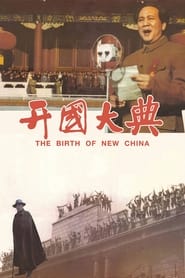
star 6.1In the spring and summer of 1949, the People's Liberation Army launched an offensive under the orders of Mao Zedong and Zhu De, they crossed the Yangtze River and Nanjing was liberated on April 23 which signaled the fall of the KMT regime, Chiang Kai-Shek fled to Taiwan; on October 1, 1949, Mao Zedong standing on the rostrum of Tiananmen, solemnly declared the foundation of the People's Republic of China.A Terrible Beauty
2013
A Terrible Beauty
2013
star 9A Terrible Beauty is the story of the men and women of the Easter Rising in Dublin in 1916, Irish and British, caught up in a conflict many did not understand and of the innocent men and boys, executed because of what transpired in The Battle of Mount Street Bridge. The British soldiers were the last of the Great War volunteers, who joined up together to fight the Germans. They knew that there was a strong chance they would die in France, but to die in Dublin would never have crossed their minds. The Irish Volunteers were weekend warriors many of whom had no idea they were about to take part in large scale battles on the streets of Dublin.