Popular History Movies on Pantaflix - Page 357
All Services
Free Services
 Netflix
 Amazon Prime Video
 Apple iTunes
 Apple TV Plus
 Disney Plus
 Google Play Movies
 Paramount Plus
 Hulu
Hulu
 HBO Max
 YouTube
 fuboTV
 Peacock
 Peacock Premium
 Amazon Video
 The Roku Channel
 AMC+
AMC on Demand
AMC+
AMC on Demand
 Kocowa
 Hoopla
 The CW
 Vudu
Vudu
 Starz
Starz
 Showtime
 PBS
PBS
 Pantaflix
 FXNow
FXNow
 Tubi TV
 Kanopy
 Comedy Central
 Crunchyroll
 Microsoft Store
 Redbox
 Sun Nxt
 ABC
ABC
 DIRECTV
 Crackle
 Fandor
 Plex
Plex
Netflix
Amazon Prime Video
Apple iTunes
Apple TV Plus
Disney Plus
Google Play Movies
Paramount Plus
Hulu
HBO Max
YouTube
fuboTV
Peacock
Peacock Premium
Amazon Video
The Roku Channel
AMC+
AMC on Demand
Kocowa
Hoopla
The CW
Vudu
Starz
Showtime
PBS
Pantaflix
FXNow
Tubi TV
Kanopy
Comedy Central
Crunchyroll
Microsoft Store
Redbox
Sun Nxt
ABC
DIRECTV
Crackle
Fandor
Plex

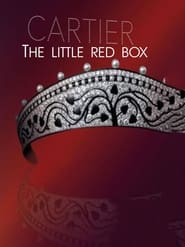
Cartier The little red box
2017
For 160 years, the Maison Cartier has inspired awe, desire and covetousness in men and women before its jewellery box, the most recognizable in the world. To paraphrase Jean Cocteau: "Cartier is still a subtle magician "whose able to hang the moon at the tip of a string of sun"".Florence Nightingale
1915
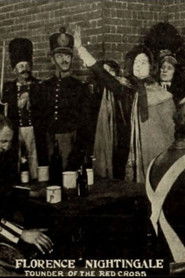
Florence Nightingale
1915
The film portrays the life of Florence Nightingale, particularly her innovations in nursing during the Crimean War (1854–56).Dance of the Forty One
2020
star 7.8Mexico City, November 1901. The police raid a private home where a secret party is being held. Among those attending is the son-in-law of President Porfirio Díaz.Geheimakte W.B. 1
1942
Geheimakte W.B. 1
1942
star 5Nazi propaganda film showing the development of the German navy's submarine fleet.Once Upon a Time in Croatia
2022
star 5.4Docu-drama about Croatia's first President, Franjo Tudjman.Toppling a Saint
2024
Toppling a Saint
2024
star 5An exploration of America’s cultural divide ignited by the 2020 controversy surrounding the forcible toppling of Father Junipero Serra’s statues. Best-selling author Arthur Brooks examines the toxic polarization gripping the nation. Can we bridge this divide, or are we destined to repeat history?The Red Dance
1928
The Red Dance
1928
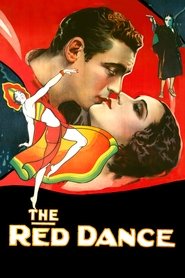
star 6.2Tasia (Dolores del Río), a beautiful dancer lower class of Russia, falls heir to the throne Prince, Grand Duke Eugene (Charles Farrell), but only admired from a distance. At the outbreak of the Russian Revolution, the Duke falls in captivity and this allows Tasia be near him.Hiver 54, l'abbé Pierre
1989
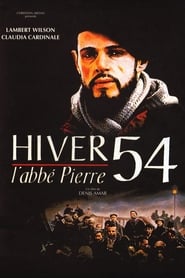
star 5.5Postwar France was slow to recover from the after-effects of the World War Two. The economy was doing poorly, and many people were poor and homeless, sleeping under bridges, etc. The winter of 1953-54 proved particularly difficult for these people, as it was one of the coldest on record. Father Pierre (Lambert Wilson), a parish priest, on seeing the suffering of these people (and their frequent death from the cold), was moved to write the French government seeking help for them. When his letter, which was published in the newspapers, succeeded in rousing overwhelming popular support for helping the homeless, he was able to form a charitable group (still active today) titled "Les Chiffoniers d'Emmaus," or "The Ragpickers of Emmaus" to channel help to them. This biographical film tells the true story of Abbe Pierre's successful efforts in those years.A Carcass
2024
A Carcass
2024
From his book, Les Fleurs du Mal, an adaptation of Charles Baudelaire’s famous poem, Une Charogne.Brave New Land
2000
Brave New Land
2000
star 5.2Diogo is a cartographer and artist who is encharged to set the new frontiers of Portuguese Colonies in South America. When he reaches the center of the continent, finds apparently nothing but wilderness and ‘uncivilized’ natives with strange ways of living. But Captain Pedro, the rude scout who guides him through the jungle, involves Diogo in an involuntary act of violence which will tie him in an unusual way to that far away country. At the same time, the Portuguese colonists are trying to make peace with Guaicuru Indians (one of the few natives with horse-riding abilities). But peace doesn’t ever have a low price.The Egyptian
1954
The Egyptian
1954
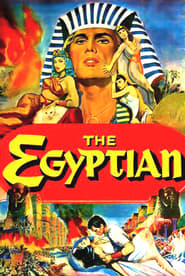
star 6.4In eighteenth-dynasty Egypt, Sinuhe, a poor orphan, becomes a brilliant physician and with his friend Horemheb is appointed to the service of the new Pharoah. Sinuhe's personal triumphs and tragedies are played against the larger canvas of the turbulent events of the 18th dynasty. As Sinuhe is drawn into court intrigues he learns the answers to the questions he has sought since his birth.Special Arrangements
2024
Special Arrangements
2024
1930 - 1931 letters found in a Los Angeles house revealed a forbidden romance.National Geographic: Last Voyage of the Lusitania
1994
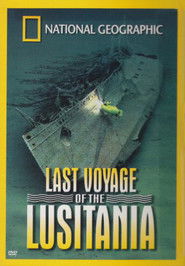
Why did Germany torpedo the Lusitania, a civilian vessel? And why did such an enormous ship sink so fast? Now, take a high-tech plunge beneath the Irish Channel and relive on of the century's most mysterious maritime tragedies: The date is May 7, 1915, just nine months into World War I. A German U-boat torpedoes the Lusitania — one of than largest and fastest luxury liners in the world. Of the 1,959 people aboard, including millionaire Alfred Vanderbilt, nearly two-thirds will die. Many are trapped inside as the great ship sinks in just eighteen minutes.The Taika Reforms
2005
The Taika Reforms
2005
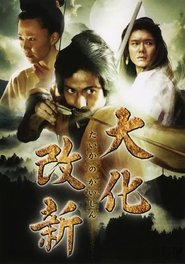
A drama introduces the well known coup in the 7th Century Japan followed by the Taika reform which marks the start of the nation by portraying the friendship and betrayal between two young men, Nakatomi no Kamatari and Soga no Iruka.Battle on Shangganling Mountain
1956
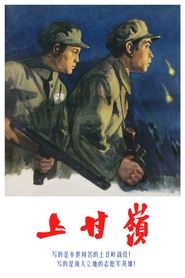
star 6.2The film follows a group of Chinese People's Volunteer Army soldiers who are holding Triangle Hill for several days against US forces. Short of both food and water, they hold their ground until the relief troops arrive. The movie portray the battle as a Chinese victory over an American invasion, and the People's Volunteer Army soldiers were shown as Chinese war heroes."Rom
1989
Rom
1989
star 7In his film, Menelaos Karamaghiolis attempts to trace the evolution of the gypsy race in Europe, particularly in Greece, through four different points of view. These are expressed in the narrations of four people: the Teacher, the Photographer, Tamara, the old gypsy lady and the young girl Aima.Mabo
2012
Mabo
2012
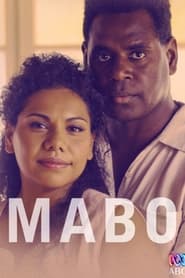
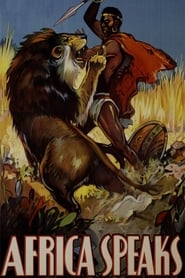
star 7.6The remarkable life story of Eddie 'Koiki' Mabo; a Torres Strait Islander who left school at the age of 15, yet spearheaded the High Court challenge that overthrew the fiction of terra nullius.Africa Speaks!
1930
Africa Speaks!
1930
star 4Explorer Paul Hoefler leads a safari into central Africa and what was then called the Belgian Congo, in the regions inhabited by the Wassara and the famous Ubangi tribes.