Popular History Movies on Pantaflix - Page 415
All Services
Free Services
 Netflix
 Amazon Prime Video
 Apple iTunes
 Apple TV Plus
 Disney Plus
 Google Play Movies
 Paramount Plus
 Hulu
Hulu
 HBO Max
 YouTube
 fuboTV
 Peacock
 Peacock Premium
 Amazon Video
 The Roku Channel
 AMC+
AMC on Demand
AMC+
AMC on Demand
 Kocowa
 Hoopla
 The CW
 Vudu
Vudu
 Starz
Starz
 Showtime
 PBS
PBS
 Pantaflix
 FXNow
FXNow
 Tubi TV
 Kanopy
 Comedy Central
 Crunchyroll
 Microsoft Store
 Redbox
 Sun Nxt
 ABC
ABC
 DIRECTV
 Crackle
 Fandor
 Plex
Plex
Netflix
Amazon Prime Video
Apple iTunes
Apple TV Plus
Disney Plus
Google Play Movies
Paramount Plus
Hulu
HBO Max
YouTube
fuboTV
Peacock
Peacock Premium
Amazon Video
The Roku Channel
AMC+
AMC on Demand
Kocowa
Hoopla
The CW
Vudu
Starz
Showtime
PBS
Pantaflix
FXNow
Tubi TV
Kanopy
Comedy Central
Crunchyroll
Microsoft Store
Redbox
Sun Nxt
ABC
DIRECTV
Crackle
Fandor
Plex

The Turkish Gambit
2005
The Turkish Gambit
2005
star 6.4The film is based on the second book from the Adventures of Erast Petrovich Fandorin series of novels written by the Russian author Boris Akunin. The film takes place in 1877 during the Russian-Turkish war. Erast Fandorin has just escaped from Turkish prison and is trying to get on the Russian side as soon as possible to give important information about the upcoming attack of the enemy. On his way he meets Varvara Suvorova, a young lady who is going to see her fiancée - a soldier of the Russian army. Erast also knows that there is a spy somewhere in the Russian army, everyone is under suspicion.Raging Through River
2018
Raging Through River
2018
star 4Difference in generational values is perhaps as old as time itself, and can neither be explained nor resolved. An ambitious teenager is eager to explore the world by reaching the other side of the river. He meets an indifferent and unenthusiastic ferryman. The tiny ferry is not large enough to hold dissenting opinions. The ferryman considers the teenager naive while the teenager thinks the other spineless with no stance. Reflecting on the present, their conflicts and separate beliefs make a consensus almost impossible. Two people set for sail, yet only one reaches the shore. On the other side of the river, the youngster, instead of hope, witnesses the end of an era.Jichung's Diary
2025
23rd March 1931: Shaheed
2002
star 6Bhagat Singh, a freedom fighter, is arrested for killing the British official responsible for the death of his mentor Lala Lajpatrai. He is ultimately hanged for his misdeed.Is It My Fault?
1969
Is It My Fault?
1969
After returning home, Haluk, who has lived abroad for years, begins to tutor sixteen-year-old Ümran and tells her a story from years ago. Ümran thinks that it is a story about something else, but the story concerns her closely.Justinian's Human Torches
1908
star 4.3During an orgy, Emperor Justinian orders three people to be torched alive.Wind. 1′40″
1985
Wind. 1′40″
1985
Impressionistic silent short film (also known as ‘Kaze. Ippun yonjûbyô’) created by 17-year-old high school student Shinozuka Tsutomu. The animation, which won the Debut Prize at the inaugural Hiroshima International Animation Festival in 1985, shows a group of samurai racing at breathtaking speed across golden meadows. The film stands out for its visceral sense of motion and extraordinary dynamism, as has been confirmed by jury member Kawamoto Kihachirō, who noted that you can almost feel the force of the wind. The focus on ‘wind’, speed and warriors elegantly evokes a famous military maxim by Sun Tzu: ‘Your swiftness shall resemble the wind’. It is the first of four tenets of Fūrinkazan (風林火山, lit. ‘Wind, Forest, Fire, Mountain’), a legendary Japanese battle standard drawn from Sun Tzu’s ‘The Art of War’. Warriors should also be ‘as calm and orderly as forests, as fierce as fire, and as steadfast as mountains’.The Roman Orgy
1911
The Roman Orgy
1911
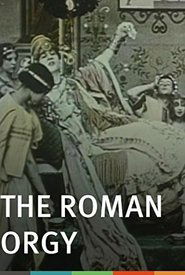
star 5.6The tyrant Emperor Heliogabalus lives a life of debauchery and set lions loose among his guests.Mary, Queen of Scots
1971
Mary, Queen of Scots
1971
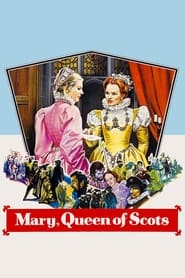
star 6.6Mary Stuart, who was named Queen of Scotland when she was only six days old, is the last Roman Catholic ruler of Scotland. She is imprisoned at the age of 23 by her cousin Elizabeth Tudor, the English Queen and her arch adversary. Nineteen years later the life of Mary is to be ended on the scaffold and with her execution the last threat to Elizabeth's throne has been removed. The two Queens with their contrasting personalities make a dramatic counterpoint to history.Operation Jericho
2011
Operation Jericho
2011
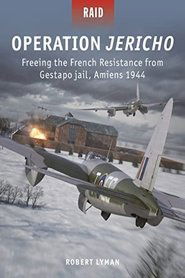
star 8Actor and aviator Martin Shaw takes to the skies to rediscover one of the most audacious and daring raids of World War II. On the morning of 18th February 1944, a squadron of RAF Mosquito bombers, flying as low as three metres over occupied France, demolished the walls of Amiens Jail in what became known as Operation Jericho. The reasons behind the controversial raid remain a mystery to this day. This dramatic documentary investigates the missing pieces of the story, with interviews from survivors and aircrew, and tries to find out why the raid was ordered and by whom.The Dive
2019
The Dive
2019
star 6.6It is Thursday and another war is hitting the northern part of Israel hard. Three brothers reunite in their childhood kibbutz to bury their father. Two days later the youngest has to go to war, and while he seeks guidance from his older siblings who have both experienced the battlefield, the homecoming soon spins out of control.Travelers
2023
Travelers
2023
The diaspora of Filipinos around the globe is driven mostly by the economics of supply and demand. The yearning for something better, stability, and self-validation leads a handful of sojourners from the provinces of the Philippines into the arms of one of its former colonial masters — the USA. But what happens when they finally get what they want? And how? Filmmaker Dennis Empalmado explores the musings of Filipino expatriates and hopeful immigrants in "Naglalakbay" (Travelers).The Assassination of the Duke de Guise
1897
star 4.9This one is modelled on the painting by Paul Delaroche and is an extension of the stage act known as “tableau vivant”.The Son
2021
The Son
2021
Using unpublished photos taken by Italian war photographer Enrico Sarsini, and the reconstruction of key events, this film examines the battle for a strategically-located church that was defended by Azerbaijani teenager Natig Gasimov. After his surrender and interrogation by Armenian forces, he was never heard of again. This film finds out what happened to Natig and who may be responsible. Filmed over a period of three years, filmmaker Karan Singh spoke to witnesses in Armenia, Azerbaijan, Italy and Russia in his search for the truth.Bulgakov. This World is Mine!
2023
A documentary dedicated to the Russian novelist Mikhail Bulgakov — the author of 'Master and Margarita' — and his story as a dramaturge.No Word For Worry
2014
No Word For Worry
2014
As a sea nomad, Hook grew up with the ocean as his universe. Now he must make a courageous voyage to salvage the remains of his dying cultureSword and Dice
1959
Sword and Dice
1959
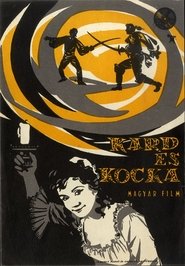
During the freedom fight led by Rákóczi, Schwartzenau carries the wages of the Emperor's soldiers to Tokaj. A small group of freedom-fighters, led by Captain Árvay, attack the major's escort, then hide in the local inn. Árvay introduces himself to the entering Schartzenau as a Hungarian aristocrat, while Simon Pali rushes to get help. The major has a passion for games, they start throwing dice.Nehru: The Jewel of India
1990
Based on the life of Jawaharlal Nehru (played by Pratap Sharma) -- who succeeded Mahatma Gandhi and became independent India's first prime minister -- this red-letter film takes an inside look at the man known as the Jewel of India. Directed by former politician Kumar Kiran, the movie intertwines historical information and human drama to examine the personal and professional life of one of India's master statesmen.Watching Walter
2024
Watching Walter
2024
Shortly before his 15th birthday, Wladyslaw "Walter" Wojnas took a bike ride into the Polish countryside. When he returned, he found Nazi troops burning down his village and murdering his entire family. Walter was kidnapped, thrown into a military truck, and sent to a labor camp. From 1940 to 1945, Walter endured the Stutthof Concentration Camp in Nazi-occupied Poland. He worked under the extreme authoritative hand of a Nazi Master Watchmaker who taught him how to turn the stolen watches from the Jews into gifts for the Nazi officers. Upon liberation, Walter was determined to learn everything he could about the internal workings of clocks and watches. He felt he could get some kind of revenge by obtaining as much knowledge as he could and become the very best master watchmaker.Puros hombres
1977
Puros hombres
1977
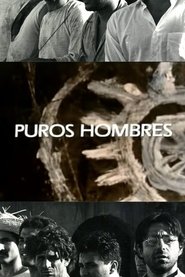
During the dictatorial regime of Juan Vicente Gómez, the bachelor Ibarra is imprisoned for political conspiracy. In prison, the inmates live together remembering the events that led to their imprisonment. Finally, a group, led by the bachelor Ibarra, manages to carry out a plan to escape from the prison.