Popular History Movies on Pantaflix - Page 458
All Services
Free Services
 Netflix
 Amazon Prime Video
 Apple iTunes
 Apple TV Plus
 Disney Plus
 Google Play Movies
 Paramount Plus
 Hulu
Hulu
 HBO Max
 YouTube
 fuboTV
 Peacock
 Peacock Premium
 Amazon Video
 The Roku Channel
 AMC+
AMC on Demand
AMC+
AMC on Demand
 Kocowa
 Hoopla
 The CW
 Vudu
Vudu
 Starz
Starz
 Showtime
 PBS
PBS
 Pantaflix
 FXNow
FXNow
 Tubi TV
 Kanopy
 Comedy Central
 Crunchyroll
 Microsoft Store
 Redbox
 Sun Nxt
 ABC
ABC
 DIRECTV
 Crackle
 Fandor
 Plex
Plex
Netflix
Amazon Prime Video
Apple iTunes
Apple TV Plus
Disney Plus
Google Play Movies
Paramount Plus
Hulu
HBO Max
YouTube
fuboTV
Peacock
Peacock Premium
Amazon Video
The Roku Channel
AMC+
AMC on Demand
Kocowa
Hoopla
The CW
Vudu
Starz
Showtime
PBS
Pantaflix
FXNow
Tubi TV
Kanopy
Comedy Central
Crunchyroll
Microsoft Store
Redbox
Sun Nxt
ABC
DIRECTV
Crackle
Fandor
Plex

Heroes Returning to the East
1993
In 1771 the oppression of Tsarist administration forced the larger part of Kalmyk's approximately 170,000-200,000 people to migrate to Dzungaria. Ubashi Khan, the great-grandson of Ayuka Khan and the last Kalmyk Khan, decided to return his people to their ancestral homeland Dzungaria, and restore the Dzungaria Khanate and Mongolian independence. Their goal is not an easy one and a lot of fighting and drama unfolds.Midnight
2017
Midnight
2017
star 10A 200 year-old vampire who drives for a ridesharing app picks up a passenger who bears an uncanny resemblance to a long lost love.The Big Burn
2015
The Big Burn
2015
star 7.5The dramatic story of an unimaginable wildfire that swept across the Northern Rockies in the summer of 1910.Alor Michil
1974
Alor Michil
1974
Alor Michil is a 1974 Bangladeshi patriotic film which focuses on the independence movement of 1971. Written and directed by Narayan Ghosh Mita, it stars Abdur Razzak, Babita, Faruk and Anwar Hussain in lead roles. It has been selected for preservation by the Bangladesh Film ArchiveBetrayed
2020
Betrayed
2020
star 7During World War II, millions of Jews from all over Europe are deported and killed in German concentration camps. When the German troops invade Norway, the Norwegian Jews feel safe and protected. But anti-Semitism knows no borders and as the war escalates in Europe, the situation changes drastically. Suddenly, their radios are taken away; their passports are stamped with a big J and one day, all the men men over the age of 15 are arrested and taken to prisons camps. Many of the women left behind are too frightened to escape and are desperately waiting for their husbands and sons to come back home. On November 26, 1942, hundreds of Jews are picked up by the police in the middle of the night and are transported to the dock in Oslo. Unknowing and frightened men, women, children, sick and old are forced on board the awaiting German cargo ship "SS DONAU". The ship leaves with 532 Norwegian Jews onboard; 302 men, 188 women and 42 children. The end station is Auschwitz.The Wandering Jew
1904
The Wandering Jew
1904
star 4.6A Jew who mocked Jesus on the cross is visited by a devil and an angel.De Nuremberg à Nuremberg
1989
star 6.1Frédéric Rossif and Philippe Meyer draw the terrible fresco of the Second World War of the rise of Hitler and the Nazi party until his ultimate defeat (1933-1945). While carefully describing the sequence of events, they go back to the genesis of fascism, and the picture they draw from this first half of the twentieth century is both lucid and frightening. A page of history illustrated by a large number of unpublished documents.21 rue la Boétie
2017
21 rue la Boétie
2017
An American Piano
2014
An American Piano
2014
star 3The true story of a young Japanese girl who played the piano for POWs during World War II and how it affected their lives. It is a story of humanity, compassion and the universality of music in helping to heal the rifts between wartime rivals.Time of Darkness and Silence
1982
star 6An investigation of Leni Riefenstahl’s infamous film production of “Tiefland” during the Holocaust, one which used Sinti extras under forced labor conditions. After filming finished in 1944, these extras were sent to Auschwitz. Nina Gladitz interviews the survivors and perpetrators, wondering if Riefenstahl knew this would happen at the end of production. Tiefland was filmed from 1940-1944 but was not released until 1954. Leni Riefenstahl sued Gladitz over the documentary.The House in the South
1976
star 4.7Indian village experiences forced relocation; their experience is paralleled by that of other groups dating back to the 18th century.The Chess Player
2017
The Chess Player
2017
star 6.3In 1934 Diego Padilla wins the Spanish Championship of Chess and meets a French journalist, Marianne Latour, and they fall in love. At the end of the Civil War, Marianne convinces Diego to live in France with their daughter, where shortly afterwards Diego will be accused of spying by the Nazis and imprisoned in an SS prison. In prison, Diego will try to survive in a hostile environment thanks to Colonel Maier's passion for chess.The Unruly Mystic: Saint Hildegard
2014
Discover why The Unruly Mystic: Saint Hildegard is the patron saint of creativity, and how her influence resonates today. The 12th-century abbess was a Christian mystic and visionary. She was also a musical composer, writer, and healer who created natural remedies widely used in Europe today.Shadows Fall North
2016
Shadows Fall North
2016
How does a state with the motto “Live Free or Die” and a celebrated legacy of abolitionism confront and understand its participation in slavery, segregation, and the neglect of African-American history? What happens when we move toward a fuller understanding of our history by including all voices? No other documentary has explored Black history in New Hampshire, no less Black history in New England. Shadows Fall North brings to light a forgotten history and continues a dialogue that is more important today than ever before. Without acknowledging our past, accepting it and embracing it, we will never move forward in our actions about race in this country.Je suis né à 17 ans
2023
Je suis né à 17 ans
2023
star 8.7Thierry is a former battered child, who has managed to build himself up despite the violence he has suffered. But the childhood traumas are still present, generating anguish and a perpetual lack of self-confidence. The announcement of the imminent death of the guilty father of the brutalities, and with whom Thierry broke all relation, sounds the hour of the accounts. The moment has come for him to put his memory and his feelings in order.Choice: The Henry Morgentaler Story
2005
star 1The life story of Dr. Henry Morgentaler and his fight for the legalization of abortion on demand in Canada.Wake of the Red Witch
1948
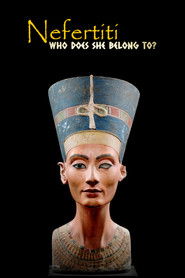
star 5.6Captain Ralls fights Dutch shipping magnate Mayrant Sidneye for the woman he loves, Angelique Desaix, and for a fortune in gold aboard the Red Witch.Nefertiti: Who Does She Belong To?
2023
star 8.5The famous bust of Nefertiti, queen of ancient Egypt, wife of Akhenaten, the heretic pharaoh of the 18th dynasty, has been on display in the Neues Museum in Berlin since 1913. But why is it not, as valuable as it is, in its country of origin, where it was discovered in December 1912 by the German archaeologist Ludwig Borchardt?