Popular War Movies on Pantaflix - Page 441
All Services
Free Services
 Netflix
 Amazon Prime Video
 Apple iTunes
 Apple TV Plus
 Disney Plus
 Google Play Movies
 Paramount Plus
 Hulu
Hulu
 HBO Max
 YouTube
 fuboTV
 Peacock
 Peacock Premium
 Amazon Video
 The Roku Channel
 AMC+
AMC on Demand
AMC+
AMC on Demand
 Kocowa
 Hoopla
 The CW
 Vudu
Vudu
 Starz
Starz
 Showtime
 PBS
PBS
 Pantaflix
 FXNow
FXNow
 Tubi TV
 Kanopy
 Comedy Central
 Crunchyroll
 Microsoft Store
 Redbox
 Sun Nxt
 ABC
ABC
 DIRECTV
 Crackle
 Fandor
 Plex
Plex
Netflix
Amazon Prime Video
Apple iTunes
Apple TV Plus
Disney Plus
Google Play Movies
Paramount Plus
Hulu
HBO Max
YouTube
fuboTV
Peacock
Peacock Premium
Amazon Video
The Roku Channel
AMC+
AMC on Demand
Kocowa
Hoopla
The CW
Vudu
Starz
Showtime
PBS
Pantaflix
FXNow
Tubi TV
Kanopy
Comedy Central
Crunchyroll
Microsoft Store
Redbox
Sun Nxt
ABC
DIRECTV
Crackle
Fandor
Plex

Steps in the Night
1963
Steps in the Night
1963
In 1943, Alex, who recently returned to the city of Kaunas, tries to join the anti-Nazi resistance, but is captured and imprisoned. He soon starts planning his escape.Al Murray's Great British War Movies
2014
star 1Comedian and history buff Al Murray is joined by historian Dan Snow, writer Natalie Haynes and broadcaster and film expert Matthew Sweet for a fresh look at a subject very close to his heart - the great British war movie. This roundtable discussion looks at both the films themselves, from A Bridge too Far to Zulu, and uses them as a lens on British history, cultural attitudes and our changing views on conflict over the decades.The Crew of the Dora
1943
The Crew of the Dora
1943
star 6.3German film about Luftwaffe pilots. It depicts a love triangle involving two of them being overcome by their participation in battle together.Lagablab sa Silangan
1956
The Waves of the Danube
1960
star 7Ciulei’s second feature recalls the best of Fritz Lang and Michael Curtiz in its WWII-era espionage tale, set on a barge transporting Nazi munitions up the Danube. Ciulei himself givers a superb performance as Mihai, the barge captain forced to navigate the heavily mined waters along with his new bride, Ana (Irina Petrescu). As the journey wears on, Mihai becomes increasingly suspicious of one of his crew, ex-convict Toma (Lazar Vrabie), and his intentions towards Ana. But Toma has a far graver—and potentially deadly—secret to conceal.Wild Wild East
0000
Wild Wild East
0000
In occupied Poland 1943, German official Martin Wolff is sent to a remote village to investigate the disappearance of a Jewish lawyer. His arrival unsettles the fragile order between scarred villagers, corrupt collaborators, and Nazi authorities, unearthing a web of betrayal and greed tied to whispers of the lawyer’s hidden fortune. Yet as the village’s darkest truths come to light, Wolff’s search may be hiding more than it reveals.Life and Deeds of Radovan Karadzic
2005
Biography and secret life of war criminal Radovan Karadzic, the leader of Bosnian Serbs.The Salt Caravan
2016
The Salt Caravan
2016
The film "The Salt Caravan," adapted from the novel, tells the story of the Artesian Salt Caravan in southern Sichuan, 1936, passing through the ancient salt horse road of the Southern Silk Road and going through difficulties and dangers to deliver salt to the front line of the defense of western Yunnan.La Fuga
1944
La Fuga
1944
star 5.3A stagecoach full of conflictive passengers makes its dangerours way from Mexico to Veracruz during the days of the French Intervention.Heroes All
1920
Heroes All
1920
star 5Examination of returning wounded WWI veterans and their treatment at Walter Reed Hospital, along with visits to iconic landmarks in Washington, D.C.Mad Minutes
2003
Mad Minutes
2003
Mad minutes is a documentary about the memories of civilians who were killed by the Korean army during the Vietnam War. It testifies to the insanity and barbarism of war that does not stop, even through the memories of survivors, who are living with the terrible memories of war buried in the heartbreaking historical sequence where countless civilians were sacrificed. The director tells a forgotten part of history through the lives and testimonies of the survivors. It is a record of the scars of war that can never be erased, in line with the twisted modern history: Before even properly apologizing for the massacre of Vietnamese civilians caused by the dispatch of South Korean troops to Vietnam in the past, the government dispatched troops to Iraq again. - Mad Minutes: "To soothe the boredom of American soldiers dispatched to Vietnam during the war, we give them 2-3 minutes once every two months to allow them to freely shoot at anything other than the target inside the unit."Hotel Imperial
1927
Hotel Imperial
1927
star 5.8During World War I, an Austrian officer is trapped behind the Russian lines. He tries to sneak through to his own lines, but is forced to take refuge in a small hotel, where he is hidden by the establishment's chambermaid. The two fall in love, but a Russian general makes the hotel his headquarters and sets his sights on the maid. In addition, the Austrian must find out the identity of a spy who is feeding the Russians military information that could lead to the destruction of the Austrian army.Hyper Loupé
2024
Hyper Loupé
2024
Dissolves
1988
Dissolves
1988
In December 1987, the (first) Palestinian Intifada broke out and the Occupied Territories were set alight with a mass wave of demonstrations, protesting the ongoing Israeli occupation – the largest scale, longest-running ones seen in the area since 1967. The IDF was sent in to quash the uprising and before long, TV screens across the country were inundated with footage of burning tyres, stones thrown about, and baton-wielding Israeli soldiers chasing after teens and children. In the face of this new reality that made the question of the Occupied Territories the single most pressing issue of the time, the Jerusalem Film Festival went ahead and commissioned the following project. The result is a classic, Heffner-esque film – an intelligent labyrinth containing the most fundamental of Israeli tropes: The Holocaust; Arabs; us vs. them – all of which find themselves clashing and intermingling, and ultimately rendering the viewers helpless and cringing with awkwardness.The Emperor's Bed
1973
The Emperor's Bed
1973
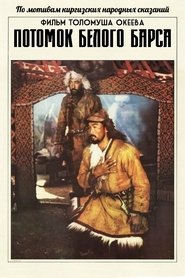
In the first day of liberation, partisan Meke enters the palace where the king used to live.The Descendant of the Snow Leopard
1984
star 7.5The Russian Descendant of the Snow Leopard is based on a famous Kirghizian folktale. Apparently the Kirghizian folks had plenty of time to tell this story: to print a full synopsis would result in a novelette. Essentially, the story involves a proud group of highland hunters called the Snow Leopards, who in order to survive a brutal winter must request help from the Lowland people. The price for this assistance is the hand of the Snow Leopard's daughter, who is promised in marriage to a wealthy Lowland trader. During the Springtime wedding celebration, the trader becomes fascinated by a stranger who wins all the athletic contests. This "male" contestant turns out to be a woman, who has arrived to seek freedom for her imprisoned husband. The subsequent romance between the trader and the beautiful stranger results in disaster and bloodshed for both the Snow Leopards and the Lowlanders.New Shadow Warriors
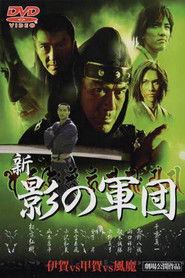
2003
New Shadow Warriors
2003
star 10In the time of the peaceful Toyotomi Era, Shinotada, the master of Kochi Family, a source of revenue for the Tokugawa, is trying to marry his younger sister Princess Fuji to Akinobu Sunekazura, who has connections with the rival Toyotomi, in order to bring peace. One of sixteen great warriors of Tokugawa, Hattori Hanzo, entrusts his wish and gathers the remnants of Iga Village, which was destroyed by Oda Nobunaga, and orders them to guard Princess Fuji. The Council of Elders of Sunekazura, hire the Fuma Ninja led by Fuma Kotaro, joined by the Koga Ninja, led by Sarutobi Sasuke, who is serving Hideyoshi Toyotomi, to assassinate Princess Fuji! Can Hanzo Hattori with the Iga remnants prevent this evil plot and protect the princess? Once again, Shinichi "Sonny" Chiba plays the leading role of Hanzo Hattori with his old enemy, Sarutobi Sasuke, played by Hiroki Matsukata. The presence of both famous actors will overwhelm any audience!Chu Fei
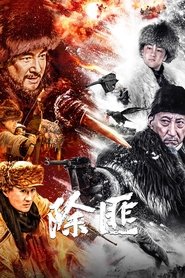
2025
Chu Fei
2025
It tells the story of a small team of the Northeast Democratic Alliance Army, led by the regiment chief of staff Shao Jianbo, going deep into the forest and snow to carry out the task of suppressing bandits. The reconnaissance platoon leader Yang Zirong experienced adventures such as fighting tigers on the mountain, fighting in black language, and flying over natural dangers, and fought wits and courage with the bandits led by Zuo Shan Diao of Wohu Mountain.Let's Work For The Mongolian People's Republic
2008
During the Great Repression of 1937, the Chekist Darambalsan was given the task of "arresting the person who spread rumors that a reincarnation would be born in Arkhangai province and destroying the reincarnation." Darambalsan searched for and destroyed the reincarnation, but at the last moment, he discovered that the reincarnation that was supposed to appear was himself, and he killed himself for his views and beliefs. The bitter story of the repression is depicted in this film, where one person accused the other in various ways and used it as a political game.