Popular War Movies on Pantaflix - Page 493
All Services
Free Services
 Netflix
 Amazon Prime Video
 Apple iTunes
 Apple TV Plus
 Disney Plus
 Google Play Movies
 Paramount Plus
 Hulu
Hulu
 HBO Max
 YouTube
 fuboTV
 Peacock
 Peacock Premium
 Amazon Video
 The Roku Channel
 AMC+
AMC on Demand
AMC+
AMC on Demand
 Kocowa
 Hoopla
 The CW
 Vudu
Vudu
 Starz
Starz
 Showtime
 PBS
PBS
 Pantaflix
 FXNow
FXNow
 Tubi TV
 Kanopy
 Comedy Central
 Crunchyroll
 Microsoft Store
 Redbox
 Sun Nxt
 ABC
ABC
 DIRECTV
 Crackle
 Fandor
 Plex
Plex
Netflix
Amazon Prime Video
Apple iTunes
Apple TV Plus
Disney Plus
Google Play Movies
Paramount Plus
Hulu
HBO Max
YouTube
fuboTV
Peacock
Peacock Premium
Amazon Video
The Roku Channel
AMC+
AMC on Demand
Kocowa
Hoopla
The CW
Vudu
Starz
Showtime
PBS
Pantaflix
FXNow
Tubi TV
Kanopy
Comedy Central
Crunchyroll
Microsoft Store
Redbox
Sun Nxt
ABC
DIRECTV
Crackle
Fandor
Plex

Red Fair
2019
Red Fair
2019
A Cold Cut or the Unbearable Echoes of Yearning
2027
A documentary from the Deep South and some (un)charted dead placesDiplomatic Chess
2025
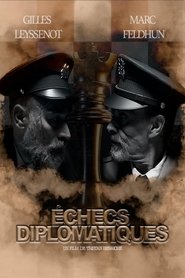
Diplomatic Chess
2025
Two warring army generals, unable to negotiate peace agreements, succumb to violence. Just as all seems lost, their eyes converge on a wooden box on the table: the negotiation turns into a game of chess.Blitzmusik
2024
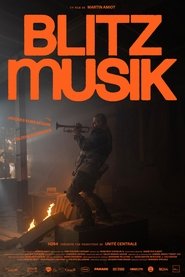
Blitzmusik
2024
star 5It’s wartime. Gus and Lars, two enemy lieutenants in search of victory, find themselves in an abandoned music school. Both are locked in a classroom full of musical instruments. Only a wall separates the two soldiers. The attacks are fierce. When Gus runs out of ammunition, he taunts his enemy by banging on the snare drum on the wall. Lars retaliates with a trombone, making an unpleasant noise. A melody emerges as the exchange of sounds continues. The duel gradually turns into a duet…Long Road to Summer
0000
Long Road to Summer
0000
The project for the 100th anniversary of Artek, a military drama, the story of Artek's men in the summer of 1941.In Stock
1988
In Stock
1988
Film-monologue of a young guy, demobilized military service, establishing life "in civilian life". A person recalls how well he served in the army, talks about the present day, about his family, about his son, about working in a factory, about drinking, fishing, friends and acquaintances.Love and the Law
1919
Love and the Law
1919
Karl "Curly" Casterline, a wrongfully discharged New York City policeman, finds work on the Midwestern farm of Adolf Bauerle to help the war effort. Curly is attracted to his boss's niece, Mina, but also realizes that Adolf and his cohort, Kurz, plan to blow up a troop train. Curly kills the two saboteurs and saves the train, but he is jailed by the abusive Sheriff Herman Lindig. Although Mina praises Curly for saving the soldiers' lives, he is sentenced to death and is denied a pardon from the governor. After the case attracts national attention, the governor explains that he prolonged Curly's incarceration to draw attention to the danger of German propaganda.Nameless Island
1960
Nameless Island
1960
In 1958, during Chiang Kai-shek’s threats to retake the mainland, the Kuomintang navy attacked Fujian Province’s coast. The landing ship “Dacheng” was sunk by our torpedo boats, and Captain Wu John led troops to an unnamed island. Naval political instructor Wang Yongzhi and others, who fell into the water after a collision, also drifted there. They launched a political offensive against the enemy, who, unaware of our capabilities, awaited rescue. Prisoner Sun Gui swam back to his comrades, witnessed the cook’s beating, and returned to our side. Wang Yongzhi, seeing the enemy’s wait for rescue, forced them to reveal themselves. The enemy tried a fake negotiation to delay time. At night, Cai Dage brought reinforcements, eliminating the enemy on the island and their rescue ship.The Lafayette Escadrille
2021
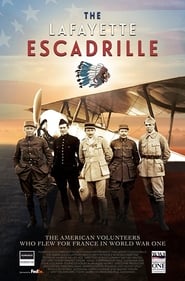
Filmed in the skies above France and the United States, The Lafayette Escadrille tells the story of the American volunteers who flew and fought for France in World War 1, becoming the founding squadron of American combat aviation.The Bread of My Childhood
1977
A heroic film story about boys at war. In 1943, teenagers from a village liberated from the Nazis cleared a rye field of mines, enabling their fellow villagers to harvest the crop.The House Of War
2002
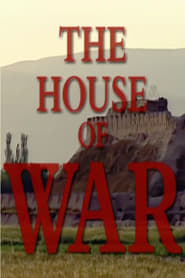
The House Of War
2002
What really happened at the battle of Mazar I Sharif? Using footage of combat never seen before, award-winning filmmaker Paul Yule chronicles an extraordinary ten days in November 2001 that involved the US Armed Forces, the CIA, the British SAS, the Taliban, al Qaeda, the warlords of the Northern Alliance, the Red Cross and the western media.State Border: Vol. 6. Beyond the Threshold of Victory
1987
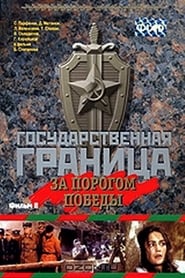
star 4.8In the border zone of the Soviet-Polish state border, gangs of the Organization of Ukrainian Nationalists operated. Captain Olkhovik was given the task of infiltrating the OUN gang.The Cuckoo's Children
1991
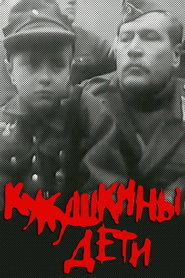
star 5About the plight of Soviet orphanage children that during the war the Nazis were taken to Germany diversantskoy for training activities in the territory of the USSR. In 1943 Gemfurte near Kassel (Germany) School for Soviet teenagers was created using Abverkomande-203, which were taken from the children's homes of Smolensk and Orsha. About this school, there are real documents, alive and witnesses of those events.24 h D-Day
2024
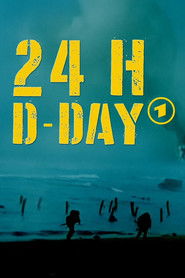
24 h D-Day
2024
D-Day marks the starting point for the liberation of Western Europe from the grip of the Nazi yoke. On June 6th, 1944, Allied soldiers attack German positions at no less than five sectors of the beach in Normandy. The assault takes place from the sea and is considered the largest amphibious landing operation in history. This event now sees its 80th anniversary. But so close, so authentic, this battle has never been shown before. American and British cameramen are at the scene in landing boats, under fire at the beaches, and during the rescue of wounded soldiers. Their original footage, shot in black-and-white, was extensively restored and colourized for this documentary. The historically unique footage appears in motion picture quality. The war gets colour. And thereby a different impact. We look directly in the faces of those, Americans, Canadians, Britons, and Germans, who are often not older than 20. In “24h D-Day”, they tell about their D-Day, the day they never can forget.Follow Me
2022
Follow Me
2022
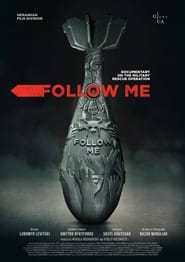
star 6.2The film tells the story of a married couple of civilians who came under intense fire from the enemy Russian army in the Izyum region in their car. The 93rd "Kholodny Yar" military brigade, not having the opportunity to safely approach Ukrainian civilians, conducted an unprecedented rescue operation with the help of drones. The plot is based on real events.Witness: Voices from the Holocaust
0000
star 8The stories of nineteen Holocaust witnesses and survivors, including an American POW, resistance fighters, a Jesuit priest, an American liberator, a Hitler Youth, and ghetto and camp survivors, create a narrative of the Holocaust in the words of those who experienced it.