Popular History Movies on Tub Tv - Page 158
All Services
Free Services
 Netflix
 Amazon Prime Video
 Apple iTunes
 Apple TV Plus
 Disney Plus
 Google Play Movies
 Paramount Plus
 Hulu
Hulu
 HBO Max
 YouTube
 fuboTV
 Peacock
 Peacock Premium
 Amazon Video
 The Roku Channel
 AMC+
AMC on Demand
AMC+
AMC on Demand
 Kocowa
 Hoopla
 The CW
 Vudu
Vudu
 Starz
Starz
 Showtime
 PBS
PBS
 Pantaflix
 FXNow
FXNow
 Tubi TV
 Kanopy
 Comedy Central
 Crunchyroll
 Microsoft Store
 Redbox
 Sun Nxt
 ABC
ABC
 DIRECTV
 Crackle
 Fandor
 Plex
Plex
Netflix
Amazon Prime Video
Apple iTunes
Apple TV Plus
Disney Plus
Google Play Movies
Paramount Plus
Hulu
HBO Max
YouTube
fuboTV
Peacock
Peacock Premium
Amazon Video
The Roku Channel
AMC+
AMC on Demand
Kocowa
Hoopla
The CW
Vudu
Starz
Showtime
PBS
Pantaflix
FXNow
Tubi TV
Kanopy
Comedy Central
Crunchyroll
Microsoft Store
Redbox
Sun Nxt
ABC
DIRECTV
Crackle
Fandor
Plex

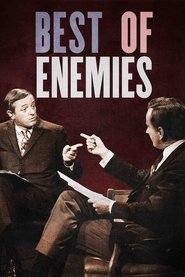
Best of Enemies
2015
Best of Enemies
2015
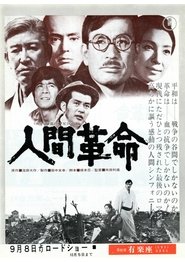
star 7.2A documentary about the legendary series of nationally televised debates in 1968 between two great public intellectuals, the liberal Gore Vidal and the conservative William F. Buckley Jr. Intended as commentary on the issues of their day, these vitriolic and explosive encounters came to define the modern era of public discourse in the media, marking the big bang moment of our contemporary media landscape when spectacle trumped content and argument replaced substance. Best of Enemies delves into the entangled biographies of these two great thinkers, and luxuriates in the language and the theater of their debates, begging the question, "What has television done to the way we discuss politics in our democracy today?"The Human Revolution
1973
The Human Revolution
1973
This Ain't California
2012
star 6.5A retrospective look at the youth cultures born in the German Democratic Republic. A celebration of the lust for life, a contemporary trip into the world of skate, a tale on three heroes and their boards, from their childhood in the seventies, through their teenage rebellion in the eighties and the summer of 1989, when their life changed forever, to 2011.Sweethearts
0000
Sweethearts
0000
The story of Hollywood movie stars Jeanette MacDonald and Nelson Eddy and their love affair during the 1930s.Kikoku
2010
Kikoku
2010
star 3.5An unscheduled late night train arrives at Tokyo station on 15 August, the anniversary of Japan’s surrender in World War II. Boarding the train are spirits of great men who died honourable deaths in the war more than 60 years ago. They have come to the modern world to see their homeland as a peaceful country and to tell the lingering spirits of the war dead about the current conditions.Her Majesty Yeonghwa
1964
Her Majesty Yeonghwa
1964
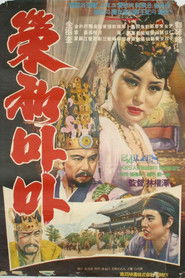
At the close of the reign of Sin the Great in Goguryeo (B.C.37-A.D.668), royalist Uso is executed by a false incrimination made by a treacherous retainer Yangsin and his sister Jangssi. His daughter becomes a royal concubine of King Nammu, and called Her Majesty Yeonghwa. She revenges herself on the party of Yangsin. After the king passes away, she makes his brother Yeonu accede to the throne and has the whole country under her thumb. But she has no child. When the king begets a son from another woman, she dies of jealousy at last.The Battle of Stalingrad
1949
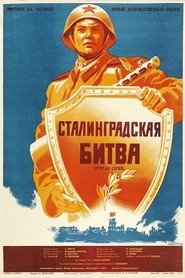
star 3.4A 1949 two-part Soviet epic war film about the Battle of Stalingrad, directed by Vladimir Petrov. The script was written by Nikolai Virta.Now or Never!
2024
Now or Never!
2024
star 2.5On March 15, 1848, a young firebrand poet, Sándor Petöfi ignites the Hungarian Revolution with his passionate 'National Song', prompting the Austrians to dispatch a ruthless secret agent to assassinate him and suppress the uprising.Marie Stuart
1908
Marie Stuart
1908
12 September: Coup Diary
1998
Turkish democracy got over May 27 and March 12 and set off again, but the storm did not subside, and the mutual reckoning was not over. On the contrary, new fronts were opened in the country and blood began to flow like a gutter. Finally, on September 12, there was a knock on the door again. Those who came that day changed everything, everything. Nothing will ever be the same againCross of Iron
1977
Cross of Iron
1977
star 7.1It is 1943, and the German army—ravaged and demoralised—is hastily retreating from the Russian front. In the midst of the madness, conflict brews between the aristocratic yet ultimately pusillanimous Captain Stransky and the courageous Corporal Steiner. Stransky is the only man who believes that the Third Reich is still vastly superior to the Russian army. However, within his pompous persona lies a quivering coward who longs for the Iron Cross so that he can return to Berlin a hero. Steiner, on the other hand is cynical, defiantly non-conformist and more concerned with the safety of his own men rather than the horde of military decorations offered to him by his superiors.Ivan Megharoopan
2012
Ivan Megharoopan
2012
The film is based on the life of Malayalam poet P. Kunhiraman Nair and is particularly based on his autobiography, Kaviyude Kalpadukal.Elemental: Hydrogen vs. Hindenburg
2017
star 6"Elemental" is the groundbreaking television event from Academy Award-winning executive producer Robert Zemeckis that reveals how the elements of the periodic table have controlled the outcome of human history. This one-hour drama tells the harrowing story of the Hindenburg disaster. Sophisticated cinematography, animation and spectacular visual effects bring this fiery saga to life in a way no audience has seen before.The Incredible Sarah
1976
The Incredible Sarah
1976
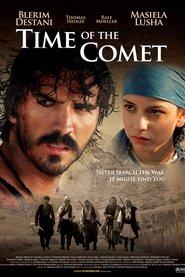
star 5The legendary actress Sarah Bernhardt's unconventional life and career are examined in this biopic. At an audition in 1860, the teenage Bernhardt proclaims herself the greatest actress of her time. Her career blossoms, as does her private life. But art and life don't stay balanced, much to the frustration of her lovers. The eccentric Bernhardt eventually does marry another actor, but it's her life on stage that ultimately gives her the most satisfaction.Time of the Comet
2008
Time of the Comet
2008
star 6.8A young man is searching for the war to free his country and establish freedom. Instead of war he finds the love of his life.Lights and Shadows
1988
Lights and Shadows
1988
star 5.8This film within a film is based on the painting Las Meninas by Diego de Velazquez. A young boy enters the canvas of the famous picture of the Spanish king and his court. In order to return to the real world, he must convince the artist to create his famous painting. The other plot involves a film director who is not sure how his film within a film will be created. He is distracted by his troubled marriage and has difficulty focusing on his project.Oriental Novel
1992
Oriental Novel
1992
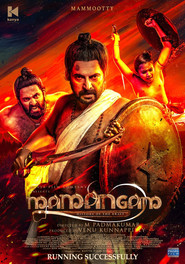
star 1The film consists of five short stories that reflect five stages (1947 — 1950 — 1957 — 1967 — 1982) the action programs of the heroine of the film, from the age of fifteen, rushed to a typical goal for that time — to smile from the front page of a central newspaper. Her fate is not simple: unhappy love, life with the unloved, a labor colony, love again, then love in return, earthquakes, fires, devastation. The heroine is getting closer to the goal and nothing can stop her..Mamangam
2019
Mamangam
2019
star 6.4Based on the medieval fair called Mamankam, which was celebrated every 12 years between 800 AD and 1755 AD, the story of the film is supposedly about a brave warrior of Malabar and his loyal soldiers.The Lord's spy
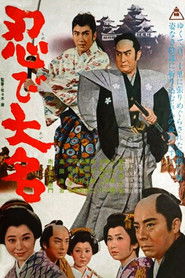
1964
The Lord's spy
1964
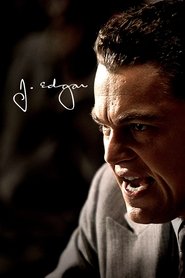
Maeda Tsunanori, the lord of Kaga Domain, had two young princes - Katsumaru, the son of his legitimate wife, who died, and Yasunosuke, the son of his concubine. However, Katsumaru suddenly lost his mind and appealed to the shogunate to hand over the reins of the family Yasunosuke, but the request was rejected. Vassal Osawa Kuranojo suspects that this is the work of Ishikawa Torajiro, a swordsman from the Katsumaru group, and begins an investigation.J. Edgar
2011
J. Edgar
2011
star 6.2As the face of law enforcement in the United States for almost 50 years, J. Edgar Hoover was feared and admired, reviled and revered. But behind closed doors, he held secrets that would have destroyed his image, his career, and his life.