Popular History Movies on Tub Tv - Page 194
All Services
Free Services
 Netflix
 Amazon Prime Video
 Apple iTunes
 Apple TV Plus
 Disney Plus
 Google Play Movies
 Paramount Plus
 Hulu
Hulu
 HBO Max
 YouTube
 fuboTV
 Peacock
 Peacock Premium
 Amazon Video
 The Roku Channel
 AMC+
AMC on Demand
AMC+
AMC on Demand
 Kocowa
 Hoopla
 The CW
 Vudu
Vudu
 Starz
Starz
 Showtime
 PBS
PBS
 Pantaflix
 FXNow
FXNow
 Tubi TV
 Kanopy
 Comedy Central
 Crunchyroll
 Microsoft Store
 Redbox
 Sun Nxt
 ABC
ABC
 DIRECTV
 Crackle
 Fandor
 Plex
Plex
Netflix
Amazon Prime Video
Apple iTunes
Apple TV Plus
Disney Plus
Google Play Movies
Paramount Plus
Hulu
HBO Max
YouTube
fuboTV
Peacock
Peacock Premium
Amazon Video
The Roku Channel
AMC+
AMC on Demand
Kocowa
Hoopla
The CW
Vudu
Starz
Showtime
PBS
Pantaflix
FXNow
Tubi TV
Kanopy
Comedy Central
Crunchyroll
Microsoft Store
Redbox
Sun Nxt
ABC
DIRECTV
Crackle
Fandor
Plex

The Rest Is Ashes
2020
The Rest Is Ashes
2020
star 7.9Atanas Burov (played by Assen Blatechki) is considered as the most influential politician in Bulgaria's history. The movie is about him and his love story with Dilyana Popova as the main female character.Dağlar Bulutlu Efem
1962
Dağlar Bulutlu Efem
1962
During the final years of the Ottoman Empire, occupying forces raided villages and oppressed the people. Nationalist fighters Süleyman Ağa and his friends organized themselves and planned to launch a resistance against the enemy. They wanted Mehmet, Süleyman Ağa's son in Istanbul, to lead the organization. For this reason, Mehmet returned to his homeland years later. However, Mehmet would not act according to the plans made by the nationalist fighters.Antti Puuhaara
1976
Antti Puuhaara
1976
star 7In 17th-century Pohjola, young Antti Puuhaara is looking for himself, because he has grown up with no knowledge of his childhood. Two actors, the tragedian and the comedian, who were banished from Tsarist Russia to Karelia, had predicted to the crooked merchant Markki Bohattov that Antti's fate would become intertwined with his own. When Antti falls in love with Bohattov's daughter Darja, the father has to arrange for her to marry the tar merchant Arho Mustahatu.The Wars of the Roses
1965
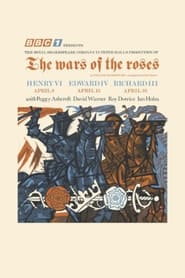
star 8.5A 1965 BBC adaptation of William Shakespeare's first historical tetralogy (1 Henry VI, 2 Henry VI, 3 Henry VI and Richard III), which deals with the conflict between the House of Lancaster and the House of York over the throne of England, a conflict known as the Wars of the Roses. It was based on the 1963 theatre adaptation by John Barton, and directed by Peter Hall for the Royal Shakespeare Company.Deadly Swords in Search of Hidden Gold
1983
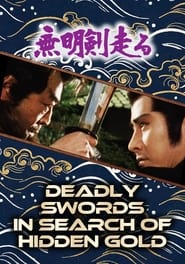
The secret map of the treasure of Kenzan was stolen out of the house of a former soldier in Awa. A fight over the treasure that the map shows happens among the Rozyu, a Ronin, a thief, and the Hyodo family. Is the treasure there? Who will get it? Masakazu Tamura plays the role of a ronin from Edo, Hayato Arakida, from the Mumyo Tenshin school dojo and a swordmaster working for Lord Awa. The film is based on the original work of Kyotaro Nishimura. A period show with a fierce fight on a raft going down a river and romance.Race for Glory: Audi vs. Lancia
2024
star 6.1Inspired by true events that occurred during the fierce rivalry between Germany (Audi) and Italy (Lancia) at the 1983 Rally World Championships.Stray Wolf
1982
Stray Wolf
1982
Matoba Kokingo, who once served as a retainer for a hatamoto, becomes disillusioned with his master and elopes with his lover, Oyuki. They flee their lord's household, taking with them 30 ryō of official funds. However, the money is stolen from them at an inn, and shortly after, Oyuki dies of illness. Eight years later, Kokingo has fallen into disgrace, now making a living as a ronin who specializes in extortion. One day, he attempts to extort a restaurant owner named Hanzo, only to discover that Hanzo was the very thief who stole the 30 ryō from him eight years ago…Samurai Rock
2015
Samurai Rock
2015
Masami is a guitarist who dreams of his band “Rhythm Head” winning the Grand Prix at the Japan Music Carnival. History, and the warlords of 16th century feudal Japan are the very last thing on his mind. But when Rhythm Head are performing in Nagoya, a mysterious lightning strike causes not only a power blackout, but also a “time slip”, in which two of Japan’s preeminent samurai-era figures, Nobunaga Oda and Hideyoshi Toyotomi are transported to present day Japan. To Rhythm Head’s manager, the duo are the perfect vehicle for the band to transition to an idol group, increase their chances of becoming famous, winning accolades and taking away the Japan Music Carnival top prize. Could this be the beginning of a new type of music, courtesy of a brand new band Samurai Rock?Joaquim
2017
Joaquim
2017
star 7Brazil, 18th century. The colony of Portugal endures a decline in gold production. A Portuguese minority rules over a corrupt and autocratic society. Joaquim is an efficient soldier, famous for capturing gold smugglers. While waiting for his promotion to Lieutenant, he leaves for a risky mission in search of new gold mines - the only way to buy the freedom of Blackie, a slave he is in love with. Inspired by the true story of Tiradentes, the first leader of the Brazilian revolutionary movement.Destiny
1977
The Fight in the Taiga
1978
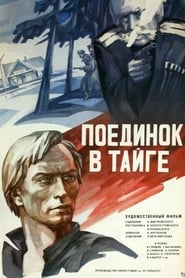
star 4.5Komsomol member Zorik arrives at the distant taiga station Suetikha. He manages to attract the guys to his side and organize a youth squad. Having contacted the partisans, they stop and disarm the enemy armored train.Er Woo Dong: The Entertainer
1985
star 4.8Er Woo Dong translates to "entertainer," a rough approximation of the duties of 14th-century Korean courtesan Er Yoon Chang. After a lifetime "in service," Er Yoon Chang retires to a faraway village. Meanwhile, her powerful father, ashamed of his daughter's lifestyle, dispatches an assassin to do her in. Er Yoon Chang is protected by her faithful deaf-mute bodyguard, but only up to a point.Storm Over Asia
1928
Storm Over Asia
1928
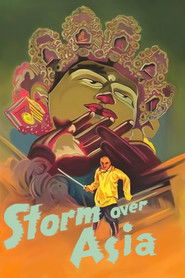
star 6.5In 1918 a young and simple Mongol herdsman and trapper is cheated out of a valuable fox fur by a European capitalist fur trader. Ostracized from the trading post, he escapes to the hills after brawling with the trader who cheated him. In 1920 he becomes a Soviet partisan, and helps the partisans fight for the Soviets against the occupying British army. However he is captured by the British when they try to requisition cattle from the herdsmen at the same time as the commandant meets with a reincarnated Grand Lama. After the trapper is shot, the army discovers an amulet that suggests he is a direct descendant of Genghis Khan. They find him still alive, so the army restores his health and plans to use him as the head of a puppet regime. The trapper is thus thrust into prominence as he is placed in charge of the puppet government. By the end, however, the "puppet" turns against his masters in an outburst of fury.Harbinger
2022
Harbinger
2022
A street sweeper, The messenger of the red-blooded letter to the soldier found out it was abused. Responsible for the extermination of neutralists during the Gestok/Gestapu era in Bali.The Film Parade
1933
The Film Parade
1933
Pioneer filmmaker J. Stuart Blackton was intrigued by the idea of a film about the history of the movies as early as 1915. He finally released a 52-minute feature called The Film Parade that was shown in New York and favorably reviewed by "Variety" in 1933. He continued tinkering with the film for the rest of the decade, and later filmmakers and distributors used Blackton's footage for stock or to produce their own variously titled and truncated versions. -UCLA Film & Television ArchiveMy Uncle Benjamin
1969
My Uncle Benjamin
1969
star 6.1Benjamin is in love with Manette, the innkeeper's beautiful daughter, but she has no intention of giving in to the young doctor until she sees the marriage contract, and marriage does not fit in with Benjamin's spirit of independence. For the same reason he resists the efforts of his sister Bettine to marry him off to Arabelle, the daughter of old Dr. Minxit. Benjamin does agree to go and meet the girl. But that evening his sister finds him at the inn together with Manette, who is arrested by her father. So she decides to go with Benjamin herself. But as result of an incident with the fat Marquis puts paid to the expedition. Benjamin is subjected by the Marquis to a humiliating practical joke. Benjamin is determined to got his revenge. He succeeds thanks to the gorgeous Vicomte Hector de Pont-Cassé, who also helps Manette with her problems against her father. But Benjamin is now arrested by the Marquis...Farha
2021
Farha
2021
star 7.1Palestine, 1948. After the withdrawal of the British occupiers, tensions rise between Arabs and Jews. Meanwhile, Farha, the smart daughter of the mayor of a small village, unaware of the coming tragedy, dreams of going to study in the big city.Awka Liwen
2010
Awka Liwen
2010
star 10This documentary exposes the untold story about the killing of native Southamerican people in Argentina in the late XIX century, with the aim of taking their lands for economical and political purposes.Before Stonewall
1984
Before Stonewall
1984
star 6.5New York City's Stonewall Inn is regarded by many as the site of gay and lesbian liberation since it was at this bar that drag queens fought back against police June 27-28, 1969. This documentary uses extensive archival film, movie clips and personal recollections to construct an audiovisual history of the gay community before the Stonewall riots.