Popular History Movies on Tub Tv - Page 204
All Services
Free Services
 Netflix
 Amazon Prime Video
 Apple iTunes
 Apple TV Plus
 Disney Plus
 Google Play Movies
 Paramount Plus
 Hulu
Hulu
 HBO Max
 YouTube
 fuboTV
 Peacock
 Peacock Premium
 Amazon Video
 The Roku Channel
 AMC+
AMC on Demand
AMC+
AMC on Demand
 Kocowa
 Hoopla
 The CW
 Vudu
Vudu
 Starz
Starz
 Showtime
 PBS
PBS
 Pantaflix
 FXNow
FXNow
 Tubi TV
 Kanopy
 Comedy Central
 Crunchyroll
 Microsoft Store
 Redbox
 Sun Nxt
 ABC
ABC
 DIRECTV
 Crackle
 Fandor
 Plex
Plex
Netflix
Amazon Prime Video
Apple iTunes
Apple TV Plus
Disney Plus
Google Play Movies
Paramount Plus
Hulu
HBO Max
YouTube
fuboTV
Peacock
Peacock Premium
Amazon Video
The Roku Channel
AMC+
AMC on Demand
Kocowa
Hoopla
The CW
Vudu
Starz
Showtime
PBS
Pantaflix
FXNow
Tubi TV
Kanopy
Comedy Central
Crunchyroll
Microsoft Store
Redbox
Sun Nxt
ABC
DIRECTV
Crackle
Fandor
Plex

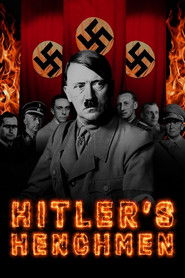
Hitler's Henchmen
2020
Hitler's Henchmen
2020
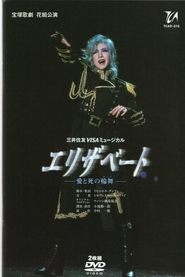
The regime of the Nazi Party inflicted terror, destruction, and brutal horrors throughout the Third Reich. Ideas of making Germany great again indoctrinated the German people to support them indefinitely, hiding the mass slaughter of human life behind their convincing propaganda campaigns. Hitler and his disturbed Henchmen made this genocide possible, each man as deranged as the next. Their dedication to the Fuhrer was absolute, and to gain his validation they were willing to do anything.Elisabeth: The Rondo of Love and Death
2003
Takarazuka Revue Flower Troupe 2002-2003 production of the Viennese musical ElisabethKaloyan
1963
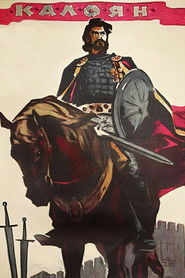
Kaloyan
1963
star 8.51197. King Kaloyan ascends the throne in hard times for Bulgaria. The country is still recovering from a century of Byzantine subjugation. He is forced to carry out a very flexible foreign policy in order to strength his positions. Pope Innocent III recognizes him as Emperor (Tsar), but a little later the fourth Crusade crosses the country under Emperor Baldwin. A new conflict is coming. Tsar Kaloyan wages the decisive battle at Adrianople and wins.Visas and Virtue
1997
Visas and Virtue
1997
star 6.5Europe, 1940. For thousands of Jews, a Japanese diplomat and his wife defy Tokyo and the Nazis, and offer visas, for life.Massacre in Rome
1973
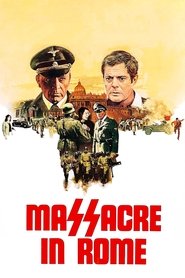
Massacre in Rome
1973
star 6In the Nazi occupied city of Rome, an assault on an SS brigade draws retaliation from the military governship. "Massacre in Rome" is the true story of how this partisan attack led to the mass execution of Italian nationals under the orders of SS-Lieutenant Colonel Kappler.The Rose of Versailles
2025
star 7.2In an age of revolution, Marie Antoinette and her protector Oscar François de Jarjayes face tough choices as women growing into their distinct roles.Things That Do Us Part
2019
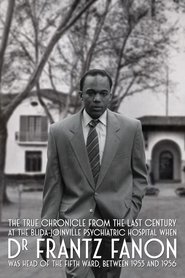
Things That Do Us Part is a documentary that reframes the stories of three women fighters who dove into a tragic war in modern Korean history, using witness statements and reenactments.True Chronicles of the Blida Joinville Psychiatric Hospital in the Last Century, when Dr Frantz Fanon Was Head of the Fifth Ward between 1953 and 1956
2025
star 61953, colonized Algeria. Fanon, a young black psychiatrist is appointed head doctor at the Blida-Joinville Hospital. He was putting his theories of ‘Institutional Psychotherapy’ into practice in opposition to the racist theories of the Algies School of Psychiatry, while a war broke out in his own wards.Family Doctrine (Part 1) - An Old Family
1965
Family Doctrine is a drama film directed by Chu Kei and stars Wu Fung, Man Lan, Pearl Au Ka-Wai, Ma Siu-Ying, and Kitty Ting Hao.Aparajito
2022
Poruno repôto: Hentai
1976
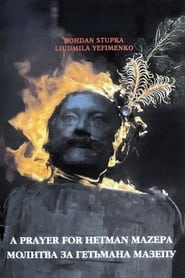
Two stories of perversion. 1) A Meiji era erotic artist forces his wife and maid to pose for his bondage themed paintings with dire consequences. 2) A WWII soldier develops a nasty sexual obsession overseas and which only grows stronger when he returns home.A Prayer for Hetman Mazepa
2003
star 5During an interesting era in the history of Eastern Europe when Russia, under Peter the Great, and Sweden, under King Charles XII, struggled for power, Ukraine was the pawn in the middle. In 1709, Ivan Mazepa, Hetman of Ukraine, which was part of the Russian Empire, signed a pact with the Swedish king promising to support Sweden in its war against Russia provided that Ukraine was given its independence.Angels of Revolution
2014
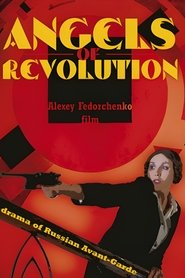
Angels of Revolution
2014
star 5.8Five friends – a poet, an actor, a painter, an architect and a primitivist film director – are five red avant-garde artists who try to find the embodiment of their hopes and dreams in the young Soviet state. The Revolution is boiling up like a bottle with apple cider: winged service dogs and heart-shaped potatoes, dead Semashko, the People’s Commissar for Health, and cheerful angels, love for the Tsar and love for the young secretary Annushka, executions and pregnancies – everything is interlaced and inseparable!Heroes of Shipka
1955
Heroes of Shipka
1955
star 4.8Heroes of Shipka was the first solo effort for Soviet director Sergei Vasilyev, who had previously collaborated with his late brother Georgi. As head of the Leningrad Film Studios, Vasilyev was obliged to traffic in propaganda, but he never forgot how to make his material entertaining. The film is set in 1887 during the pivotal battle between the Russians and the Turks at the Shipka Pass. Stressing the solidarity of the Soviet states, tribute is paid to the courageous Bulgarian volunteers who helped the Russians fend off their mutual enemy. American critics were impressed by Heroes of Shipka, but felt that the film would have been twice as effective had it been lensed in Cinemascope rather than "standard aspect."Shogun Iemitsu Shinobi Tabi
1990
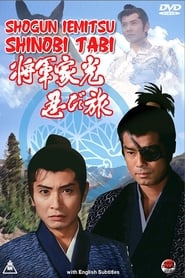
Shogun Iemitsu Shinobi Tabi was a pair of television jidaigeki series on TV Asahi in Japan. The first aired in 1990–1991 and the sequel in 1992–1993. Kunihiko Mitamura portrayed Tokugawa Iemitsu in both series. The show premiered on October 13, 1990, as an off-season replacement for the popular Abarenbo Shogun. It shared several cast members with Abarenbo Shogun, including Reiko Takashima, Ayako Tanaka and some minor guest actors. The final episode aired on March 30, 1991. The sequel ran during the same months of 1992–1993.Afterimage
2016
Afterimage
2016
star 6.6In 1945, as Stalin sets his hands over Poland, famous painter Wladislaw Strzeminski refuses to compromise on his art with the doctrines of social realism. Persecuted, expelled from his chair at the University, he's eventually erased from the museums' walls. With the help of some of his students, he starts fighting against the Party and becomes the symbol of an artistic resistance against intellectual tyranny.Tchaikovsky. An Elegy
2011
star 2Thrust into an empty room and prompted by the relentless turning of a music score's pages, Tchaikovsky is forced to revisit the traumas and successes of his life, reaching some acceptance.The Forgotten Battle
2021
The Forgotten Battle
2021
star 7.1During WWII's crucial Battle of the Scheldt, the lives of a glider pilot, a Nazi soldier and a reluctant Resistance recruit tragically intersect.A Beautiful Day in the Neighborhood
2019
star 7An award-winning cynical journalist, Lloyd Vogel, begrudgingly accepts an assignment to write an Esquire profile piece on the beloved television icon Fred Rogers. After his encounter with Rogers, Vogel's perspective on life is transformed.Stolen Eyes
2005
Stolen Eyes
2005
star 6.1This is a story of strange, impossible, inexplicable love between a Muslim Turk woman and a non-Muslim Bulgarian man. Ivan (the Bulgarian) is a pure and romantic young fellow, who gets caught up in the so-called "regeneration process" (when ethnic Turks' names were forcibly changed to Bulgarian ones). He is responsible for the official seals, which is required to issue the new identity documents after the forced name changes. The schoolteacher Ayten tries to steal the seals, thinking that this way she can slow down the ethnic genocide. Their unexpected and unusual meeting brings these two characters together and makes them fell close, forcing Ivan to take a fateful decision -he must either "rename" Ayten, or face the consequences if he does not.