Popular History Movies on Tub Tv - Page 261
All Services
Free Services
 Netflix
 Amazon Prime Video
 Apple iTunes
 Apple TV Plus
 Disney Plus
 Google Play Movies
 Paramount Plus
 Hulu
Hulu
 HBO Max
 YouTube
 fuboTV
 Peacock
 Peacock Premium
 Amazon Video
 The Roku Channel
 AMC+
AMC on Demand
AMC+
AMC on Demand
 Kocowa
 Hoopla
 The CW
 Vudu
Vudu
 Starz
Starz
 Showtime
 PBS
PBS
 Pantaflix
 FXNow
FXNow
 Tubi TV
 Kanopy
 Comedy Central
 Crunchyroll
 Microsoft Store
 Redbox
 Sun Nxt
 ABC
ABC
 DIRECTV
 Crackle
 Fandor
 Plex
Plex
Netflix
Amazon Prime Video
Apple iTunes
Apple TV Plus
Disney Plus
Google Play Movies
Paramount Plus
Hulu
HBO Max
YouTube
fuboTV
Peacock
Peacock Premium
Amazon Video
The Roku Channel
AMC+
AMC on Demand
Kocowa
Hoopla
The CW
Vudu
Starz
Showtime
PBS
Pantaflix
FXNow
Tubi TV
Kanopy
Comedy Central
Crunchyroll
Microsoft Store
Redbox
Sun Nxt
ABC
DIRECTV
Crackle
Fandor
Plex

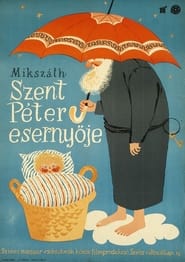
St. Peter's Umbrella
1958
St. Peter's Umbrella
1958
star 6.4A comedy about a lost inheritance, love and a red umbrella, which, according to a local legend, belonged to St. Peter himself.Florence Nightingale
1915
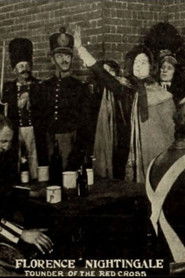
Florence Nightingale
1915
The film portrays the life of Florence Nightingale, particularly her innovations in nursing during the Crimean War (1854–56).The Amazing Nina Simone
2015
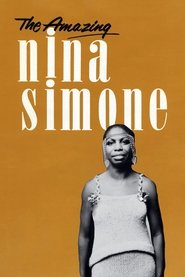
star 7.4The life, legacy and musical accomplishments of singer, musician, pianist, songwriter and Civil Rights activist, Nina Simone through interviews with over 50 of the subject’s friends, family, band members, lovers and fellow activists. The film has been called the best of the three Nina Simone films by The New Yorker Magazine.Miyamoto Musashi
1929
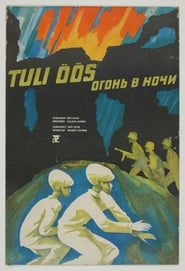
Fire in the Night
1973
Fire in the Night
1973
star 9Ülo and Olev think the German occupation is humiliating and the soldiers are arrogant. But even among Estonians there are people who cannot be trusted - this can have fatal consequences. Witty schoolboys find out that Mr Velirand, who has moved in the apartment that once belonged to their teacher, is a henchman of Fascists. The boys make up their minds to give people warning about the provocator, even if the rebellion is risky and their opponent superior, as it had been in the St George's Night Uprising in 1343.Topos
1985
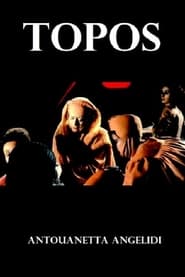
Topos
1985
star 6.5During its 85-minute running time, this jarring experimental film takes a no-holds-barred look at the way women have been treated and depicted in Western art.Juan & Eva
2011
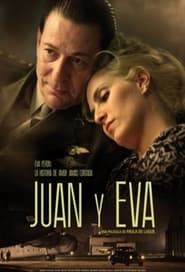
Juan & Eva
2011
star 5.4The earthquake in the city of San Juan, in January 1944, is the origin of the love story between Juan Domingo Perón (Osmar Nunez) and Eva Duarte (Julieta Diaz). He was a colonel in the Army and she was a popular radio actress. Eva collaborates with other artists in the collection organized by Peron, from the Secretary of Workr, to raise funds for earthquake victims. Neither then imagine what the future holds them.Nazi Titanic
2012
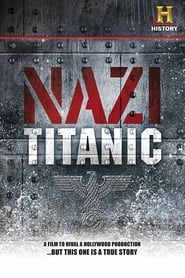
Nazi Titanic
2012
star 6.7During a bizarre chapter of WWII, Nazi propaganda minister Joseph Goebbels decided to make a movie based on the sinking of the Titanic. This epic film was so large in scale that the Nazis were forced to divert men, material and ships from the war effort in order to complete it. Titanic was filmed aboard cruise ship SS Cap Arcona in the Baltic Sea. The movie’s director Herbert Selpin was arrested by the Gestapo over comments he made about the ship’s crew and he was questioned by Goebbels. Selpin was found dead the next day in his cell. The Gestapo’s verdict was suicide. Titanic never received the impressive premiere that Goebbels intended, being first shown in Nazi-occupied Paris in 1943. We reveal this little known but fascinating story by looking at the making of the film, as well as the fate of the German ship Cap Arcona.The Private Files of J. Edgar Hoover
1977
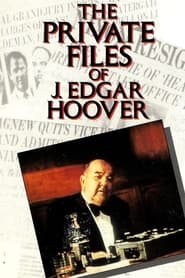
star 4.9The story of J. Edgar Hoover, head of the FBI from 1924-1972, following his racket-busting days through his reign under eight US presidents.Gates to Paradise
1968
Gates to Paradise
1968
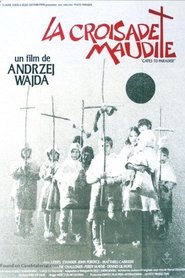
star 5.8In 1212, a Children's Crusade is launched after a young shepherd, Jacques de Cloyes, claims to have had a vision in which it is said that the innocence of children would be able to liberate Jerusalem. A monk, returning from Holy Land, joins the crusade and hears the children's confessions, gradually realizing that most of them are taking part not for religious, but for more worldly reasons, like rejected love and hopes for freedom, the true nature of their enthusiasm is homosexual. In fact, if the children follow Jacques, it is more for romantic than religious reasons. They take literally the famous phrase: “Love one another”.Rambam - The Story of Maimonides
2005
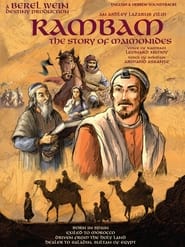
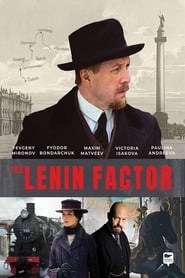
Rambam was born in Cordova, Spain in the 12th century. Known as the "Nesher Gadol" the "Great Eagle" - Rambam had the unique ability to see and perceive, with insight and clarity, the "big picture" - and man's relationship to the Divine. He was the first philosopher to unify - and reconcile the rational - with the reality of God. The legacy he left behind is astounding.The Lenin Factor
2019
The Lenin Factor
2019
star 5.7Having dedicated his life to the preparation of the revolution in the Russian Empire, Vladimir Lenin, living in exile in Switzerland, desperately seeks a way back to Russia to take control. Options are few when Lenin receives an offer from Alexander Parvus, the most infamous of political opportunists, who has made a deal with Germany to sponsor the revolution under Lenin’s command and smuggle Lenin and his comrades into Russia. Aware that making a deal with 2 devils could cost him everything, Lenin knows he must outsmart and outmaneuver Parvus and the Germans at any cost...Dateline: Saigon
2017
Dateline: Saigon
2017
star 8How does a nation slip into war? Dateline-Saigon profiles the controversial reporting of five Pulitzer Prize-winning journalists -The New York Times' David Halberstam, the Associated Press' Malcolm Browne, Peter Arnett, and legendary photojournalist Horst Faas, and UPI's Neil Sheehan -- during the early years of the Vietnam War as President John F. Kennedy is secretly committing US troops to what is initially dismissed by some as 'a nice little war in a land of tigers and elephants.' 'When the government is telling the truth, reporters become a relatively unimportant conduit to what is happening,' Halberstam tells us. 'But when the government doesn't tell the truth, begins to twist the truth, hide the truth, then the journalist becomes involuntarily infinitely more important.'Tsarevich Aleksey
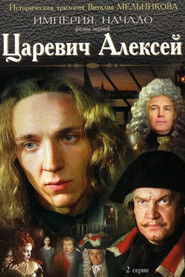
1996
Tsarevich Aleksey
1996
star 6.5Tsarevich Alexei was one of the smartest people in the state. His father Peter hoped that he would take his place, but Alexei tried with all his might to remain out of power and wished for ordinary human happiness.Mussorgsky
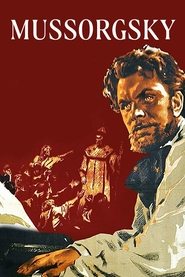
1950
Mussorgsky
1950
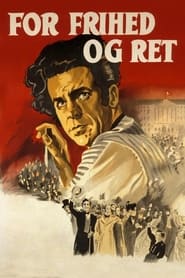
star 4.5Saint Petersburg, 1858. A group of composers known as The Five meet at Balakirev's. Young Modest Mussorgsky, both a civil servant and a musician, has become a fixture there. He tells about the first opera he plans to compose. Then he goes to the country where he discovers the lowly conditions of the peasants and the bloody conflicts with the rich land owners. He works on Gogol's 'The Marriage', trying to render into music the natural accents of the play's naturalistic dialogue. But his efforts do not pan out. On the other hand, he starts writing his opera on the story of Boris Godunov. The Marinsky Theatre refuses to stage the work. The Five, and Mussorgsky among them, are libeled and the group starts disintegrating. When 'Boris Godunov' is finally performed in 1874, it is a popular success.For freedom and justice
1949
star 6.2A picture of the life of the Danish people from the late 1820s to the introduction of the free constitution in 1849. A fictional character, Rasmus Nielsen, travels around the country, first as a traveling teacher, later in other positions, and through his experiences we are introduced to the conditions of various population groups. The central figure in the portrayal of historical figures is the politician Orla Lehmann.Executed at the Dawn
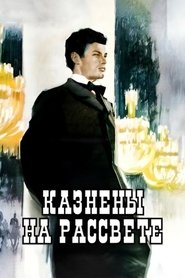
1965
Executed at the Dawn
1965
star 9About Lenin's brother Alexander Ulyanov and his comrades' fight against the Russian autocracy.