Popular History Movies on Tub Tv - Page 272
All Services
Free Services
 Netflix
 Amazon Prime Video
 Apple iTunes
 Apple TV Plus
 Disney Plus
 Google Play Movies
 Paramount Plus
 Hulu
Hulu
 HBO Max
 YouTube
 fuboTV
 Peacock
 Peacock Premium
 Amazon Video
 The Roku Channel
 AMC+
AMC on Demand
AMC+
AMC on Demand
 Kocowa
 Hoopla
 The CW
 Vudu
Vudu
 Starz
Starz
 Showtime
 PBS
PBS
 Pantaflix
 FXNow
FXNow
 Tubi TV
 Kanopy
 Comedy Central
 Crunchyroll
 Microsoft Store
 Redbox
 Sun Nxt
 ABC
ABC
 DIRECTV
 Crackle
 Fandor
 Plex
Plex
Netflix
Amazon Prime Video
Apple iTunes
Apple TV Plus
Disney Plus
Google Play Movies
Paramount Plus
Hulu
HBO Max
YouTube
fuboTV
Peacock
Peacock Premium
Amazon Video
The Roku Channel
AMC+
AMC on Demand
Kocowa
Hoopla
The CW
Vudu
Starz
Showtime
PBS
Pantaflix
FXNow
Tubi TV
Kanopy
Comedy Central
Crunchyroll
Microsoft Store
Redbox
Sun Nxt
ABC
DIRECTV
Crackle
Fandor
Plex

Sweet Country
1987
Sweet Country
1987
star 4.4An American couple in Chile is drawn into the turmoil that followed President Salvador Allende's 1973 overthrow.Anastasiya Slutskaya
2003
Anastasiya Slutskaya
2003
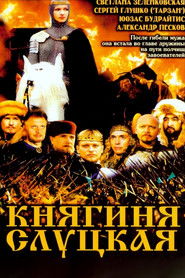
star 4.5The action takes place at the beginning of the 16th century. The rich Belarusian lands that are part of the Grand Duchy of Lithuania, located at the intersection of trade routes, are attacked by Tatars. With rapid raids, the Crimean cavalry reaches all Belarusian cities without exception. The conquerors stormed the fortress, robbed, stole the population into slavery, leaving behind ashes. On the way, the troops of the Crimean Tatars, among the few who have not yet been defeated, stand up to the brave squad and brave residents of the city of Slutsk, whose defense after the death of the husband of Prince Semyon Olelkovich was led by Princess Anastasia Slutskaya.The Twenty Six Comissars
1966
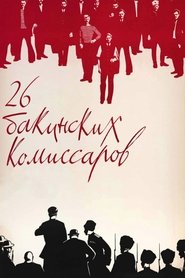
star 7.2The film is about dramatic revolutionary events happened in 1918 in Baku.The Battle of Bhima Koregaon
0000
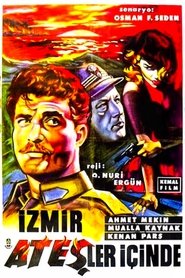
The Battle of Bhima Koregaon was fought on 1 January 1818 between the British East India Company and the Peshwa faction of the Maratha Confederacy, at Koregaon Bhima.İzmir Ateşler İçinde
1959
İzmir Ateşler İçinde
1959
Королева Анна
2027
Goldfish
2016
Goldfish
2016
1946, Kyrgyzstan, evacuated from Leningrad woman with two children — boys of six and ten years. Their father is in hospital, badly wounded. Time is poor, hungry. The family fights for life, selling homemade rugs on the market and picking up everything that can be useful in the economy on the ruins of abandoned houses. Once the brothers find in the dump a book with wonderful pictures. This is Alexander Pushkin's fairy tale "goldfish". The mother reads it to them before bedtime — and in the lives of boys be the dream and the sense of becoming owners of the coveted gold fish and the three wishes, one of which, of course, the return of the father, alive and well.The Life of Moses
1909
The Life of Moses
1909
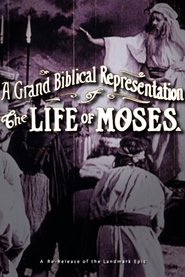
star 1Released in five parts (The Persecution of the Children of Israel by the Egyptians, Forty Years in the Land of Midian, The Plagues of Egypt and the Deliverance of the Hebrews, The Victory of Israel, The Promised Land), 4 December 1909 to 19 February 1910. A Vitagraph advertisement in the Moving Picture World (31 Dec. 1909) refers to The Life of Moses as a "Biblical Film-de-Luxe". It is preserved in the Library of Congress collection.The Fig Tree
2020
The Fig Tree
2020
Extremadura (Spain), 19th century. Four shepherd agree to let a game of cards decide which one of them will kill the village landowner.The Happy Valley
1987
The Happy Valley
1987
star 5.8In 1940 Kenya as their country prepares for war, the local aristocratic social set lives a decadent, self-indulgent lifestyle, that leads to murder. The same events were also dramatised in the feature film White Mischief, which was released seven months after the first transmission of The Happy Valley.Hudson Taylor
1981
Hudson Taylor
1981
star 6The early years of the great missionary Hudson Taylor are portrayed in this drama. The movie details his work in China and the trails he endured. Hudson Taylor is an inpiration to all as a man of true faith in the living God.Esop
1981
Esop
1981
star 5.2This is a story about Greek slave Esop, who contributed a lot to the world of literature, and about his silly owner, who had the power and money, but did not have kindness.Wasp Network
2020
Wasp Network
2020
star 6Havana, Cuba, 1990. René González, an airplane pilot, unexpectedly flees the country, leaving behind his wife Olga and his daughter Irma, and begins a new life in Miami, where he becomes a member of an anti-Castro organization.Coconut Connection
2017
Coconut Connection
2017
السدرة
2001
السدرة
2001
Larco Ave.: The Movie
2017
star 5.8Based on a theater musical, this movie is set in the city of Lima, Peru during the end of the 80's. The plot is about a group of youngsters from Lima who are participating in a contest for the best new Peruvian rock band. All these while they have to deal with the worst economic situation in Peru, corrupt leaders and terrorism that is rampant throughout the country. Features very popular Peruvian rock songs from the 80's and 90's.Mustafa Kamel
1952
Mustafa Kamel
1952
The work begins with a student objecting to the political situation in 1919, which reminds the teacher of the same position, but his hero at that time was the national leader (Mustafa Kamel), who spent his whole life defending the homeland from his trip to France to study law, and the formation of the National Party, which was a platform for presenting His homeland issue.Star of the East
1999
Star of the East
1999
The film presents a part of the biography of legendary artist Umm Kulthum since 1944, shedding light on her unfinished romance like her relationship with King Sharif Sabri's uncle, and Ahmed Rami. And her role in the revolution of 1952 and after the defeat of 1967 and the sacrifices she made.Saving Ronald Reagan
2006
Saving Ronald Reagan
2006
Examines how a team of doctors saved Ronald Reagan's life after an attempted assassination in 1981.Atatürk II 1881 – 1919
2024
star 8.1Mustafa Kemal had just begun his journey after proving himself in 1915 at the Gallipoli front. He would go on to face major battles on the eastern front against the Russians and later against the British in Syria, ultimately becoming the only Ottoman officer not to lose a battle during WW1. However, despite all his success, he would encounter an unexpected challenge upon his return to Istanbul.