Popular History Movies on Tub Tv - Page 420
All Services
Free Services
 Netflix
 Amazon Prime Video
 Apple iTunes
 Apple TV Plus
 Disney Plus
 Google Play Movies
 Paramount Plus
 Hulu
Hulu
 HBO Max
 YouTube
 fuboTV
 Peacock
 Peacock Premium
 Amazon Video
 The Roku Channel
 AMC+
AMC on Demand
AMC+
AMC on Demand
 Kocowa
 Hoopla
 The CW
 Vudu
Vudu
 Starz
Starz
 Showtime
 PBS
PBS
 Pantaflix
 FXNow
FXNow
 Tubi TV
 Kanopy
 Comedy Central
 Crunchyroll
 Microsoft Store
 Redbox
 Sun Nxt
 ABC
ABC
 DIRECTV
 Crackle
 Fandor
 Plex
Plex
Netflix
Amazon Prime Video
Apple iTunes
Apple TV Plus
Disney Plus
Google Play Movies
Paramount Plus
Hulu
HBO Max
YouTube
fuboTV
Peacock
Peacock Premium
Amazon Video
The Roku Channel
AMC+
AMC on Demand
Kocowa
Hoopla
The CW
Vudu
Starz
Showtime
PBS
Pantaflix
FXNow
Tubi TV
Kanopy
Comedy Central
Crunchyroll
Microsoft Store
Redbox
Sun Nxt
ABC
DIRECTV
Crackle
Fandor
Plex

Legends of War: Battle of Baideng
2019
star 8The war units of the Hun Emperor Mete Han and the Chinese Emperor Gao-Zu, the father of the turan tactic used by the Turks for centuries, come face to face in the Battle of Baideng. The war genius Mete Han was going to surround the Chinese with an unexpected war tactic and inflict a heavy defeat on them.Fort McCoy
2014
Fort McCoy
2014
star 5.6Unable to serve in World War II because of a heart condition, a barber moves his family adjacent to a Wisconsin army base and prisoner-of-war camp to provide his services. But even in rural America -- far from the frontline -- the war finds victims.Kiheitai 2
1989
Kiheitai 2
1989
It is the second part of the period drama at the end of the Edo period, featuring Shinsaku Takasugi, who organized the Kiheitai and led the Meiji Restoration to success and depicts the turbulent life of the young samurai of the Choshu clan at the end of the Edo period.Caravan 1915
2017
Caravan 1915
2017
A Turkish mercenary and his men are hired to move 200 expelled Armenians from their coastal city to Aleppo during the 1915 forced relocation and genocide.Eliso
1928
Eliso
1928
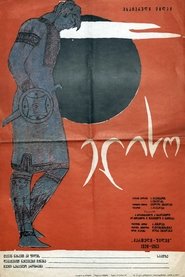
star 5.4Georgia, 1864. The Tsarist regime is using Cossacks to forcibly resettle Muslim Georgians to Turkey in order to steal their land. Meanwhile a Muslim girl falls in love with a Christian from the next village.Wait for the «John Grafton»
1979
At the beginning of the summer of 1905, representatives of the Socialist-Revolutionary Party Krasilnikov and Elkonen turned to Captain Zhanis Trautman, a Latvian political emigrant living on the outskirts of London, with a proposal to lead a steamer with a cargo of weapons to the shores of Russia. Having recruited a team of old and tried comrades, Trautman changes the crew of an English cargo ship bought by the front men. In the course of the squabble that arose on this occasion, a sailor of the old crew, David Blake, was stabbed. The wounded Blake and the veterinarian Gruber, who accompanied the cargo of anthrax drugs, are forced to leave on board. On the high seas, weapons and explosives were loaded on board. The steamer headed for the Oresund Strait, where a messenger was to meet him.Kamouraska
1973
Kamouraska
1973
star 5.8A writer, Kamouraska is based on a real nineteenth-century love-triangle in rural Québec. It paints a poetic and terrifying tableau of the life of Elisabeth d'Aulnières: her marriage to Antoine Tassy, squire of Kamouraska; his violent murder; and her passion for George Nelson, an American doctor. Passionate and evocative, Kamouraska is the timeless story of one woman's destructive commitment to an ideal love.The Bloody Hundredth
2024
The Bloody Hundredth
2024
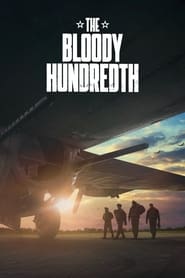
star 7.2Meet the real-life airmen who inspired Masters of the Air as they share the harrowing and transformative events of the 100th Bomb Group.St. Patrick: The Irish Legend
2000
star 5.3A young Christian boy attends a druid worship that is attacked by invading Irish tribes. Taken captive, he is taken back to Ireland to become a slave. Enduring many hardships, he finds comfort and eventually salvation in his faith. After several years, he escapes back to England, where he joins a convent to prove his faith. His greatest desire is to return to Ireland to convert the Irish to Christianity. Years later, he is given the opportunity. Upon setting foot on the Irish soil, all snakes are aitomatically driven from the land. He then overcomes many obstacles, including disagreements with the British Cardinal (Malcolm McDowell), to fulfill his destiny and ultimately being given Sainthood.A Noite do Meu Bem
1968
Not the Messiah (He's a Very Naughty Boy)
2010
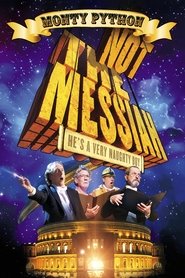
star 6.9Not The Messiah (He's a Very Naughty Boy) is a comic oratorio based on Monty Python's Life of Brian, which retells the tragic tale of Mandy, impregnated by a Roman soldier, giving birth to Brian, a reluctant revolutionary of the People's Front of Judea who falls in love with Judith, gets mistaken for a Messiah and is arrested by the Romans and sentenced to be crucified. It ranges in reference from Handel, through a naughty Mozart duet, to the Festival of Nine Carols, Bob Dylan, and the classic finale "Always Look on the Bright Side of Life".The Secret Government: The Constitution in Crisis
1987
star 5.6In the revealing 24 minutes of the PBS video documentary The Secret Government available for free viewing below, host Bill Moyers exposes the inner workings of a secret government much more vast that most people would ever imagine. Though originally broadcast in 1987, it is even more relevant today. Interviews with respected top military, intelligence, and government insiders reveal both the history and secret objectives of powerful groups in the hidden shadows of our government.Wind. 1′40″
1985
Wind. 1′40″
1985
Impressionistic silent short film (also known as ‘Kaze. Ippun yonjûbyô’) created by 17-year-old high school student Shinozuka Tsutomu. The animation, which won the Debut Prize at the inaugural Hiroshima International Animation Festival in 1985, shows a group of samurai racing at breathtaking speed across golden meadows. The film stands out for its visceral sense of motion and extraordinary dynamism, as has been confirmed by jury member Kawamoto Kihachirō, who noted that you can almost feel the force of the wind. The focus on ‘wind’, speed and warriors elegantly evokes a famous military maxim by Sun Tzu: ‘Your swiftness shall resemble the wind’. It is the first of four tenets of Fūrinkazan (風林火山, lit. ‘Wind, Forest, Fire, Mountain’), a legendary Japanese battle standard drawn from Sun Tzu’s ‘The Art of War’. Warriors should also be ‘as calm and orderly as forests, as fierce as fire, and as steadfast as mountains’.Murder on the Newfie Bullet
2025
As Newfoundland and Labrador hurtles toward its Confederation vote, a murder aboard the infamous train turns a routine journey into a chaotic political whodunit where every passenger has a motive, and the future of a nation might just be riding on a narrow gauge.The Old Winter
2014
The Old Winter
2014
Asa Bodine returns to inherited farmland to rebuild his life 40 years after he left it during Depression-era Kentucky. Directed by John A. Coulter.The Ruins of Empires
2018
The Ruins of Empires
2018
The Ruins Of Empires is an innovative performance piece by Hip Hop Artist and writer Akala. It is an abridged version of his epic poem of the same name and is a personal interpretation of history as told through the 'knowledge seeker' performed by Akala himself. He follows the course of mans evolution, via astral travel and multiple reincarnations, in an attempt to discover the cause of the rise and fall of Empires. It is driven by a musical score by Mala and Paul Gladstone-Reid and combines innovative animation techniques and emerging technology with some of the most ground breaking creative talents in the industry, under the creative guidance of Andy Serkis and The Imaginarium.Egypt's Lost Queens
2014
Egypt's Lost Queens
2014
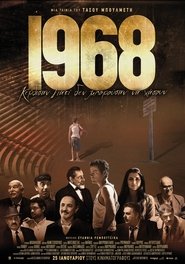
star 6.2Professor Joann Fletcher explores what it was like to be a woman of power in ancient Egypt. Through a wealth of spectacular buildings, personal artefacts and amazing tombs, Joann brings to life four of ancient Egypt's most powerful female rulers and discovers the remarkable influence wielded by women, whose power and freedom was unique in the ancient world. Throughout Egypt's history, women held the title of pharaoh no fewer than 15 times, and many other women played key roles in running the state and shaping every aspect of life. Joann Fletcher puts these influential women back at the heart of our understanding, revealing the other half of ancient Egypt.1968
2018
1968
2018
star 6.8A.E.K., the well-known Greek basketball team founded in 1924 by refugees from Constantinople, after 44 years, beats SLAVIA of Prague and wins the European Cup.CIA vs. Bin Laden: First In
2021
star 5.5CIA vs. Bin Laden. 20 years after 9/11 and 10 years after his death. The most revealing documentary ever produced about the 10 year hunt for Osama Bin Laden by the Central Intelligence Agency. We interview former Directors, CIA case officers, military leaders, members of European intelligence services, and US Congressman who played direct roles in the hunt and elimination of the world's #1 terrorist. Many of the people most deeply involved with the hunt and killing of Bin Laden have been reluctant to share their stories until now. There was simply no benefit for these quiet professionals, their families, or the agencies they served to be in the public eye. But they have collectively decided that now is the time - to go on record and tell their stories before it's too late. As far as possible, we will permit testimonies of those who dealt directly with the ex-Al Qaeda leader. His family, his lieutenants, his fighters.