Popular History Movies on Tub Tv - Page 442
All Services
Free Services
 Netflix
 Amazon Prime Video
 Apple iTunes
 Apple TV Plus
 Disney Plus
 Google Play Movies
 Paramount Plus
 Hulu
Hulu
 HBO Max
 YouTube
 fuboTV
 Peacock
 Peacock Premium
 Amazon Video
 The Roku Channel
 AMC+
AMC on Demand
AMC+
AMC on Demand
 Kocowa
 Hoopla
 The CW
 Vudu
Vudu
 Starz
Starz
 Showtime
 PBS
PBS
 Pantaflix
 FXNow
FXNow
 Tubi TV
 Kanopy
 Comedy Central
 Crunchyroll
 Microsoft Store
 Redbox
 Sun Nxt
 ABC
ABC
 DIRECTV
 Crackle
 Fandor
 Plex
Plex
Netflix
Amazon Prime Video
Apple iTunes
Apple TV Plus
Disney Plus
Google Play Movies
Paramount Plus
Hulu
HBO Max
YouTube
fuboTV
Peacock
Peacock Premium
Amazon Video
The Roku Channel
AMC+
AMC on Demand
Kocowa
Hoopla
The CW
Vudu
Starz
Showtime
PBS
Pantaflix
FXNow
Tubi TV
Kanopy
Comedy Central
Crunchyroll
Microsoft Store
Redbox
Sun Nxt
ABC
DIRECTV
Crackle
Fandor
Plex

Adrift Potentials
2024
Adrift Potentials
2024
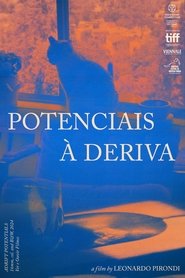
star 1This pseudo diary film is made of found materials from an unfinished 16mm film. Potenciais à Deriva is a film started by a Brazilian artist under a pseudonym while living in exile in Los Angeles, California. Isolated shots and previously assembled scenes reveal an intention to create a mysterious film comprised of disembodied interviews, empty rooms, radio recordings, soccer games, and sudden apparitions of the filmmaker that slowly ruminates on Brazil's colonial past, North American Imperialism and the military dictatorship of the time in a paranoid and anxious manner. Be aware that the film's final version never came to exist. This version presented is my mere attempt to produce a film with these otherwise lost images.Traces: The Kabul Museum 1988
2003
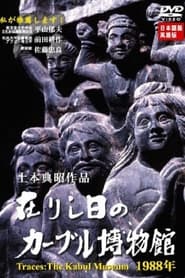
The Kabul National Museum, once known as the "face of Afghanistan," was destroyed in 1993. We filmed the most important cultural treasures of the still-intact museum in 1988: ancient Greco-Roman art and antiquitied of Hellenistic civilization, as well as Buddhist sculpture that was said to have mythology--the art of Gandhara, Bamiyan, and Shotorak among them. After the fall of the Democratic Republic of Afghanistan in 1992, some seventy percent of the contents of the museum was destroyed, stolen, or smuggled overseas to Japan and other countries. The movement to return these items is also touched upon. The footage in this video represents that only film documentation of the Kabul Museum ever made.Death of Yazdgerd
1982
Death of Yazdgerd
1982
star 7.8Bahram Beyzai's poetic imagining of the circumstances that led to the death of Yazdgerd III, the last of the Sassanid kings of Iran. His death in 651, during the Arab invasions that brought Islam to this Zoroastrian realm, was mysterious: his corpse was discovered in a mill, but the cause of his death—and the whereabouts of his remains—are unknown.The Stork Derby
2002
The Stork Derby
2002
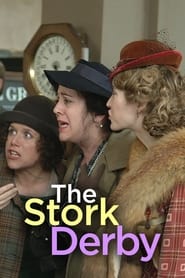
star 6The woman who birthed the most children in the City of Toronto within a certain time period would inherit a fortune in the midst of the Great DepressionA Star Named Wormwood
1965
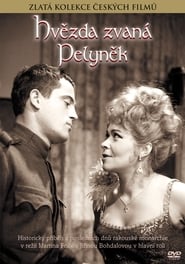
At the end of May 1918, released prisoners return to the Rumburk garrison from Russian captivity, hoping that the war is over for them. The only thing they want is to get their withheld ...Laissez-faire
2015
Laissez-faire
2015
star 10A historical perspective to understand Neoliberalism and to understand why this ideology today so profoundly influences the choices of our governments and our lives.School of Fine Arts. Return
1990
The second part of the duology on the famous Estonian artist Ülo Sooster continues his life story, paying homage to many other great artists who were spiritually consonant with his work.Admiral Nakhimov
1947
Eadweard Muybridge, Zoopraxographer
1975
star 7.2Thom Andersen's hour-long documentary adroitly combines biography, history, film theory, and philosophical reflection. Muybridge's photographic studies of animal locomotion in the 1870s were a major forerunner of movies; even more interesting are his subsequent studies of diverse people, photographed against neutral backgrounds.Kepler's Laws
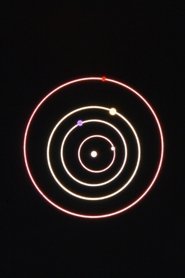
1974
Kepler's Laws
1974
Animated graphic symbols presented in a constant time frame are used to diagram and explain the laws of planetary motion devised by the Sixteenth-century astronomer Johannes Kepler. “Little Suite”, guitar and lute music composed by Galileo Galilei’s father Vincenzo, is performed by Laurindo AlmeidaRabbit in the Moon
1999
Rabbit in the Moon
1999
star 2Like many Japanese Americans released from WWII internment camps, the young Omori sisters did their best to erase the memories and scars of life under confinement. Fifty years later acclaimed filmmaker Emiko Omori asks her older sister and other detainees to reflect on the personal and political consequences of internment. From the exuberant recollections of a typical teenager, to the simmering rage of citizens forced to sign loyalty oaths, Omori renders a poetic and illuminating picture of a deeply troubling chapter in American history.Sylvia Plath: Inside The Bell Jar
2018
star 6.3The story of the making of The Bell Jar, the unique, semi-autobiographical novel written by American writer Sylvia Plath (1932-63), published in February 1963, shortly before her death.El vals sin fin
1972
Соловей
1937
Соловей
1937
The struggle of Belarusian peasants against the oppression of Polish lords during the reign of Paul I.Will
2012
Will
2012
In World War I, a Canadian soldier finds himself trapped in a hole while the war carries on around him. There, he finds himself conversing with a German soldier trapped in an adjacent crater, who reminds him of his own German heritage. While tensions are high, there’s a camaraderie there that can’t be denied.The Little Animals of Anthony van Leeuwenhoek
1975
star 7Anthony van Leeuwenhoek, a Dutch naturalist of the 18th century, the founder of scientific microscopy, makes a lens in his workshop. He is visited by an English scientist, a member of the Royal Society of London. Leeuwenhoek shows the scientist his "microscope". A scientist examines a flea, mold on bread, and other objects through a "microscope." He recommends that Leeuwenhoek write about his invention to the Royal Society of London. Leeuwenhoek refuses. The scientist writes the letter himself. Leeuwenhoek examines different objects through a "microscope". He is visited by a friend of Google, with whom he shares his observations. Leeuwenhoek and Google talk about the origin of the "little animals" in the water. Leeuwenhoek takes samples of rainwater and pond water. The simplest microorganisms, taken through a microscope. Leeuwenhoek writes a letter in which he outlines the results of his research.Rob Peace
2024
Rob Peace
2024
star 6.8An underprivileged, gifted young black man from Newark reaches Yale University, only for shadows and injustices from his past to threaten his future.