Popular History Movies on Tub Tv - Page 472
All Services
Free Services
 Netflix
 Amazon Prime Video
 Apple iTunes
 Apple TV Plus
 Disney Plus
 Google Play Movies
 Paramount Plus
 Hulu
Hulu
 HBO Max
 YouTube
 fuboTV
 Peacock
 Peacock Premium
 Amazon Video
 The Roku Channel
 AMC+
AMC on Demand
AMC+
AMC on Demand
 Kocowa
 Hoopla
 The CW
 Vudu
Vudu
 Starz
Starz
 Showtime
 PBS
PBS
 Pantaflix
 FXNow
FXNow
 Tubi TV
 Kanopy
 Comedy Central
 Crunchyroll
 Microsoft Store
 Redbox
 Sun Nxt
 ABC
ABC
 DIRECTV
 Crackle
 Fandor
 Plex
Plex
Netflix
Amazon Prime Video
Apple iTunes
Apple TV Plus
Disney Plus
Google Play Movies
Paramount Plus
Hulu
HBO Max
YouTube
fuboTV
Peacock
Peacock Premium
Amazon Video
The Roku Channel
AMC+
AMC on Demand
Kocowa
Hoopla
The CW
Vudu
Starz
Showtime
PBS
Pantaflix
FXNow
Tubi TV
Kanopy
Comedy Central
Crunchyroll
Microsoft Store
Redbox
Sun Nxt
ABC
DIRECTV
Crackle
Fandor
Plex

Hriech Kataríny Padychovej
1973
Štefan Padych loses a lawsuit against Šulgan, a local innkeeper to whom he owes money. Not wanting his wife and three-year-old daughter to starve, he decides to leave for France. However, after his departure, his wife Katarína Padych commits infidelity and becomes pregnant...Pollock
2000
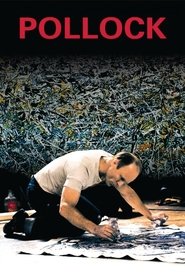
Pollock
2000
star 6.7In August of 1949, Life Magazine ran a banner headline that begged the question: "Jackson Pollock: Is he the greatest living painter in the United States?" The film is a look back into the life of an extraordinary man, a man who has fittingly been called "an artist dedicated to concealment, a celebrity who nobody knew." As he struggled with self-doubt, engaging in a lonely tug-of-war between needing to express himself and wanting to shut the world out, Pollock began a downward spiral.Mao, l'empereur rouge, la longue marche
2024
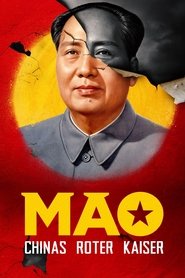
A three-part portrait of Mao Zedong, a peasant's son who became a revolutionary and then a totalitarian leader. The story of a destiny that tells the collective history of modern China. Mao Zedong was born in 1893 in a rural China beset by political instability and social upheaval. After the revolution of 1911, which precipitated the fall of the Empire, the country was dominated by imperialist powers. The young Mao, whose political conscience was awakening, dreamed of seeing China return to its former greatness. Influenced by the Russian Revolution of October 1917 and embracing Marxist ideology, the activist co-founded the Chinese Communist Party, soon establishing himself as its supreme leader, notably during the Long March that ended in 1935. In 1949, after the war between the Kuomintang nationalists and the Communists, he seized power and proclaimed the People's Republic of China.Vivo o muerto: El expediente García
2024
star 8.3Amidst the uncertainty caused by the alleged suicide of former president Alan García, journalist Carmen Ríos initiates an intense search aiming to unravel the mystery surrounding the case and answer the pressing question still lingering in the minds of all of Peru: Is Alan García alive or dead?A Wolf's Mind
2016
A Wolf's Mind
2016
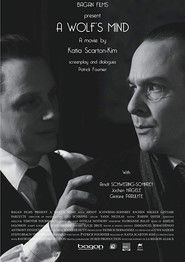
It is April 1933 and the Nazis have been in power in Germany for just two months. All liberties have been suppressed. Fritz Lang, who has just directed “The Testament of Dr. Mabuse”, is summoned to the private quarters of Joseph Goebbels. The objective of the meeting: to convince the most prominent man in German cinema to work for the Nazi regime.Thank you for living
2025
Thank you for living
2025
A short film arranged and edited by internet personality Benjamin De Almeida in honour of his dog Kobe's passing. Largely a social commentary on life and it's meaning, as well as some scattered personal links.Ergenekon's legend
1992
Ergenekon's legend
1992
2,000 years ago, two families escaped from the conflict between Mongolia and Turkic provinces and were forced into the Ergune-Kun gorge, where there was no other way to enter except for a narrow path. As a result, when their descendants multiplied and their land was no longer contained by the water, they all gathered together and discussed, and by breaking the dam, they made a hole by melting the mountainside.Kino: The Legend of the Black Priest
1993
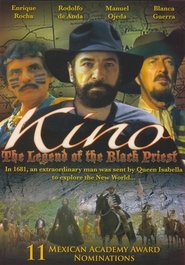
star 2.3Propped up on his deathbed, a 17th century Spanish missionary named Father Kino (Enrique Rocha) looks back on his remarkable life and relives one of his greatest challenges: bringing the teachings of Christianity to California's native population while convincing the Spanish military to respect the Indians' traditions.Sharedol
2021
Sharedol
2021
The Sixth Post
2018
The Sixth Post
2018
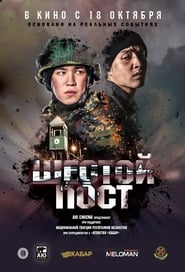
star 6Against the backdrop of a conflict between former friends, and now a soldier and a prisoner, events break out that will make them make a difficult choice. This choice changed the history and attitude to true heroism.Legacy of War
2008
Legacy of War
2008
Details the successful launch and execution of the Marshall Plan - America's expansive commitment to re-build Europe at the end of the war. Walter Cronkite traces the complex and changing relationship between the United States and England and explores the dramatic shifts of the Cold War from the end of the war up to the present.Le Cinéma de grand-père
1995
Remarkable life story of Henri Diamant-Berger, a director and screenwriter whose devotion to cinema led him to collaborate with some of the greatest actors and filmmakers of his time.Execution Is Not Possible
1982
star 8Boris Zhadanovsky, a hereditary nobleman and officer who was predicted to have a brilliant military career, sides with the rebellious people. In 1905, Zhadanovsky is sentenced to death for his revolutionary activities. However, a powerful strike movement organized in response to the court's decision forces the tsarist government to commute the sentence to life imprisonment. After the revolution, Zhadanovsky joins the Red Army and dies fighting the White Army.Volga And Siberia
1914
Volga And Siberia
1914