Popular War Movies on Tub Tv - Page 183
All Services
Free Services
 Netflix
 Amazon Prime Video
 Apple iTunes
 Apple TV Plus
 Disney Plus
 Google Play Movies
 Paramount Plus
 Hulu
Hulu
 HBO Max
 YouTube
 fuboTV
 Peacock
 Peacock Premium
 Amazon Video
 The Roku Channel
 AMC+
AMC on Demand
AMC+
AMC on Demand
 Kocowa
 Hoopla
 The CW
 Vudu
Vudu
 Starz
Starz
 Showtime
 PBS
PBS
 Pantaflix
 FXNow
FXNow
 Tubi TV
 Kanopy
 Comedy Central
 Crunchyroll
 Microsoft Store
 Redbox
 Sun Nxt
 ABC
ABC
 DIRECTV
 Crackle
 Fandor
 Plex
Plex
Netflix
Amazon Prime Video
Apple iTunes
Apple TV Plus
Disney Plus
Google Play Movies
Paramount Plus
Hulu
HBO Max
YouTube
fuboTV
Peacock
Peacock Premium
Amazon Video
The Roku Channel
AMC+
AMC on Demand
Kocowa
Hoopla
The CW
Vudu
Starz
Showtime
PBS
Pantaflix
FXNow
Tubi TV
Kanopy
Comedy Central
Crunchyroll
Microsoft Store
Redbox
Sun Nxt
ABC
DIRECTV
Crackle
Fandor
Plex

Why Hitler Lost WWII
0000
Why Hitler Lost WWII
0000
Explores the fascinating reasons behing Hitler's demise and delves into several explanations for the failed 1,000-year Reich.Détruisez Paris !
2012
The Tiger of Malaya
1943
Inheritance
2005
Inheritance
2005
star 5.2In an impassioned message from the grave, one concentration camp Liberator forces us to remember the horror humanity is capable of. Utilizing actual photos from the Buchenwald concentration camp, and a soulful performance by Harrison Young, Inheritance is a gut-wrenching experience that not only informs, but puts the burden of defending humanity squarely on the viewer.For Sama
2019
For Sama
2019
star 8.2A love letter from a young mother to her daughter, the film tells the story of Waad al-Kateab’s life through five years of the uprising in Aleppo, Syria as she falls in love, gets married and gives birth to Sama, all while cataclysmic conflict rises around her. Her camera captures incredible stories of loss, laughter and survival as Waad wrestles with an impossible choice– whether or not to flee the city to protect her daughter’s life, when leaving means abandoning the struggle for freedom for which she has already sacrificed so much.Abandoned
1955
Abandoned
1955
star 6.8A group of rich young intellectuals hiding from the war in rural Italy play at being partisans when some disbanded soldiers and some refugees ask them for shelter in their villa. The young and aristocratic Andrea strikes up a friendship with a peasant girl, Lucia. Then the Germans suddenly appear, looking for the real partisans, and the time comes for serious decisions.The Enemies
1968
The Enemies
1968
star 5.4The tribulations of an American GI during the Ardennes offensive and the people he encounters, keeps you riveted all the way through the unexpected ending. Great characters in a cold and snowy Belgium.Enigmatic Explosion of the Battleship Mutsu
1960
During the naval battle of Midway in WWII, the battleship Mutsu was in its home port in Japan. The ship's officers and crew were frustrated at not being able to take part in the fighting. They had been held back by orders from the Naval Ministry, but there was also a plot by saboteurs, who were trying to prevent the sailing of the Mutsu. Director Komori developed a suspenseful plot by including a fictional adaptation of the Russian spy Richard Sorge, who had been captured in Japan and subsequently executed. Komori brings a fictional Russian spy to the screen by portraying him as a military attaché at the German embassy. As Germany was an ally of Japan in WWII, a secret agent being a mole in the German embassy is a perfect cover. The interaction of the saboteurs and the officers and crew of the Mutsu make an exciting story.Hitlers Courts - Betrayal of the rule of Law in Nazi Germany
2005
Documentary about the legal system in Nazi Germany.Hindustan Ki Kasam
1973
For the Soviet Motherland
1937
star 5The film takes place in 1921 on the Soviet-Finnish border. Shyutskorov detachments broke into Karelia, killed Soviet activists, burned houses ... In the rear of the enemy with a special task - to destroy the headquarters of the White Finns on the Kimas Lake - a detachment of Soviet cadets under the command of Toivo Antikainen (Oleg Zhakov) was sent.The War Lover
1962
The War Lover
1962
star 6Buzz Rickson is a dare-devil World War II bomber pilot with a death wish. Failing at everything not involving flying, Rickson lives for the most dangerous missions. His crew lives with this aspect of his personality only because they know he always brings them back alive.Lover, Come Back to Me
1983
Ken Ota is a Japanese-American GI. He comes to Hiroshima after WW2 looking for his big sister, but finds Keiko, a bomb victim with a keloid scar on her shoulder.Halo Legends
2010
Halo Legends
2010
star 7.4The universe of the Halo video game series is expanded in seven short animated films from Japan's greatest anime directors and studios.Chocolate and Soldiers
1938
star 8Chocolate and Soldiers (チョコレートと兵隊, Chokorēto to Heitai) is a 1938 Japanese war film directed by Sato Takeshi and one of the most effective Japanese propaganda films of the late 1930s. The American director Frank Capra said of Chocolate and Soldiers "We can't beat this kind of thing. We make a film like that maybe once in a decade. We haven't got the actors. It shows the common Japanese soldier as an individual and as a family man, presenting even enemy Chinese soldiers as brave individuals. It is considered to be a "humanist" film, paying close attention to the human feelings of both the soldier and his family. Cinema theorist Kate Taylor-Jones suggests that Chocolate and Soldiers provided "a vision of the noble, obedient and honourable Japanese army fighting to defend the emperor and Japan.Hollywoodgate
2024
Hollywoodgate
2024
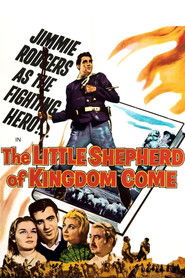
star 8.3Immediately after the US pullout from Afghanistan, Taliban forces occupied the Hollywood Gate complex, which is claimed to be a former CIA base in Kabul.The Little Shepherd Of Kingdom Come
1961
star 3.3Director Andrew V. McLaglen's 1961 drama, based on John William Fox's novel, is the tale of a young man returning home after fighting in the Civil War. The cast includes Jimmie Rodgers, Luana Patten, Chill Wills, George Kennedy, Neil Hamilton and Morris Ankrum.Flying Tigers
1995
Flying Tigers
1995
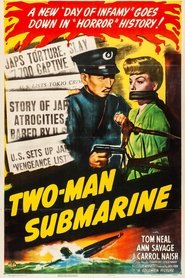
star 6.5Before the breakout of the Sino-Japanese War, Hong, Wang, and Peng were best friends. Hong and Wang secretly joined the local guerrillas after the Japanese began invading China. Hong ran a small business and Wang worked as a courier for a Japanese trading firm, hiding their true identities in order to collect intelligence on the Japanese for the Eight Route Army, and established a railway guerrilla unit. Wang soon found out that the trading firm he was working for was indeed an intelligence unit of the Japanese. They infiltrated the Japanese special forces and eliminated many Japanese. Suspicions arise from the Japanese as to the real identity of the individuals suspected of being part of the railway guerrilla forces, so called Flying Tigers unit, so the Japanese began to form a counter-spying operation and other under-handed means by recruiting Chinese traitors to uncover and eliminate them all.Two-Man Submarine
1944
Two-Man Submarine
1944
star 6Medical researchers Jerry Evans and Walt Hedges are assigned by a pharmaceutical company to work at a secret laboratory on a remote South Pacific Island in order to produce penicillium, the mold from which the magic drug penicillin is derived.