Popular War Movies on Tub Tv - Page 250
All Services
Free Services
 Netflix
 Amazon Prime Video
 Apple iTunes
 Apple TV Plus
 Disney Plus
 Google Play Movies
 Paramount Plus
 Hulu
Hulu
 HBO Max
 YouTube
 fuboTV
 Peacock
 Peacock Premium
 Amazon Video
 The Roku Channel
 AMC+
AMC on Demand
AMC+
AMC on Demand
 Kocowa
 Hoopla
 The CW
 Vudu
Vudu
 Starz
Starz
 Showtime
 PBS
PBS
 Pantaflix
 FXNow
FXNow
 Tubi TV
 Kanopy
 Comedy Central
 Crunchyroll
 Microsoft Store
 Redbox
 Sun Nxt
 ABC
ABC
 DIRECTV
 Crackle
 Fandor
 Plex
Plex
Netflix
Amazon Prime Video
Apple iTunes
Apple TV Plus
Disney Plus
Google Play Movies
Paramount Plus
Hulu
HBO Max
YouTube
fuboTV
Peacock
Peacock Premium
Amazon Video
The Roku Channel
AMC+
AMC on Demand
Kocowa
Hoopla
The CW
Vudu
Starz
Showtime
PBS
Pantaflix
FXNow
Tubi TV
Kanopy
Comedy Central
Crunchyroll
Microsoft Store
Redbox
Sun Nxt
ABC
DIRECTV
Crackle
Fandor
Plex

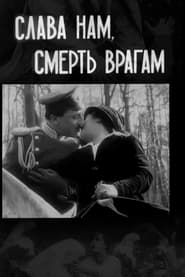
Glory to Us, Death to the Enemy
1914
star 5This 1914 drama set in the WWI-era relates a heroic act carried out by a war nurse for the Red Cross (Dora Tschitorina) who has witnessed the death of her husband (Ivan Mosjoukine).The Relief of Lucknow
1912
star 5The story of the siege and eventual relief of British soldiers garrisoned at Lucknow during the 1857 Indian Rebellion. Only a fragment of the original film remains.Guns of Freedom
1961
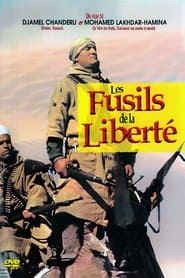
Guns of Freedom
1961
star 10This docu-fiction recounts the difficulties overcome by an ALN detachment whose perilous mission is to transport weapons and ammunition from Tunisia across the Algerian Sahara during the Algerian liberation war (1954-1962) against the French army of occupation.Heroes & Villains: Napoleon
2007
Twenty Four year-old Corsican refugee Napoleon Bonaparte is a lowly artillery captain in the French army at the siege of Toulon. Destitute and relying on his success in the new and dangerous revolutionary society, his mother and siblings become embroiled in Napoleon's struggle. The opponents are the English but the enemy are the revolutionaries authorities who seek to keep him in his place. Using his astonishing tactical mind, his sheer audacity and extraordinary military bravery, Napoleon emerges victorious and sets out on a path that would one day lead him to the throne of France.Retreat, Hell!
1952
Retreat, Hell!
1952
star 6.3During the Korean War, a U.S. Marine battalion must fight its way out of a frozen mountain pass despite diminishing supplies, freezing temperatures and constant attacks by overwhelming numbers of Chinese soldiers.Beachhead
1954
Beachhead
1954
star 5.6On a Japanese-occupied island during World War II, only two soldiers remain alive after a mission attempt goes horribly wrong. Trapped on the island, they must escort a scientist and his daughter to the other side of the island where their ship awaits. They must battle nature, hard terrain, and advancing Japanese troops.Baggage
2011
Baggage
2011
star 5.7Being away for many years, Amir returns to Bosnia and Herzegovina in order to take custody of his parent's remains. They were murdered during the war but their bodies haven't been recovered so far. Amir also decides to visit the place of his birth. There, besides a ruined house, he also finds a forgotten friend and those who know about him more than he knows about himself.Hunt for U-479
2009
Hunt for U-479
2009
Two Finnish filmmakers and an international team of divers embark on a quest to find the lost WWII German U-boat, U-479, in the Gulf of Finland. Despite Soviet claims of its sinking by the submarine Lembit, unanswered questions prompted the filmmakers to investigate the mystery firsthand.The Rifleman
2019
The Rifleman
2019
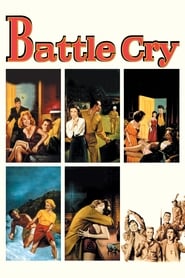
star 7.2The love story of sixteen-year-old Arturs is interrupted by the First World War. After losing his mother and his home, he finds some consolation in joining the army, because this is the first time national battalions are allowed in the Russian Empire. But war is nothing like Arturs imagined – no glory, no fairness. It is brutal and painful. Arturs is now completely alone as war takes the lives of his father and brother. Also, no progress is made in the promised quick resolution of the war and timely return home. Within the notion that only he alone cares about returning home and that his homeland is just a playground for other nations, Arturs finds strength for the final battle and eventually returns home to start everything from scratch, just like his newly born country.Battle Cry
1955
Battle Cry
1955
star 5.6The dramatic story of US Marines in training, in combat, and in love, during World War II. The story centers on a major who guides the raw recruits from their training to combat.Onoda: 10,000 Nights in the Jungle
2021
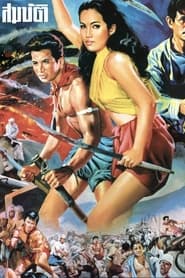
star 7.1Japan, 1944. Trained for intelligence work, Hiroo Onoda, 22 years old, discovers a philosophy contrary to the official line: no suicide; stay alive whatever happens; the mission is more important than anything else. Sent to Lubang, a small island in the Philippines where the Americans are about to land, this role will be to wage a guerrilla war until the return of the Japanese troops. The Empire will surrender soon after; Onoda, 10,000 days later.The Battle of Bang Rajan
1966
This movie is about Bang Rajan village. This village is located north of Ayutthaya, the old capital of Siam, predecessor state to modern Thailand. The village played a famous role related to its resistance against the Burmese in the war that saw the destruction of Ayutthaya city in 1767. Tap is a Siamese soldier leader. Siamese people have internal conflicts while they are also fighting with Burma.Schweik's New Adventures
1943
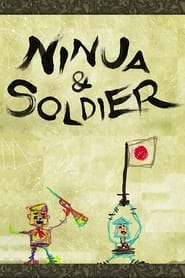
star 8Nazis are nothing to the wily good soldier Schweik (Lloyd Pearson).Ninja & Soldier
2013
Ninja & Soldier
2013
Two eight-year-old boys compete in a game of childish bravado. Ken is a Ninja, Nito a child soldier from the Congo who was forced to kill his own mother. Their naïve game addresses cruel realities, and they talk about their differences and what they have in common. Accompanied by contrasting graphics, the film explores the types of acts of which humankind is capable.Battle of Wan Cheng
2021
Battle of Wan Cheng
2021
197 AC. War between warlords Cao Cao and Zhang Xiu. Xiangyang prefect Xun Song was besieged by enemy army. His 13-year daughter Xun Guaning broke through the siege and moved troops without fear of danger and helped his father break the siege of Xiangyan.The Soldier of the Supply Column
1976
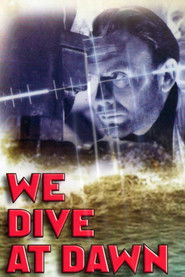
star 9.5In September 1944, the red army crosses the Danube. Private Ales together with his agricultural horses follows the victory march. A broken wheel of his cart forces Ales to fall behind and look for help in the nearby village. The "odyssey" of the common cavalry soldier begins. He becomes a friend with the Bulgarian peasants. They need to part ways with a hidden sadness and true love. —Georgi DjulgerovWe Dive at Dawn
1943
We Dive at Dawn
1943
star 6.4A gripping tale of WWII naval warfare in the Baltics, starring John Mills as Lt. Freddie Taylor, a British submarine Captain. The crew of the Sea Tiger are summoned from leave on shore with their families, and sent on a secret mission to intercept the Nazi battleship Brandenburg. In the ensuing battle the British submarine is damaged by a German destroyer. The submarine is leaking fuel so badly that the crew won't be able to make it back to Britain before running out somewhere along the Danish coast. When it seems that their only option may be to blow up the submarine and try to escape to Denmark, seaman James Hobson hatches a plan...Target for Today
1944
Target for Today
1944
star 5.3A bombing mission over Germany by the American Eighth Air Force, from the initial planning for the mission through final completion, with all of its intricacies from beginning to end.Let There Be Light
1946
Let There Be Light
1946
star 7.4The final entry in a trilogy of films produced for the U.S. government by John Huston. Some returning combat veterans suffer scars that are more psychological than physical. This film follows patients and staff during their treatment. It deals with what would now be called PTSD, but at the time was categorised as psychoneurosis or shell-shock. Government officials deemed this 1946 film counterproductive to postwar efforts; it was not shown publicly until 1981.