Popular War Movies on Tub Tv - Page 412
All Services
Free Services
 Netflix
 Amazon Prime Video
 Apple iTunes
 Apple TV Plus
 Disney Plus
 Google Play Movies
 Paramount Plus
 Hulu
Hulu
 HBO Max
 YouTube
 fuboTV
 Peacock
 Peacock Premium
 Amazon Video
 The Roku Channel
 AMC+
AMC on Demand
AMC+
AMC on Demand
 Kocowa
 Hoopla
 The CW
 Vudu
Vudu
 Starz
Starz
 Showtime
 PBS
PBS
 Pantaflix
 FXNow
FXNow
 Tubi TV
 Kanopy
 Comedy Central
 Crunchyroll
 Microsoft Store
 Redbox
 Sun Nxt
 ABC
ABC
 DIRECTV
 Crackle
 Fandor
 Plex
Plex
Netflix
Amazon Prime Video
Apple iTunes
Apple TV Plus
Disney Plus
Google Play Movies
Paramount Plus
Hulu
HBO Max
YouTube
fuboTV
Peacock
Peacock Premium
Amazon Video
The Roku Channel
AMC+
AMC on Demand
Kocowa
Hoopla
The CW
Vudu
Starz
Showtime
PBS
Pantaflix
FXNow
Tubi TV
Kanopy
Comedy Central
Crunchyroll
Microsoft Store
Redbox
Sun Nxt
ABC
DIRECTV
Crackle
Fandor
Plex

Digging The Great Escape
2011
The classic movie "The Great Escape" was based on a real life escape attempt during the second world war. This documentary follows Archaeologists who are trying to find the original tunnels dug by the real prisoners of war who escaped. Some of the surviving prisoners also join the team to assist with the tunnel locations and to describe what it was really like to live that situation. In an effort to understand the technical details of how this feet of ingenuity was achieved, the team recreate some of the equipment used by the prisoners.Mt. Baekdu can be seen everywhere
1956
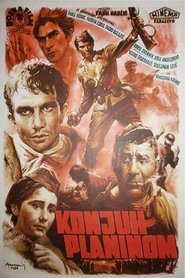
A screen adaptation of the novel by North Korean writer Yong Song. On the anti-Japanese partisan struggle of the Korean partisans in the 1930s.On the Mountain of Konjuh
1966
star 6.3An exciting story of Husine coalminers who formed a partisan batch and put up an armed resistance during WW2 in Bosnia and Herzegovina.Ukrainian Rhapsody
1961
Ukrainian Rhapsody
1961
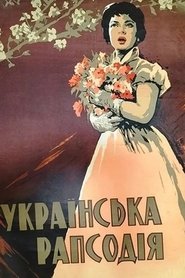
star 5.5World War II separates lovers Oksana and Anton. The young man is taken prisoner by the Germans, while his beloved abandons her studies at the conservatory to become a frontline nurse. Despite all the hardships, their paths cross again.Raiding Invaders
1987
Raiding Invaders
1987
Después de Ucrania: Relatos de una Cobertura
2023
star 2Four journalists talk about their experiences and share their testimonies of the Russian invasion of Ukraine.Kastriota
2018
Kastriota
2018
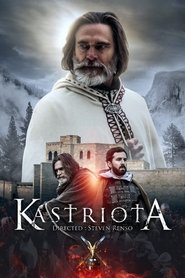
The Balkans 1443 . After a long successful military experience in the Turkish army, the reputation of the young Kastriota reached Albania and people began to hope in his return to his homeland, from which he was taken away as a child. When the Sultan gives the hero the task of facing János Hunyadi, Kastriota will start a journey towards finding his true self and choosing his path.My Four Years in Germany
1918
star 4.7The experiences of the American ambassador to Germany, James Gerard, are recounted in this semi-documentary.Toha, Pahlawan Bandung Selatan
1961
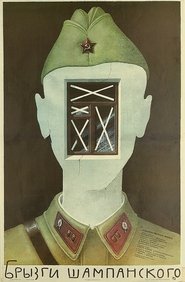
This is the heroic story of Mochamad Toha, who successfully blew up a Dutch ammunition depot in Bandung and ruined their defences. Set in Bandung at the time of transition, between the departing Japanese and the incoming Dutch (who are supported by the British), Indonesians had to fight for their independence. Toha emerged as a leader of the common people, who saw injustice and oppression, and who sacrificed himself by blowing up the ammunition depot.Splashes of Champagne
1989
star 5.5The film is based on the novel by Vyacheslav Kondratyev "Vacation by Wound." The story of the few weeks that young lieutenant Volodya spent in Moscow in the summer of 1942 after treatment at the hospital. Directly from the Rzhev Front with a bandaged hand, in a bloodstained padded jacket and tattered boots, he goes on vacation to his mother in the capital. Here, at the height of the war, almost peaceful life is going on - lines for vodka and beer, restaurants for the aristocracy of nomenclature, parties, girls... It’s another month for Volodya to live an ordinary life in Moscow, in a peaceful city in which everything is alien to him.The Chechen Diary of Polina Zerebova
2017
The Diary of Polina Żerebcowa, now an acclaimed writer and journalist, is a moving record of entering adulthood during the course of the war. The Chechen author describes her childhood and youth, which spanned from 1994 to 2004. First as a nine – year-old girl, then as a teenager, she documents her process of adolescence, presents her own vision of the world and immortalizes the experiences that shape her-she records her whole life, which takes place during the horrific Chechen wars. And although Polina's diary is a loose personal note, it is exceedingly evocative and lyrical. It leaves no one indifferent. The show, whose main character is the aforementioned diary presented by the outstanding actor, Andrzej Seweryn, gives Polina her voice so that she can tell us about what she experienced, what happened over the course of 10 years, during the two Chechen wars. Thus the story of how to remain human in the most inhumane circumstances is created.The Battle of Pussy Willow Creek
2013
Ken Burns meets Spinal Tap in a subversive tour de force relaying the outrageous life stories of four forgotten Civil War heroes: an opium-addicted gay Colonel, an aging Chinese launderer, a nerdy escaped slave, and a one-armed teenage prostitute. Both wickedly satirical and deeply affectionate, The Battle of Pussy Willow Creek tells the "100% true" story of how these oddball outsiders saved the Union from a nefarious foreign plot, how the forces of bigotry expunged their stunning victory from the history books, and - most importantly - how meeting one's ex on the field of battle can be just the thing to re-spark a detoured romance.Red Dawn
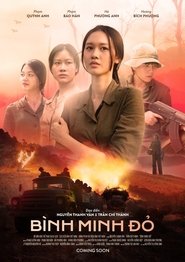
2022
Red Dawn
2022
After the Tet Offensive of 1968, the Command of Group 559 assigned Transport Stations 9 and 12 to urgently recruit young female volunteers for training as truck drivers to supply the battlefield. The story follows four women—Chau, Han, Sa, and Thuong—who drive from Ben Thuy to the Western Truong Son. During their missions, the sacrifices of Han, Thuong, Sa, and Chau’s brother leave her with deep sorrow. Yet, with determination and strength, Chau continues to the battlefield to fulfill her duty.White Darkness
1948
White Darkness
1948
star 4.5A young doctor and a group of injured are hiding in an underground shelter and are liberated by Soviet soldiers.The Future of Iraq
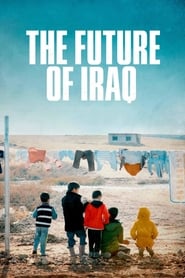
2018
The Future of Iraq
2018
One of six children today live in a war zone. This is a meeting with three of them, where they in simple terms describe their experiences of war and daily life. The film is set in Iraq, but could be set anywhere in the world.Önce Vatan
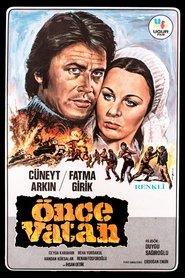
1974
Önce Vatan
1974
star 7.8The story of love between a Turkish officer who went to the island during the Cyprus landing and a woman who is a native Turkish of Cyprus.Suspense
1930
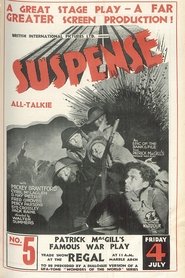
Suspense
1930
During the First World War a British unit take up a new position in a trench unaware that the Germans are laying a mine underneath it.A Savage Christmas: The Fall of Hong Kong
1992
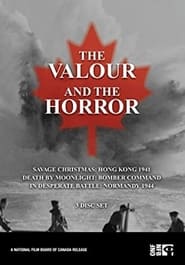
star 10The documentary, using the dramatization of fact, makes the case that the Canadian government knowingly sent two unprepared infantry battalions to help defend Hong Kong in late 1941, fully aware that they may have been on a doomed mission. The C Force, consisting of about 2000 soldiers from the Winnipeg Grenadiers and the Royal Rifles of Canada (from Quebec City) were, with the other British, Indian and Hong Kong troops, attacked on December 8, 1941 and overwhelmed by Japanese troops, leading to numerous casualties and the surrender on Christmas day. The Canadians would spend more than 3 and half years as prisoners of war, in horrible conditions. Part of "The Valour and the Horror" mini series.Blood on Wolf Mountain
1936
star 6Blood on Wolf Mountain tells the story of a village that is beset by a pack of wolves. Made just prior to the commencement of full-scale war with the Japanese, the film itself is often considered an allegory of conflict between China and Japan.