Popular War Movies on Tub Tv - Page 434
All Services
Free Services
 Netflix
 Amazon Prime Video
 Apple iTunes
 Apple TV Plus
 Disney Plus
 Google Play Movies
 Paramount Plus
 Hulu
Hulu
 HBO Max
 YouTube
 fuboTV
 Peacock
 Peacock Premium
 Amazon Video
 The Roku Channel
 AMC+
AMC on Demand
AMC+
AMC on Demand
 Kocowa
 Hoopla
 The CW
 Vudu
Vudu
 Starz
Starz
 Showtime
 PBS
PBS
 Pantaflix
 FXNow
FXNow
 Tubi TV
 Kanopy
 Comedy Central
 Crunchyroll
 Microsoft Store
 Redbox
 Sun Nxt
 ABC
ABC
 DIRECTV
 Crackle
 Fandor
 Plex
Plex
Netflix
Amazon Prime Video
Apple iTunes
Apple TV Plus
Disney Plus
Google Play Movies
Paramount Plus
Hulu
HBO Max
YouTube
fuboTV
Peacock
Peacock Premium
Amazon Video
The Roku Channel
AMC+
AMC on Demand
Kocowa
Hoopla
The CW
Vudu
Starz
Showtime
PBS
Pantaflix
FXNow
Tubi TV
Kanopy
Comedy Central
Crunchyroll
Microsoft Store
Redbox
Sun Nxt
ABC
DIRECTV
Crackle
Fandor
Plex

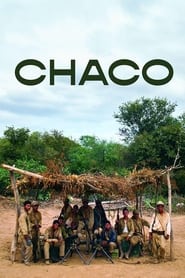
Chaco
2020
Chaco
2020
star 7.8In 1934, Bolivia is at war with Paraguay. Liborio and Ticona and other Bolivian indigenous soldiers are lost in the hell of the Chaco, under the commandment of German Captain Kundt. They're looking for the Paraguayan enemy that they haven't seen for months, and that they will never find. They leave together in a search that will make them realize, progressively, the destiny they have been pushed into and the inevitable condition of a defeated troop. They're walking like shadows, wandering forever in the middle of dust and silence.Dawn on the Third Day
1962
The inhabitants of Praxos, a mountain village in an occupied country, organize their own resistance to the oppressor. Faced with reprisals, they decide that every hour a man will cross the bridge that is the population's only supply route. The action, which results in the death of all those taking part, continues until dawn on the third day.Overwatch Animated Short "Honor and Glory"
2017
star 5Explore the origin story of Overwatch's rocket-hammer wielding knight in our latest animated short: Honor and Glory.Tears of War
0000
Tears of War
0000
In "Tears of War," a soldier who mourns the loss of his wife in the war unexpectedly reunites with her on the battlefield. Through their poignant final dialogue, they confront their deepest emotions, grappling with love, loss, and the harsh realities of war.Ligne de vie
2003
Ligne de vie
2003
star 5.5An old man recounts: I have always worn glasses. Even in the camp, I managed to keep them. We feared the night almost as much as the day. One night, they brought in a newcomer, a bearded man. His drawings over the days had become essential to us. The guards did not understand that only death would prevent him from drawing. All that remains of the camp is this piece of wall, with his last drawing, which he called "Ligne de vie (Lifeline)."Lifting the Ban of Coventry
1915
Even though his widowed mother and sweetheart, Mary Putnam, disapprove, Worth Stuyvesant insists on going to West Point and becoming a soldier. Ultimately, Mary breaks off their engagement and Stuyvesant goes on a bender. His conduct is reported to the commander, who sends him to the sub post of Del Rio for 60 days of tour duty. There, Stuyvesant meets Lola Montez, an adventuress. With the help of a couple of her pals, Lola gets him drunk and marries him. But Stuyvesant lives up to his duties as a husband and surprisingly, Lola renounces her old ways and becomes a model wife.The Tower of Silence
2021
The Tower of Silence
2021
Mourad is a young Moroccan man who lives alone on his parents' farm. After a meal, Mourad's family realizes that the scars of the past are beyond anything they could have imagined.General
1992
Polack
2010
Polack
2010
star 1A closeted Polish-American seeks answers but must face the hard truths hidden beneath the humor. A complex documentary, Polack layers striking images from history and pop culture, with a gay man's search for home. Beyond the punch lines, we sway between outsider and insider, where victim becomes bully.21 Brothers
2011
21 Brothers
2011
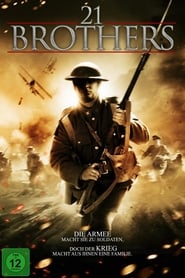
star 5.321 Brothers tells the story of the Canadian 21st Battalion as they prepare for the battle of Courcellette in WWI. Taking place in real time, the film follows Sgt. Reid as he must get his men ready for the impending battle. Not only must he prep his battalion Sgt. Reid must also deal with the day to day difficulties of Life in the trenches, including injuries to his men, supply issues, and an underage recruit who has recently been sent into the front lines.Serious Games 3 – Immersion
2010
An exploration of how the U.S. military employs video game technology to train troops for war. In Immersion, Farocki presents footage of a role-playing exercise in which military psychologists demonstrate how to use the PTSD program on their colleagues, who describe traumatic wartime experiences. On a second channel, their descriptions play out as virtual renderings.La negra Angustias
1950
La negra Angustias
1950
star 4.6When her father dies, a young Afro-Mexican woman joins the Revolution, the way he was planning to do, and becomes the leader of a Zapatista battalion.Set In Stone
2017
Set In Stone
2017
The race to save the world's only dedicated Māori World War One Memorial from collapse reveals an unknown soldier's heroic story to the community he was once part of.The Hunt For Hitler's Missing Millions
2014
In one of the most astonishing untold stories of the 20th century, Channel 5 reveals how a team of British intelligence officers found Hitler’s will and examines the subsequent quest to uncover the extent of the Führer’s wealth and to find his money. For the first time on television, Hermann Rothman recounts his part in the story. A German Jew now in his 90s, Rothman fled Hitler’s tyranny just before the war started and was assigned to the British Counter Intelligence Corps for the duration. http://www.channel5.com/shows/the-hunt-for-hitlers-missing-millionsTaste of Chocolate
1986
Taste of Chocolate
1986
The action takes place in occupied Poland during World War II. Ewa moves into the tenement house where 12-year-old Filip lives. Since she meets the Germans, the inhabitants of the tenement house avoid her. Filip, on the orders of "Gypsy", who follows Ewa, starts visiting her and tells "Gypsy" about these visits. Soon a friendship is born between him and the girl.Obaida
2019
Obaida
2019
OBAIDA, a short film by Matthew Cassel, explores a Palestinian child’s experience of Israeli military arrest. Each year, some 700 Palestinian children undergo military detention in a system where ill-treatment is widespread and institutionalized. For these young detainees, few rights are guaranteed, even on paper. After release, the experience of detention continues to shape and mark former child prisoners’ path forward.Generale - Anatomie der Marneschlacht
1977
star 6The movie depicts the events from July until September of 1914 which led to the defeat of the German troops at the Marne. While Sebastian Haffner explains and comments on operations and decisions on the basis of situation maps, key scenes are depicted by actors. A main focus is thereby placed by Haffner onto the controversial mission of lieutenant-colonel Richard Hentsch who is said to have, during a war patrol to the various army high commands, contributed to the abortion of the operations significantly.Surgeon during the Algerian War
2012
Has everything really been said about the Algerian war? Although the archives are opening up, almost fifty years after the signing of the Evian Agreements (March 18, 1962), direct witnesses are beginning to disappear. They are, however, unique bearers of history, often the only ones able to illustrate the harsh reality of a long-hidden period. Gérard Zwang, surgeon of the contingent between May 1956 and June 1958, is one of these essential witnesses who help us discover an original history of the Algerian War. During his service, in charge of treating the most atrocious wounds of his fellow soldiers, he sees the war from the side of its victims. He did not fight with a machine pistol in his hand, but behind the closed doors of an operating room where life gives way to death in a matter of seconds.To the Bright Light
1976
Collection of Films for the Armed Forces #1
1941
The movie collection consists of three novellas. "Meeting with Maxim." On the screen are the last shots of the movie "Vyborg Side". The movie ends and the hero goes off the screen. He addresses the audience with a patriotic appeal. "A Dream in the Hand." The movie in satirical form "warns" Hitler in his disturbing dream of inevitable defeat on Russian soil. He dreams of Napoleon, the German occupiers of 1918 - all those who experienced the power of Russian arms on their own skin. "Three in a funnel." A wounded Red Army soldier falls into a funnel. The nurse who is there bandages the soldier. The third inhabitant of the funnel is a wounded Hitler. The nurse helps him too, after which the Nazi tries to shoot the girl. The Red Army man hits the enemy with an accurate shot.