Popular War Movies on Tub Tv - Page 443
All Services
Free Services
 Netflix
 Amazon Prime Video
 Apple iTunes
 Apple TV Plus
 Disney Plus
 Google Play Movies
 Paramount Plus
 Hulu
Hulu
 HBO Max
 YouTube
 fuboTV
 Peacock
 Peacock Premium
 Amazon Video
 The Roku Channel
 AMC+
AMC on Demand
AMC+
AMC on Demand
 Kocowa
 Hoopla
 The CW
 Vudu
Vudu
 Starz
Starz
 Showtime
 PBS
PBS
 Pantaflix
 FXNow
FXNow
 Tubi TV
 Kanopy
 Comedy Central
 Crunchyroll
 Microsoft Store
 Redbox
 Sun Nxt
 ABC
ABC
 DIRECTV
 Crackle
 Fandor
 Plex
Plex
Netflix
Amazon Prime Video
Apple iTunes
Apple TV Plus
Disney Plus
Google Play Movies
Paramount Plus
Hulu
HBO Max
YouTube
fuboTV
Peacock
Peacock Premium
Amazon Video
The Roku Channel
AMC+
AMC on Demand
Kocowa
Hoopla
The CW
Vudu
Starz
Showtime
PBS
Pantaflix
FXNow
Tubi TV
Kanopy
Comedy Central
Crunchyroll
Microsoft Store
Redbox
Sun Nxt
ABC
DIRECTV
Crackle
Fandor
Plex

Dong jin xu qu
1962
Dong jin xu qu
1962
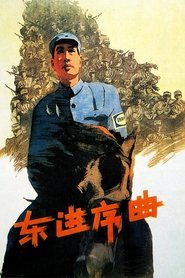
star 6“It’s a story, adapted from the homonymous drama, that the new Forth Army struggles with the branch of Jiangsu-Shandong-Anhui of Kuomindang for Anti-Japanese, solidification and against surrender, abruption during the way going east.It reflects the complicate situation during the Anti-Japanese War andthe victory of the Anti-Japanese unibus policies of the CCP Center and Chairman Mao.” From the English Red Movie blurb17th Parallel, Nights and Days
1973
Following the 1954 Geneva Accords that partitioned Vietnam into two zones at the 17th parallel, a pregnant Dịu remains back in the South with her family while her husband has to move up North. At home, the young woman has to juggle between the duties of a liberation fighter and a mother while enduring her enemies' tortures and imprisonment, as she assumes the leadership of an underground liberation movement after its previous secretary was assassinatedGeorge Stevens World War II Footage
1946
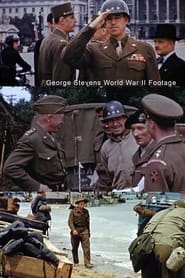
star 8Raw footage filmed by George Stevens during World War II between 1944 and 1946 for the US Army Signal Corps. Includes footage shot at D-Day, the liberation of Paris and the Dachau concentration camp.SIX MINUTES OF WAR
2020
SIX MINUTES OF WAR
2020
star 6In the time of WW2 Sgt Holt and his platoon were ordered to clear the forest from the enemy troops, with no mercy. The men experienced the war cruelty and learned that each freed meter cost them victims.Bitter Spring
1985
Bitter Spring
1985
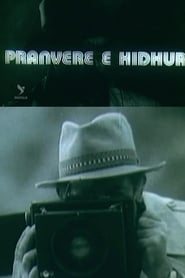
At the center of the film is a patriot photographer, who sees how the city moves on the eve of invasion by focusing his camera at the heroic resistance of the people.Visit Palestine
2005
Visit Palestine
2005
star 7What drives a young, well-educated Westerner to volunteer as a “peace activist” in the Middle East? Caiomhe Butterly is one of a growing number of volunteers who risk their own safety to intervene in the long-running and bloody conflict between Israel and Palestine. Several internationals, including her, have now been injured. Some have died. In this film, she describes witnessing the aftermath of the attack on Jenin in April 2002. The film follows her work, the main emphasis being “the accompaniment of communities at risk”. Despite being threatened, shot in the leg and deported later that year, she is determined to go back.Guerilyera
1946
Guerilyera
1946
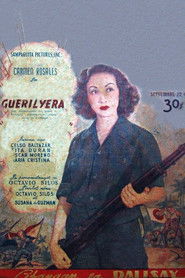
Carmen Rosales plays herself in this dramatization of her time as a guerilla fighter.The Blade, The Wound
2025
The Blade, The Wound
2025
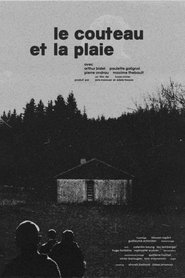
Jason lives with his grandmother, a folk healer, along with his older brother and their cousin in a secluded house in Auvergne. As a rumor spreads about the disappearance of a foreign soldier who came to train in the region, the old woman's health begins to deteriorate.Sinai Commandos
1967
Eagle 101
1957
Eagle 101
1957
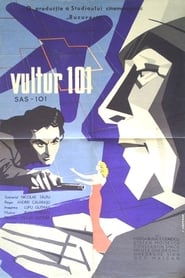
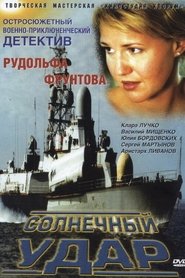
star 6A love story sprinkled with spies. A young hero pilot is vulnerable in front of foreign agents due to his love. Based on the novel "Zbor de noapte" (Night Flight) by Nicolae Tăutu. Acting debut for Ion BesoiuСолнечный удар
2003
Солнечный удар
2003
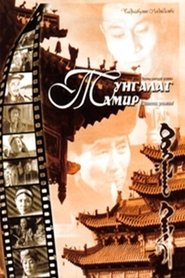
The Clear Tamir: Episode 3
1973
The image of the Mongolian countryside, the struggle for freedom, and the changes in the minds of the people of the new social relations are reflected in the form of an epic. The main characters of the film are the well-known characters such as Erdene, his wife Dolgor, the rich Itgum, and Timur, a good glass man called "silicon", and the complex events of their lives. appears.Vùng Trời
1972
Vùng Trời
1972
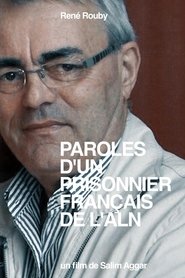
Paroles d'un Prisonnier Français de l'ALN
2010
star 10The image of French prisoners was very often evoked in Algerian cinema and literature, but until today, no Algerian or even European report or documentary had given voice to one of these French prisoners of the war of Algeria. In the interest of truth and writing history, we set out in search of one of these French witnesses. This witness is René Rouby, prisoner of Amirouche's group for more than 114 days in 1958 in the Akfadou region in Kabylia. This is the first testimony from a French prisoner of the ALN (the National Liberation Army).Der Spion
1917
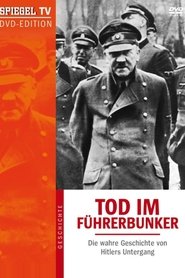
Death in the Bunker: The True Story of Hitler's Downfall
2004
star 8Adolf Hitler spent the last ten days of his life in a bunker underneath the Chancellery of the Reich. Unwilling to face the consequences of defeat, the dictator ended his own life on April 30, 1945 in this fortified underground complex. Featuring exclusive interviews with the last survivor’s of Hitler’s inner circle and extensive archival footage, Death in the Bunker is an illuminating look at the Führer’s final decisions in preparation for his suicide.Verfolgt - Die sieben Leben des Dany Dattel
2024
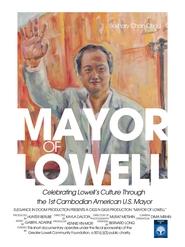
star 7Dany Dattel, a survivor of Auschwitz, where he was deported as a child, returns to the concentration camp eighty years later and tells of the two persecutions to which he fell victim in the course of his life.Mayor of Lowell
2025
Mayor of Lowell
2025
This short documentary chronicles the culture and arts of Cambodian Americans and the Lowell, MA community through the eyes of Sokhary Chau, the first Cambodian American Mayor in the United States. Chau immigrated to the U.S. at seven years old to escape the Khmer Rouge genocide. Through this unique story that showcases the best of Lowell—immigrant success, assimilation, history, and the development of the arts—we see a man born into a war-torn country who comes to America to be a first-in-the-nation leader.