Popular Animation TV Shows - Page 78
All Services
Free Services
 Netflix
 Amazon Prime Video
 Apple iTunes
 Apple TV Plus
 Disney Plus
 Google Play Movies
 Paramount Plus
 Hulu
Hulu
 HBO Max
 YouTube
 fuboTV
 Peacock
 Peacock Premium
 Amazon Video
 The Roku Channel
 AMC+
AMC on Demand
AMC+
AMC on Demand
 Kocowa
 Hoopla
 The CW
 Vudu
Vudu
 Starz
Starz
 Showtime
 PBS
PBS
 Pantaflix
 FXNow
FXNow
 Tubi TV
 Kanopy
 Comedy Central
 Crunchyroll
 Microsoft Store
 Redbox
 Sun Nxt
 ABC
ABC
 DIRECTV
 Crackle
 Fandor
 Plex
Plex
Netflix
Amazon Prime Video
Apple iTunes
Apple TV Plus
Disney Plus
Google Play Movies
Paramount Plus
Hulu
HBO Max
YouTube
fuboTV
Peacock
Peacock Premium
Amazon Video
The Roku Channel
AMC+
AMC on Demand
Kocowa
Hoopla
The CW
Vudu
Starz
Showtime
PBS
Pantaflix
FXNow
Tubi TV
Kanopy
Comedy Central
Crunchyroll
Microsoft Store
Redbox
Sun Nxt
ABC
DIRECTV
Crackle
Fandor
Plex

Otherside Picnic
2021
Otherside Picnic
2021
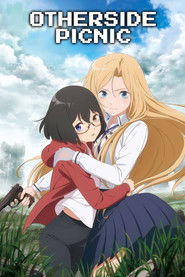
star 6.5Friendless college girl Sorawo finds a door to another world one day — a strangely post-apocalyptic-feeling Otherside with serene emptiness, which becomes her new “special place.” There, she meets one other human, the beautiful and independent Toriko, and they explore the abandoned Otherside together.The Legend of Snow White
1994
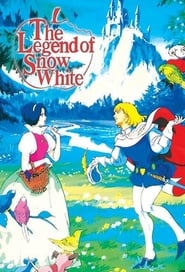
star 9.7The Legend of Snow White is a Japanese anime series produced by Tatsunoko Production and based on the European fairy tale. Directed by Tsuneo Ninomiya and using a screenplay written by Jinzō Toriumi, the series premiered on NHK on April 6, 1994 and ran for 52-episodes until its conclusion on March 29, 1995. The series uses two pieces of theme music: one opening theme, "Heart no mori e tsuretette" by Miki Sakai with Red Dolphins, and one ending theme, "Folk Dance" by Mebae Miyahara.Lucky Fred
2011
Lucky Fred
2011
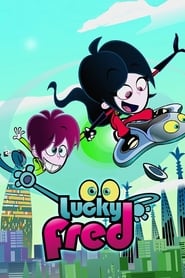
star 6Lucky Fred is a Spanish animated TV series. Created by Imira Productions in 2011. It aired in Disney Channel and Nickelodeon on November 1, 2011 and Nickelodeon Philippines on February 18, 2012.Black Jack
1993
Black Jack
1993
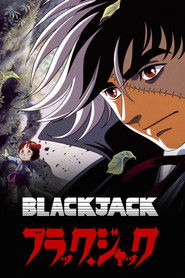
star 6.5Kuroo Hazama, also known as "Black Jack," is a legend in the medical world. Famous for being one of the best, as well as not having a license, Hazama and his assistant Pinoko save countless lives that other doctors cannot... for a price; an exorbitant price, in fact, which causes many to view the genius as greedy and heartless. Despite these claims, however, none can deny his skill and the lengths that he will go to treat his patients. This dark medical drama tells the story of the ominous and mysterious world of underground medicine as Black Jack risks his life to cure some of the most bizarre diseases imaginable, even if it means breaking every law in the process.Touring After the Apocalypse
2025
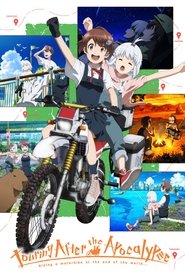
star 8.8Two young girls, Yoko and Airi, travel through the empty world of post-apocalyptic Japan. They photograph the scenery of famous places and camp out in towns overtaken by nature. Together, they ride on a Serow off-road motorbike and experience a new sense of freedom, unbothered by neither traffic nor traffic lights. The world is over now, so let’s hop on a bike and go on a journey!Miru Tights
2019
Miru Tights
2019
star 6.4Inspired by mangaka Yomu’s fascination with women’s legwear presented in his art book “Yomu Tights”, “Miru Tights” takes us into a world of sheer tights and beautiful women’s legs. The bright Homi Moemi, the serious and ambitious Ren Aikawa, and the cheerful, albeit somewhat naïve Yua Nakabeni have been friends for a long time and of course, their tights are part of their everyday attire! While Homi likes to jump into the biggest puddles she can find on rainy days, and Yua devotes herself completely to cosplay – much to the delight of her numerous followers on Twitter – Ren is more serious and works at a small café in her free time.Kubo Won't Let Me Be Invisible
2023
star 6.6First year high schooler Junta Shiraishi is a mob character who goes unnoticed even when he's standing right next to you. But his classmate, "heroine-level beauty" Kubo, always notices him and is there to tease him. Anyone can become special to someone, but it might be a little too early to call these feelings "love." Perhaps this story is still two-steps from being a romantic comedy--let's call it a sweet comedy where a background character becomes visible!Ramen Akaneko
2024
Ramen Akaneko
2024
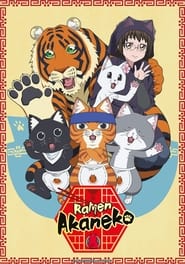
star 5.8Tamako, a human, arrives at Ramen Akaneko, run solely by cats, for a part-time job interview. Her honesty about being a dog person gets her hired, and she becomes the caretaker of the cats at the restaurant. A story of both cat and human relationships, told through the interactions with both feline staff and customers. Enjoy your extra-large serving of heartwarming and endearing moments at Ramen Akaneko.Bogus Skill «Fruitmaster» ~About that time I became able to eat unlimited numbers of Skill Fruits (that kill you)~
2025
star 7.5In a world where Skill Fruits grant powers, aspiring adventurer Light is stuck with the useless «Fruitmaster» skill. Eating another one results in death, so no do-overs. Meanwhile, his childhood friend Rena quickly rises to S Rank. But when Light accidentally eats a second Skill Fruit, he survives and discovers his true power: He can consume unlimited Skill Fruits and gain their abilities!Tenjho Tenge
2004
Tenjho Tenge
2004
star 7.6The story primarily focuses on the members of the Juken Club and their opposition, the Executive Council, which is the ruling student body of a high school that educates its students in the art of combat. As the story unfolds, both groups become increasingly involved with an ongoing battle that has been left unresolved for four hundred years.Tom Goes to the Mayor
2004
star 6.8Tom Goes to the Mayor is an American animated television series created by Tim Heidecker and Eric Wareheim for Cartoon Network's late night programming block, Adult Swim. It premiered on November 14, 2004 and ended on September 25, 2006, with a total of thirty episodes.Fresh Precure!
2009
Fresh Precure!
2009
star 7.5Love Momozono is a 14-year-old student at Yotsuba Junior Highschool that tends to care more for others than for herself. One day she visits a show of the famous dance unit "Trinity" and decides to become a dancer, too. On the same event, subordinates of the Labyrinth Kingdom show up who want to collect the unhappiness of the audience. Love gets the power to change into Cure Peach and fights them. Soon after, she is joined by her good friends Miki, who is Cure Berry, and Inori, who becomes Cure Pine.Those Snow White Notes
2021
star 6.5Matsugorou Sawamura is a shamisen player of legendary talent. Upon his death, his grandson, Setsu Sawamura, lost his ability to play. Having lost his beloved sound, Setsu finds himself in Tokyo in search of a new sound to love. Tachiki Yuna, who works at a club, hooks him up with a gig to play there as a warm up act. Setsu imbues the sound of his shamisen with his many thoughts and feelings he has of others, still searching for his own sound and his own feelings.Super Why!
2007
Super Why!
2007
star 6.8Super Why! or The Reading Adventures of Super Why! is a CGI animated show developed by Angela C. Santomero and Samantha Freeman Alpert. The TV series is produced by New York City-based Out of the Blue Enterprises and Toronto-based DHX Media through its Decode Entertainment division. The show debuted on PBS stations on September 3, 2007. The series airs on PBS Kids and PBS Kids Sprout in the USA, Kids' CBC in Canada. Thai PBS from Thailand broadcasts the shortened version, the episodes are 5 years behind the U.S.Kanokon
2008
Kanokon
2008
star 6.6Kouta has girl troubles of the supernatural sort. For some reason, he keeps attracting the attention (and affections) of animal spirits! Having spent most of his life in the country, Kouta is understandably nervous when he moves in with his grandma to attend a high school in the big city. He hoped to make a good impression, but having Chizuru, a beautiful fox spirit, hanging off his arm didn't seem to be the sort of image he wanted to have. She's not alone in her love for Kouta, either. Nozomu, a wolf spirit, as well as other youkai have their sights set on the hapless country boy.Blend · S
2017
Blend · S
2017
star 8.3High school girl Maika Sakuranomiya has trouble finding a part-time job because of how scary she looks when smiling. However, she is scouted one day by Dino, the manager of the café Stile where its waitresses play unique traits such as tsundere and younger sister. Maika is given a sadist trait because of her looks and has to adopt a dominant and cruel persona when servicing customers, particularly masochist ones.Popolocrois Monogatari
1998
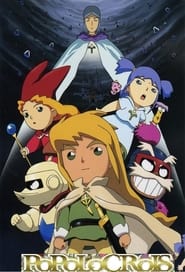
star 5Prince Pietro is the half-human, half-dragon prince of the kingdom of Popolocrois. After the evil GamiGami tries to take over the Kingdom, a mysterious girl named Hyuu appears in the forest near Popolocrois Castle, which is the beginning of an adventure for Pietro, his witch friend Narcia, and all their friends.GINTAMA - Mr. Ginpachi's Zany Class
2025
star 9Class is in session—and it’s out of control! Sakata Ginpachi teaches Gintama High School’s Class 3-Z, a ragtag bunch of idol otaku, stalkers, mayo guzzlers, sadists, and more. Fights break out, rules are ignored, and sanity is optional. Every day spirals into chaos, but Ginpachi somehow survives it all with nonchalance and almost zero effort. When the bell rings, chaos begins!Birdy the Mighty: Decode
2008
star 7While pursuing fugitives the Space Federation police officer Birdy Cephon Altera finds herself on Earth.Phi Brain: Puzzle of God
2011
star 6.7Phi Brain: Puzzle of God is a 2011 Japanese anime television series produced by Sunrise. The first two series aired on NHK Educational TV between October 2011 and September 2012, with a third season to begin airing in October 2013. The series is directed by Junichi Sato with script supervision by Mayori Sekijima. Hajime Yatate, the collective penname for the creative staff at Sunrise, is credited with the original story. The anime has been licensed in North America by Sentai Filmworks. A manga adaptation by Yoshiki Togawa began serialization in Kadokawa Shoten's Newtype Ace magazine from November 2011. A PlayStation Portable video game by Arc System Works was released on May 31, 2012.