Popular War Politics TV Shows - Page 103
All Services
Free Services
 Netflix
 Amazon Prime Video
 Apple iTunes
 Apple TV Plus
 Disney Plus
 Google Play Movies
 Paramount Plus
 Hulu
Hulu
 HBO Max
 YouTube
 fuboTV
 Peacock
 Peacock Premium
 Amazon Video
 The Roku Channel
 AMC+
AMC on Demand
AMC+
AMC on Demand
 Kocowa
 Hoopla
 The CW
 Vudu
Vudu
 Starz
Starz
 Showtime
 PBS
PBS
 Pantaflix
 FXNow
FXNow
 Tubi TV
 Kanopy
 Comedy Central
 Crunchyroll
 Microsoft Store
 Redbox
 Sun Nxt
 ABC
ABC
 DIRECTV
 Crackle
 Fandor
 Plex
Plex
Netflix
Amazon Prime Video
Apple iTunes
Apple TV Plus
Disney Plus
Google Play Movies
Paramount Plus
Hulu
HBO Max
YouTube
fuboTV
Peacock
Peacock Premium
Amazon Video
The Roku Channel
AMC+
AMC on Demand
Kocowa
Hoopla
The CW
Vudu
Starz
Showtime
PBS
Pantaflix
FXNow
Tubi TV
Kanopy
Comedy Central
Crunchyroll
Microsoft Store
Redbox
Sun Nxt
ABC
DIRECTV
Crackle
Fandor
Plex

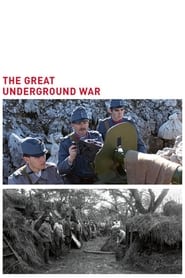
The Great Underground War
2014
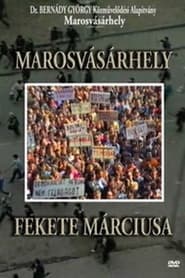
A five-part series that explores the forgotten story of the incredible engineering feats and secret survival techniques of five legendary battles fought underground during World War I.Black March of Târgu Mureș
2010
The series covers the events of the ethnic clashes in Târgu Mures after the fall of the communist regime. The author has arranged the written and film material collected by the Dr. Bernády György Foundation in chronological order. The archival photos showing the important events of the five days, the moments that created the revolutionary atmosphere, are complemented by the recollections of Hungarians and Romanians, and official statements.The Secret War
1977
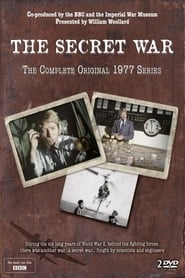
The Secret War
1977
The Secret War was a six–part television series produced by the BBC in conjunction with the Imperial War Museum documenting various technical developments during the Second World War. It was aired during 1977 and presented by William Woollard. The programme opening music was an excerpt from Mussorgsky's Pictures at an Exhibition. The closing music was by the BBC Radiophonic Workshop. The 'seventh' episode often included with video versions of the series was not part of the original series but produced separately.Le 16 à Kerbriant
1972
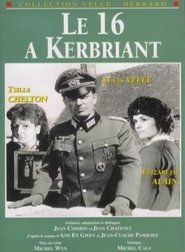
Le 16 à Kerbriant
1972
Rhineland 45
2021
Rhineland 45
2021
The Battle of the Rhineland was one of the largest WW2 battles the Allies fought on German soil and part of the critical final campaign against Nazi Germany on the western front. The Battle for the Rhineland was a series of operations in early 1945, the dramatic finale of the Allied advance from the coast of Normandy to the borders of the Reich. The desperate German forces had managed to form a last line of defence with their backs to the Rhine – the famous river that stood between the Allies and the heart of the German Reich.The Hidden Truth of World War 2
2009
The History Channel series The Lost Evidence recounts the moments of key battles in the European and Pacific theaters through the use of recently unearthed reconnaissance photos that were taken during the actual battle as well as in the days and weeks prior. Interviews with men on both sides of each battle offer a fresh look at the war. This series offers an unprecedented viewpoint of famous battles in Europe during WWII, using recently unearthed reconnaissance photos that were taken during the actual battles. For over 60 years these photographs have remained lost, or forgotten...until now. For the first time these original high-resolution images allow the viewer to track the battle, step by step from the air. Individual stories of courage and heroism can be placed in the exact location where they took place. Using cutting edge technology, unique archive film, re-enactments and extraordinary interviews with the men who were thereDecisive Battles
2004
Decisive Battles
2004
star 8.5Decisive Battles was a television show on the History Channel that depicted historic battles. It ran for thirteen episodes in mid-2004. The show used the game engine from Rome: Total War to present 3-D versions of the battles. The show was hosted by Matthew Settle, who usually traveled to the sites of the battle. Reruns of the show air on the History International channel and the Military History channel.Tony Robinson's World War 1
2015
star 6.5Sir Tony Robinson, the history presenter and former Black Adder star, tells the story of the Great War. How it started, how it changed the world and how it finished with a 100 day flourish of military brilliance, which finally put an end to four years of incompetence and slaughter. With the aid of hundreds of amazing archived 3D images of the Great War which chronicle WWI from start to finish and breathe new life into the story, Tony Robinson's World War I allows modern audiences to see the war in a completely new way. Robinson will also show how the Great War changed British people for generations to come – liberating large portions of the working class, powering the rise of the Labour party and breaking the old ties of service to the aristocracy.Ancient Xia Blood Cup
0000
Tells the story of the succession of royal power in the Xia Dynasty and Shao Kang’s restoration of the territory. From the loss of royal power and the killing of the Prince of Xiang to Shao Kang’s hardships and accumulation of strength, and finally, the elimination of enemies and the restoration of the throne, comprising the historical process of the historical “Shao Kang’s Restoration”.Flying Phoenix
0000
Flying Phoenix
0000
Feng Ming was only 19 when he lost his life saving a child from death without hesitation. The grateful father of the rescued child grants Feng Ming a second chance at life. Unknown to Feng Ming, his soul is whisked away to a faraway ancient land. Upon waking up, he finds himself inhabiting the frail body of Thunder Kingdom’s crowned prince who is also graced with the title of the most beautiful man across all the lands. However, his beauty has a price as he attracts the unwanted attention of the minister of affairs, Rong Tian who finds every reason to torment the prince mentally and physically. As Feng Ming starts to get a hold of the conspiracies surrounding him, what will happen when the prince’s true identity is revealed? And what happened to the ‘real’ prince?Rare Bird
2024
Rare Bird
2024
star 8The year is 1943. Anna Petrova (Katerina Shpitsa) is a combat pilot who was seriously injured. She returned to the rear and works as a leading engineer at an aviation plant, where new Gyrfalcons aircraft are being prepared for testing. The plant's management, unaware of the consequences of her injury, instructs Anna, together with Major Zotov (Alexander Gorbatov), to drive the prototype of the "Gyrfalcon" to the front. In addition to the desire to defeat the enemy and return home with a victory, Anna pursues a personal goal. She is determined to get even with Major Briggel, the German pilot who killed her lover.Parola (su una data)
2003
Parola (su una data)
2003
There is No Third
2009
There is No Third
2009
star 5Occupied Western Ukraine, 1944. The Soviet High Command is concerned about a large-scale, highly classified construction running through the line of the Soviet offensive. A reconnaissance unit is deployed and a Soviet scout is placed behind enemy's lines in order to obtain information about the project.Les Grandes Batailles
1966
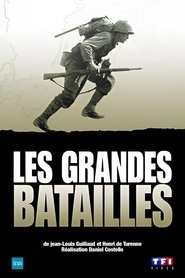
Les Grandes Batailles is a series of historical television programs by Daniel Costelle, Jean-Louis Guillaud, and Henri de Turenne, broadcast on French television in the 1960s and 1970s, depicting the major battles of World War II, as well as the Nuremberg Trials. The project for the series actually began with an official government commission for a program on the Battle of Verdun in 1966. Ten other programs about World War II followed. The writers and producers of the series were Henri de Turenne and Jean-Louis Guillaud, both journalists. They entrusted the production of the series to the young director Daniel Costelle.Iraq, Destruction of a Nation
2021
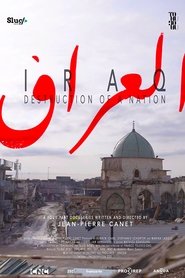
star 8.8The evolution of the former Saddam Hussein's Baathist regime, from the start of the 1980's Iran-Iraq war to the excalation of the ISIS/Daesh insurgency. in the 2000s.Urda: The Third Reich
2002
star 3Urda: The Third Reich is an original net animation written and directed by Romanov Higa. The story takes place circa 1943, during World War II. Facing a losing war, the Nazi Party discovers a marooned spaceship capable of time travel, thus enabling them to alter the outcome of their fate. Enter Erna Kurtz, a newly hired spy who stumbles upon the Nazis' plot. With the help of her fearless friend Janet, Erna must face her past in order to secure her future.Al-Nakba (The Catastrophe)
2008
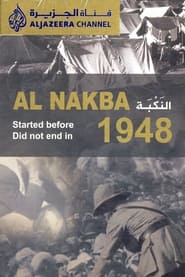
star 10For Palestinians, 1948 marks the “Nakba” or “catastrophe”, when hundreds of thousands were forced out of their homes. For Israelis, the same year marks the creation of their own state. This four-part series attempts to present an understanding of the events of the past that are still shaping the present.