Popular War Politics TV Shows - Page 93
All Services
Free Services
 Netflix
 Amazon Prime Video
 Apple iTunes
 Apple TV Plus
 Disney Plus
 Google Play Movies
 Paramount Plus
 Hulu
Hulu
 HBO Max
 YouTube
 fuboTV
 Peacock
 Peacock Premium
 Amazon Video
 The Roku Channel
 AMC+
AMC on Demand
AMC+
AMC on Demand
 Kocowa
 Hoopla
 The CW
 Vudu
Vudu
 Starz
Starz
 Showtime
 PBS
PBS
 Pantaflix
 FXNow
FXNow
 Tubi TV
 Kanopy
 Comedy Central
 Crunchyroll
 Microsoft Store
 Redbox
 Sun Nxt
 ABC
ABC
 DIRECTV
 Crackle
 Fandor
 Plex
Plex
Netflix
Amazon Prime Video
Apple iTunes
Apple TV Plus
Disney Plus
Google Play Movies
Paramount Plus
Hulu
HBO Max
YouTube
fuboTV
Peacock
Peacock Premium
Amazon Video
The Roku Channel
AMC+
AMC on Demand
Kocowa
Hoopla
The CW
Vudu
Starz
Showtime
PBS
Pantaflix
FXNow
Tubi TV
Kanopy
Comedy Central
Crunchyroll
Microsoft Store
Redbox
Sun Nxt
ABC
DIRECTV
Crackle
Fandor
Plex

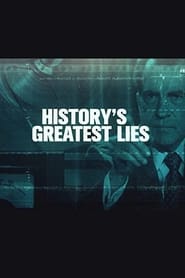
History's Greatest Lies
0000
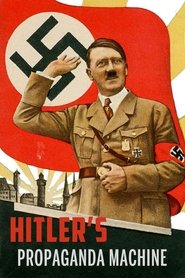
Often forgotten, and rarely punished, the lies of those in power always achieve their goals: THEY CHANGE THE COURSE OF HISTORY Who are the liars? Heads of state, politicians or military leaders, supported by their hierarchies. They have no qualms about lying to the radio, to television, to millions of people, end even, on oath, to the highest authorities and institutions. They use secret services, military strategy or communications agencies to make their lies more credible. The only motto is: «the bigger the lie, the more it will be believed!» In affairs of state, all and every means can be used to certify or conceal an operation. Lies are not just a matter of words, or of silence. They entail practical acts as well as technical support. Whole teams are sometimes necessary to construct believable illusions. In the service of a nation, lying just means reinventing the world.Hitler's Propaganda Machine
2017
star 8Power, terror, performance. These notions define our perception of Adolf Hitler and the Nazi Party at the height of the Third Reich. But behind these impressions Hitler was a rather ordinary man. This compelling new series tells the story of one of the most comprehensive, wide-reaching, and successful marketing campaigns in modern history. It describes in a whole new way the rise of Adolf Hitler.Gniewko, syn rybaka
1969
Gniewko, syn rybaka
1969
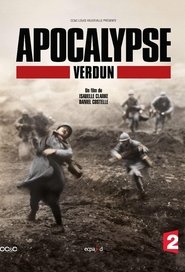
Apocalypse: Verdun
2016
Apocalypse: Verdun
2016
star 8February 1916. World War I has been raging for two years and has killed over three million people, neither side gaining the upper hand. The Germans mobilize more artillery and men in Verdun than in any other offensive -- for three hundred days -- but the French hold out. Constructed from over five hundred hours of restored, colorized archival footage.Ateşten Günler
1987
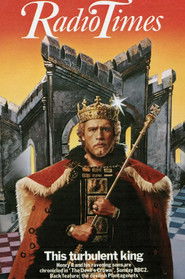
The Devil's Crown
1978
The Devil's Crown
1978
star 7.3The Devil's Crown was a BBC limited series which dramatised the reigns of three medieval Kings of England: Henry II and his sons Richard the Lionheart and John. It was broadcast in thirteen 55-minute episodes between 30 April and 23 July 1978. Henry Plantagenet (latterly Henry II), sees his opportunity to seize the crown of England and create a kingdom of law and order. He cuts a deal with King Stephen in which Stephen will name him his heir, excluding his sons Eustace and William in exchange for a fragile truce. Stephen's sudden death elevates Henry to the throne. He may have been King of England, but the bulk of the Angevin Empire was in France, and it was this that Henry regarded as the Jewel in his Crown, maintained through a series of political marriages and complex allegiances. Henry pays homage to Louis VII, King of the Franks, for these lands, but it is clear that Henry is the shrewder and more ambitious of the two kings, having married Louis' ex-wife Eleanor of Aquitaine.On the Neman
1988
On the Neman
1988
star 7.5An adaptation of Eliza Orzeszkowa’s novel. Set in 1886 in Lithuania, the story centers on the conflict between the Bohatyrowicz family and the Korczyn estate. Against a backdrop of social and familial tensions unfolds the love story of Justyna Orzelska (Iwona Katarzyna Pawlak), niece of Benedykt Korczyński, and Jan Bohatyrowicz (Adam Marjański). Will their love prove strong enough to overcome the deep mental divide separating the world of the Bohatyrowiczs from that of the Korczyńskis?Flower in the War
2012
Flower in the War
2012
During wartime, heiress Shen Junyi joins the Children’s Relief Association and meets army captain Fang Jianming, who secretly works for the Communist Party. Together, they protect orphaned children from Japanese forces, traitors, and bandits, enduring danger and loss.NDH
2021
World War I
2014
World War I
2014
World War 1. Over 35 world powers were involved in this conflict. As a result, four empires – Russian, Austria-Hungary, Ottoman and German – ceased to exist… The participant countries lost 12 million killed, 55 million were wounded… From the series, the viewers will learn about the overall course of the war and follow the incredible life stories of its heroes.Witnesses
0000
Witnesses
0000
The extended version of the eponymous film served as a TV mini-series. The plot is centered in the city of Karlovac in 1992, during the Croatian War of Independence. The front lines, where Croatian and Serbian forces fight each other, lie near the city. Meanwhile, in the city of Karlovac, a Serbian civilian Vasić is murdered. The story follows the local police officer Barbir (Dražen Kühn), who tries to solve the murder in spite of ethnic hatred and war revolving nearby.眼中钉
2008
眼中钉
2008
La buona battaglia – Don Pietro Pappagallo
2006
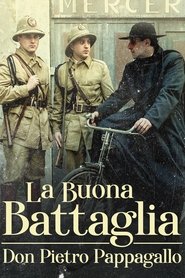
star 7La buona battaglia – Don Pietro Pappagallo is an Italian television miniseries based on the true story of Don Pietro Pappagallo, a Catholic priest and Italian anti-fascist who assisted victims of Nazism and Fascism in Rome during World War II and was arrested and executed in the Ardeatine Caves massacre on March 24, 1944. It was produced by 11 Marzo Cinematografica and Rai Fiction, directed by Gianfranco Albano, written by Stefano Gabrini and Furio Scarpelli, and stars Flavio Insinna as Don Pietro. It was first released in 2006 and is distributed by Radiotelevisione Italiana and RaiTrade.No Way Back
1971
No Way Back
1971
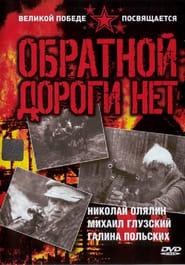
star 4.5In October 1943, Red Army Major Toporkov, after escaping a concentration camp, informs a partisan detachment about a planned uprising in the camp and the need for weapons. The commander sends two convoys: one with real weapons and another with fake ones to mislead the Germans, aware of a traitor in their ranks. The convoys navigate through Polesie, thickets, and swamps, pursued by German forces, with no return.生死兄弟情
2015
生死兄弟情
2015
Insiders
2001
Insiders
2001
Insiders analyses and discusses Australian politics with the use of a panel of political journalists and columnists and interviews with prominent politicians and commentators. Broadcast on ABC1 on Sunday mornings at 9 am, the show also features many regular commentators from various Australian media outlets and think tanks. The program is presented by veteran political journalist Barrie Cassidy as part of the ABC's Sunday morning line-up, commencing with Insiders, followed by Inside Business and then Offsiders, a sports program also hosted by Cassidy.Italy at War: 1940-1942 Battles
1983
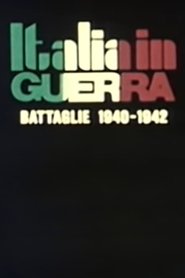
A 1983 six-episodes series, made by Massimo Sani, which recounts the WW2 battles involving Italy between 1940 and 1942: from the attacks to France and Greece to the clashes in Africa and the disastrous expedition to Russia.Wrath of the Wolf
2015
Wrath of the Wolf
2015