Popular Animation TV Shows on Pantaflix - Page 476
All Services
Free Services
 Netflix
 Amazon Prime Video
 Apple iTunes
 Apple TV Plus
 Disney Plus
 Google Play Movies
 Paramount Plus
 Hulu
Hulu
 HBO Max
 YouTube
 fuboTV
 Peacock
 Peacock Premium
 Amazon Video
 The Roku Channel
 AMC+
AMC on Demand
AMC+
AMC on Demand
 Kocowa
 Hoopla
 The CW
 Vudu
Vudu
 Starz
Starz
 Showtime
 PBS
PBS
 Pantaflix
 FXNow
FXNow
 Tubi TV
 Kanopy
 Comedy Central
 Crunchyroll
 Microsoft Store
 Redbox
 Sun Nxt
 ABC
ABC
 DIRECTV
 Crackle
 Fandor
 Plex
Plex
Netflix
Amazon Prime Video
Apple iTunes
Apple TV Plus
Disney Plus
Google Play Movies
Paramount Plus
Hulu
HBO Max
YouTube
fuboTV
Peacock
Peacock Premium
Amazon Video
The Roku Channel
AMC+
AMC on Demand
Kocowa
Hoopla
The CW
Vudu
Starz
Showtime
PBS
Pantaflix
FXNow
Tubi TV
Kanopy
Comedy Central
Crunchyroll
Microsoft Store
Redbox
Sun Nxt
ABC
DIRECTV
Crackle
Fandor
Plex

Mechanical Arms
2018
Mechanical Arms
2018
star 7.3Hero was a high schooler living an ordinary life. One day, he meets a very strong and intelligent mechanical arm named "Mecha-ude". After a strange turn of events, the "Mecha-ude" started living inside Hero's hoodie and the two's life full of trouble begins. As the boy and his "Mecha-ude" fights together and strengthen their bonds, the two also meets new friends who also fights along with each of their own unique "Mecha-ude" partners. Out of those, one of the heroine has two "Mecha-ude" which appears out of her skirt. An active girl with a totally opposite characteristics from hero himself, he gradually becomes attracted to her. But the two are confronted with other "Mecha-ude" users who are in search of the secret of "Mecha-ude" relentlessly.唐诗大电影
2024
唐诗大电影
2024
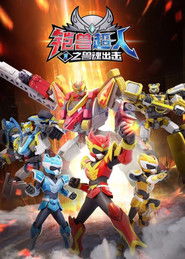
Beastcore Heroes
2022
Beastcore Heroes
2022
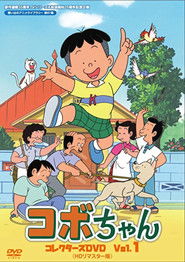
Kobo, the Li'l Rascal
1992
star 6Kobo Tabata lives in a typical Japanese family. His father is a normal salary-man, his mother's a typical housewife, his grandparents (from his mother's side) help to take care of the family and it's pets, and his uncle's a slightly obese high school teacher. Still, they manage to find odd situations that sometimes arise due to Kobo's growing up process or simply because of their own habits and misunderstandings.Genius Party
2007
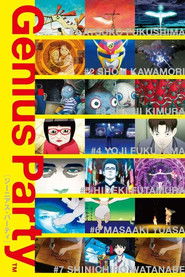
Genius Party
2007
star 7.7The seven short films making up GENIUS PARTY couldn’t be more diverse, linked only by a high standard of quality and inspiration. Atsuko Fukushima’s intro piece is a fantastic abstraction to soak up with the eyes. Masaaki Yuasa, of MIND GAME and CAT SOUP fame, brings his distinctive and deceptively simple graphic style and dream-state logic to the table with “Happy Machine,” his spin on a child’s earliest year. Shinji Kimura’s spookier “Deathtic 4,” meanwhile, seems to tap into the creepier corners of a child’s imagination and open up a toybox full of dark delights. Hideki Futamura’s “Limit Cycle” conjures up a vision of virtual reality, while Yuji Fukuyama’s "Doorbell" and "Baby Blue" by Shinichiro Watanabe use understated realism for very surreal purposes. And Shoji Kawamori, with “Shanghai Dragon,” takes the tropes and conventions of traditional anime out for very fun joyride.Tooter Turtle
1960
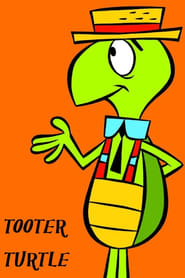
Tooter Turtle
1960
star 5Tooter Turtle was a cartoon about a turtle that first appeared on TV in 1960, as a segment, along with The Hunter a detective dog, as part of the King Leonardo and His Short Subjects program. "Tooter Turtle" debuted on NBC, on Saturday, October 15, 1960, and ran for 39 original episodes through July 22, 1961. These episodes were later rerun as backups on other cartoon shows, but no more original episodes were made.Girls of Olympus
2021
Girls of Olympus
2021
Agent Binky Pets of the Universe
2019
star 5.6Agent Binky and his fellow P.U.R.S.T. Agents protect their human families from unidentified aliens.Novoland Eagle Flag
2023
First Frost
0000
First Frost
0000
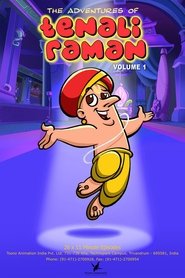
The Adventures of Tenali Raman
2003
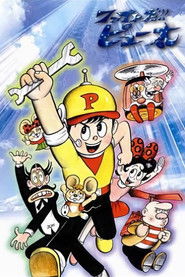
star 7.7The Adventures of Tenali Raman is an Indian animated television series that premiered on Cartoon Network on 14 June 2003. It was based on one of the most popular and best-loved characters of Indian folklore. It was produced by Toonz Animation Studios, Trivandrum. Promoted with the tagline "Get Ready for the Rama Effect", the series aired every Saturday and Sunday on Cartoon Network in India.Fight Da!! Pyuta
1968
Pene e Vagina
2006
Pene e Vagina
2006
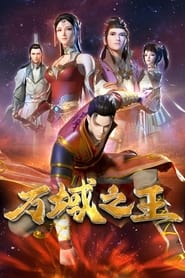
The King of Ten Thousand Domains
2022
star 7.5In ancient times, there existed giant spirits capable of supporting the heavens. With bodies as enormous as stars, they soared across the universe. Great clan leaders with mysterious blood running through their veins shattered the void and created new worlds. Ancient Qi Warriors crossed rivers of stars to enlighten countless mortal beings. For unknown reasons, an era silently came to an end, all realms were separated, ancient giant spirits disappeared one after another. Thousands of years later, young Nie Tian managed to tap into the powers of the ancient times with the help of a drop of blood…Squish
2019
Squish
2019
Set in Small Pond, Squish’s hometown looks suspiciously like an ordinary suburb, with its tidy streets, schools and homes…with just one small difference: Small Pond is inhabited solely by single-celled organisms. They’re mostly like us - with a few unicellular quirks: algae are the cool kids, parasites can’t be trusted and, of course, bacteria always make a mess of everything.Manmaru The Ninja Penguin
1997
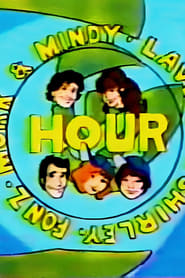
star 6An old man named Jiya brings a new recruit, a modest penguin named Manmaru, to join in on a 300-year battle between the three Ninja clans living in the mountains he owns. But the others, the cowardly Tsuenjiro (fox) and quick-tempered Tanutaro (racoon), are disappointed when they learn the newest trainee is nothing other than a polite, if not flaky penguin. And not just any penguin, but a penguin with dreams to become a professional soccer player! Will Manmaru be the one that helps bring an end to the 300-year battle?The Mork & Mindy / Laverne & Shirley / Fonz Hour
1982
star 8.5Mork & Mindy/Laverne & Shirley/Fonz Hour is a 1982 cartoon series produced by Hanna-Barbera and Ruby-Spears Productions in association with Paramount Network Television, featuring animated versions of characters from Mork & Mindy, Laverne & Shirley, and Happy Days, all part of the same franchise. This Saturday morning series lasted for one season on ABC. This show was divided into two segments, entitled Mork & Mindy and Laverne & Shirley with the Fonz.